

Imagine stepping out your back door into a space that feels less like a simple patio and more like a chef's personal retreat. That's the promise of a well-designed outdoor kitchen. This guide is your roadmap to selecting and integrating the perfect outdoor kitchen appliances to bring that vision to life. We're moving far beyond the lonely charcoal grill of yesterday and into a world of fully-equipped, luxurious hubs built for entertaining.
Designing Your Ultimate Outdoor Culinary Oasis
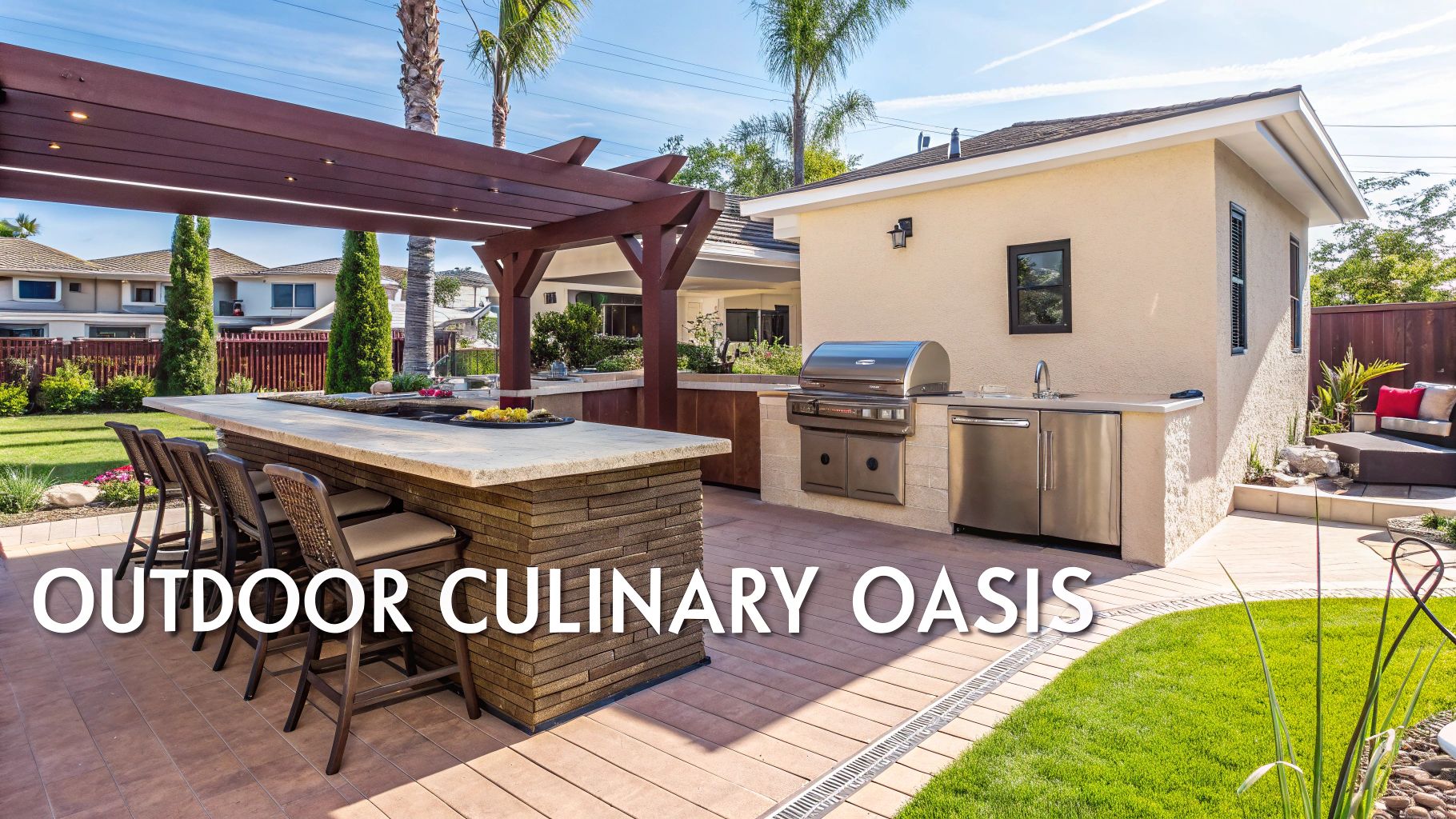
Think of a modern outdoor kitchen as a true extension of your home's heart, seamlessly blending indoor comfort with open-air living. It’s about creating a cohesive, beautiful, and highly functional space for cooking, dining, and making memories. The right appliances are the soul of this space, each one specifically engineered to deliver flawless performance while standing up to mother nature.
This isn't just a fleeting trend. The global market for outdoor kitchen appliances is booming, valued at roughly USD 7.8 billion in 2025 and on track to more than double to an incredible USD 16.8 billion by 2035. This massive growth signals a real shift in how we see our backyards—they've become premium entertainment venues worthy of thoughtful investment.
Key Components of a Modern Outdoor Kitchen
A great outdoor kitchen is so much more than a pile of equipment. It’s a carefully planned system with dedicated zones, just like the one inside your house. Getting these foundational components right is the first step to creating a space that feels both effortless and inspiring.
- The Cooking Zone: This is the main event, the undisputed star of your setup. It’s almost always anchored by a high-performance grill and can be expanded with specialty cookers like a pizza oven, side burners, or even a smoker.
- The Refrigeration Zone: Absolutely essential for keeping drinks ice-cold and ingredients perfectly fresh. This area is home to outdoor-rated refrigerators, freezers, and for the ultimate host, maybe even a kegerator.
- The Prep and Storage Zone: You can never have too much counter space. This zone provides ample room for prep work, paired with weatherproof cabinets and drawers to keep your tools, spices, and serving ware protected and organized.
- The Cleanup Zone: An integrated outdoor sink and a discreet trash receptacle are game-changers. They make cleanup a breeze and eliminate the constant back-and-forth trips to the indoor kitchen.
By planning these zones with a clear strategy, you create a natural workflow that makes hosting outdoors feel completely seamless. The idea is to have everything you need right at your fingertips, turning the act of cooking into part of the party.
When you look at your project this way, you'll start designing a true culinary destination, not just buying appliances. This guide will give you the detailed know-how to select every component with a designer's eye. For some fantastic layout and design ideas, be sure to check out the exceptional outdoor kitchen ideas on our blog.
Choosing the Heart of Your Outdoor Kitchen: The Grill
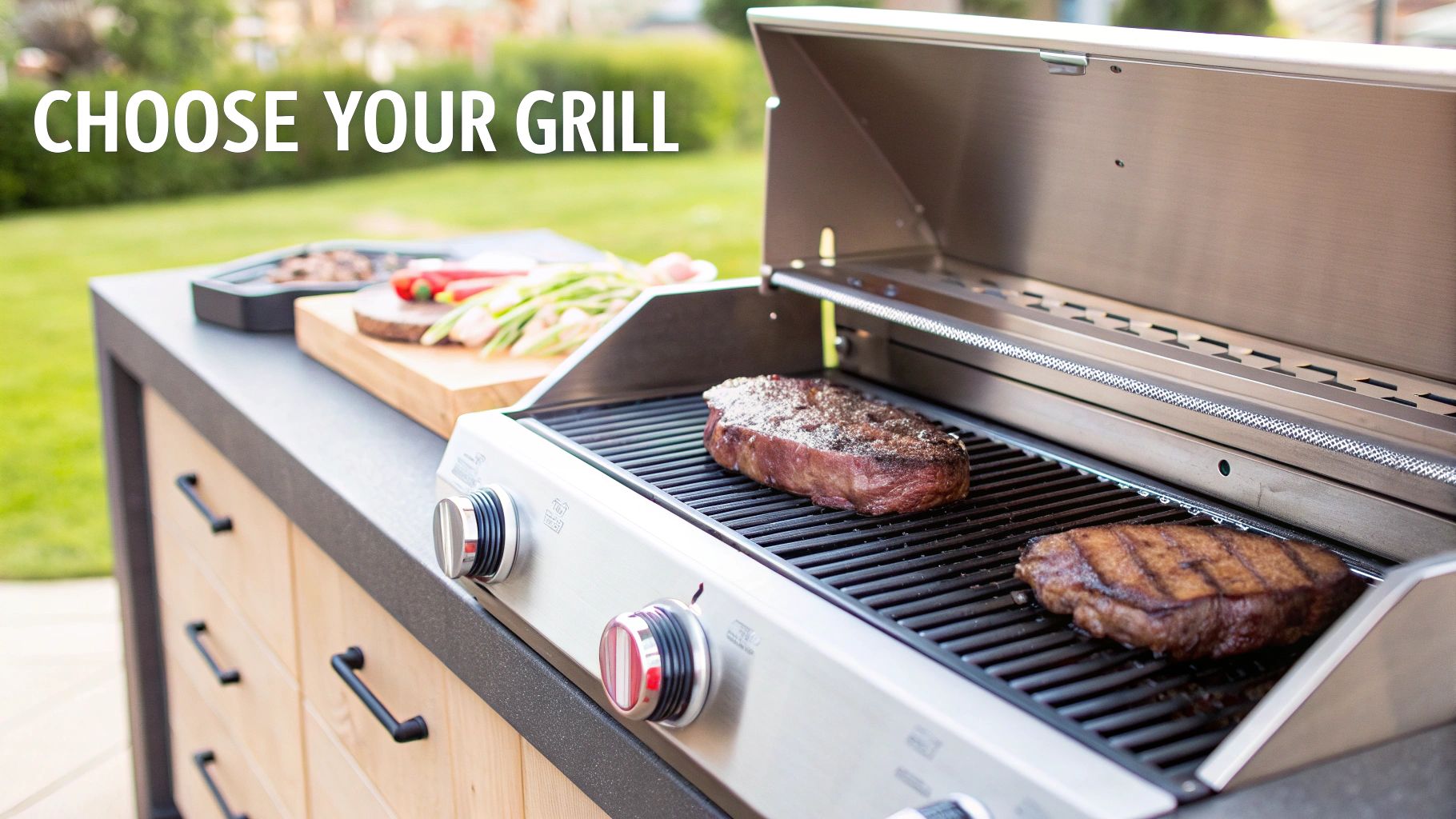
Let’s be honest—the grill is the undisputed star of any outdoor kitchen. It's the engine that drives the whole experience. Picking the right one isn’t just about flipping burgers; it's about choosing a reliable workhorse that fits your cooking style and entertaining ambitions. This single decision really sets the stage for everything else.
Think of it this way: you wouldn't put a four-cylinder engine in a supercar. The same logic applies here. You need a grill that can keep up with your vision. The market for outdoor kitchen appliances certainly reflects this reality, with grills and barbecues making up a staggering 45% market share of the 120 million units sold worldwide in 2024. This is a huge driver behind why the entire outdoor kitchen market, valued at USD 24.45 billion in 2024, is expected to skyrocket to USD 52.75 billion by 2033. You can dig deeper into the numbers by exploring the future of the outdoor kitchen appliance market.
Understanding Your Fuel Options
Your first big decision is fuel. This choice dictates everything from flavor and convenience to how much control you have over the heat. Each type offers a totally different cooking experience.
- Natural Gas: This is the ultimate "set it and forget it" option for convenience. Hooking directly into your home’s gas line means you'll never, ever run out of fuel mid-cookout. It's the always-ready choice for people who entertain often and on the fly.
- Propane: If you want flexibility, propane is your answer. These grills use refillable tanks, so you can place them anywhere on your patio without being tethered to a utility line. You get the same instant heat and control as natural gas, just with total portability.
- Charcoal & Wood Pellets: For the purists out there who are all about that authentic, smoky flavor, nothing beats charcoal or wood pellets. It’s a more hands-on process, for sure. But the incredible taste it delivers is something gas simply can’t replicate.
Think about your lifestyle. If push-button simplicity and spontaneous get-togethers are your jam, natural gas is your best friend. But if you crave those deep, smoky flavors and truly enjoy the ritual of cooking, charcoal is the undisputed king.
Exploring Advanced Grilling Technology
Today’s high-performance grills are so much more than just a set of burners. Modern tech can seriously level up your cooking game.
One of the biggest game-changers is the infrared burner. Instead of heating the air, infrared burners use intense radiant heat to cook food directly, just like a professional steakhouse broiler. This method gives you a phenomenal sear in seconds, locking in all the juices and creating that perfect crust without drying out the inside. If you want that restaurant-quality finish on your steaks, a grill with a dedicated infrared searing zone is a non-negotiable.
For a great example of this technology in action, check out the Blaze Professional 44-inch 4-Burner Built-In Gas Grill, which features a rear infrared burner that’s also perfect for rotisserie.
Another fantastic option gaining traction is the hybrid grill. These versatile machines combine different fuel types or cooking methods in one unit—think gas burners right alongside a charcoal tray or a built-in smoker box. It’s the best of both worlds: gas for a quick weeknight dinner and charcoal for a slow-and-low weekend barbecue.
To help you visualize the trade-offs between different fuel and installation types, here’s a quick comparison.
Grill Fuel Type and Installation Comparison
This table compares the most popular grill fuel types and installation styles, outlining the pros, cons, and best use-cases for each to help you select the perfect centerpiece for your outdoor kitchen.
| Feature | Natural Gas | Propane | Charcoal or Pellet | Built-In | Freestanding |
|---|---|---|---|---|---|
| Convenience | Highest; endless fuel supply | High; portable but tanks need refilling | Lower; requires lighting and temperature management | High; always in place and ready | High; can be moved and stored |
| Flavor | Clean, neutral | Clean, neutral | Rich, smoky flavor infusion | N/A (determined by fuel) | N/A (determined by fuel) |
| Cost | Higher initial setup, lower running cost | Lower initial cost, higher fuel cost over time | Low to moderate equipment cost, ongoing fuel cost | Higher upfront investment in grill and installation | Lower upfront cost, self-contained unit |
| Installation | Professional installation required for gas line | Minimal; attach tank and go | No installation; just assemble and place | Requires precise planning and custom cabinetry | Minimal assembly; ready to use quickly |
| Best For | Frequent entertainers; built-in kitchens | Portability; smaller patios; budget-conscious | Flavor enthusiasts; weekend barbecue artists | Seamless, high-end, custom outdoor kitchen designs | Flexibility; renters; those who may move in the future |
Ultimately, weighing these factors will point you toward the right grill that not only meets your cooking needs but also fits perfectly into your outdoor living vision.
Built-In vs Freestanding Grills
Finally, how will your grill live in your outdoor space? This choice is all about aesthetics and workflow.
- Freestanding Grills: These are the classic, self-contained units on a cart. They offer maximum flexibility—you can roll them to a different spot on the patio whenever you like or even take them with you if you move.
- Built-In Grills: For that truly seamless, high-end look, a built-in grill is the way to go. It’s installed directly into your outdoor kitchen countertops, creating a clean, integrated design that screams "custom."
Choosing a built-in model takes more planning upfront, especially for utilities and proper ventilation. But the payoff is a cohesive and professional-looking space where the grill becomes a stunning architectural feature, not just an appliance.
Expanding Your Culinary Horizons with Specialty Appliances
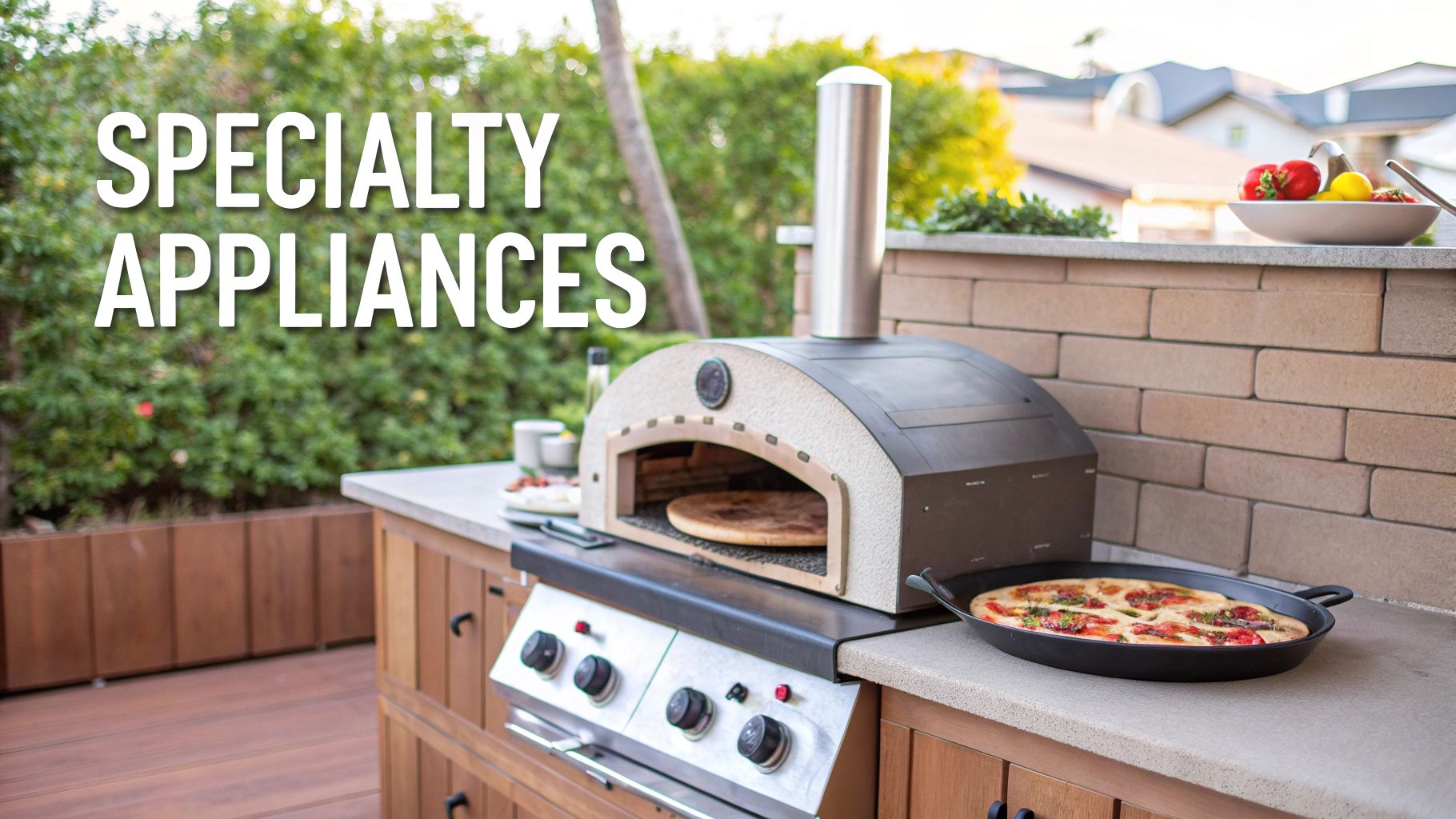
The grill might be the undisputed star of the show, but the real magic in a luxury outdoor kitchen happens when you bring in a team of specialists. Think of your grill as the lead singer; specialty outdoor kitchen appliances are the expert musicians who add depth, texture, and a whole lot of excitement.
These additions are what elevate a patio from a simple barbecue spot into a true open-air culinary stage. Suddenly, you're not just grilling steaks—you're hosting entire multi-course dinner parties without ever setting foot back inside. Weekend brunch, authentic pizza nights, and slow-smoked barbecue feasts are all on the menu.
The Authentic Charm of Outdoor Pizza Ovens
There's just something about a pizza cooked outdoors. The intense, dry heat of a dedicated pizza oven is the secret to that perfectly crisp, leopard-spotted crust and bubbly, melted cheese—a texture and flavor a conventional oven just can't replicate. It instantly becomes a fun, interactive centerpiece for parties.
When you're picking an oven, the big decision comes down to your preferred fuel source and flavor profile.
- Wood-Fired Pizza Ovens: For the purists. Nothing beats the subtle, smoky flavor that burning hardwoods infuse into the crust. They take a bit more hands-on effort to manage the fire, but the authentic, Neapolitan-style results are absolutely worth it.
- Gas-Powered Pizza Ovens: If you value convenience, gas is the way to go. You get consistent, controllable heat at the turn of a knob. They heat up fast and cleanup is a breeze, making them perfect for those spontaneous pizza nights.
Many modern designs, like the popular Bull Countertop Pizza Oven, even offer a hybrid approach. You can use gas for steady, reliable heat while adding a bit of wood for that signature smoky aroma.
Unlocking Versatility with Side Burners and Griddles
Integrated cooking surfaces are some of the most practical upgrades you can make. They put an end to the constant back-and-forth trips to your indoor kitchen for sauces and side dishes, making every meal a smoother experience.
A high-powered side burner is an absolute game-changer. It’s perfect for simmering a homemade barbecue sauce, boiling a pot of corn on the cob, or sautéing fresh vegetables right next to your grilled mains. It’s like having your indoor stovetop right where you need it.
In the same vein, a flat-top griddle opens up a whole new world of outdoor cooking. It’s the perfect surface for whipping up a weekend pancake and bacon breakfast, getting a beautiful sear on scallops, or even putting on a teppanyaki-style show for your guests. And for burger lovers, it's the key to that perfect, crispy-edged smash burger.
These additions aren’t just about luxury; they are about workflow. By consolidating all your cooking tasks into one zone, you remain part of the conversation and the center of the party, not an absent chef stuck indoors.
Mastering the Art of Smoke with a Dedicated Smoker
For anyone truly serious about barbecue, a dedicated smoker isn't a luxury—it's essential. While some grills come with smoker box attachments, a purpose-built unit delivers the low-and-slow, consistent temperature control you need for fall-off-the-bone ribs, unbelievably tender brisket, and succulent pulled pork.
Smokers work their magic by using indirect heat and wood smoke over many hours, breaking down tough cuts of meat and infusing them with incredible flavor. Whether you opt for an offset, pellet, or kamado-style smoker, integrating one into your outdoor kitchen is a statement—it shows a true commitment to the craft of American barbecue. It’s a patient art form that always yields spectacular, crowd-pleasing results.
Mastering Outdoor Refrigeration and Bar Stations
Great outdoor entertaining really comes down to one simple idea: having what you need, right where you need it. This is where your refrigeration and bar station truly shines, acting as the hospitality hub of your entire outdoor kitchen. It keeps fresh ingredients at the chef’s fingertips and cold drinks just an arm's reach away for guests.
But listen, this is one area where you absolutely cannot cut corners. Dragging your old indoor fridge out to the patio isn't just a bad idea—it's inefficient and a real safety hazard. Indoor refrigerators are built for stable, climate-controlled environments. They just don't have the heavy-duty insulation or powerful compressors to battle intense summer heat, which leads to spoiled food and a quickly fried appliance.
Why Outdoor-Rated Refrigeration Is a Must-Have
True outdoor kitchen appliances are built like tanks compared to their indoor cousins. They're specifically engineered to perform perfectly in conditions that would make a standard fridge give up.
The real difference is in their construction and official certification. UL-rated outdoor refrigerators have been rigorously tested and approved to work safely and efficiently in ambient temperatures that can climb past 100°F. They pull this off with a few key upgrades:
- Superior Insulation: We're talking thicker, denser insulation that locks in the cold and keeps the heat out, even when the sun is beating down on it.
- Variable-Speed Compressors: These are the workhorses. They kick into high gear when it gets hot outside to maintain a consistent, food-safe temperature inside.
- Weatherproof Construction: Built from materials like 304-grade stainless steel, these units are designed to fend off rust, corrosion, and moisture from rain and humidity.
Think of it this way: an indoor fridge is like a sedan built for smooth city streets. An outdoor-rated refrigerator is a rugged, all-terrain SUV engineered to handle extreme conditions. One is built for comfort, the other for pure resilience and performance.
Designing Your Ultimate Beverage and Bar Station
Moving beyond a basic fridge, a well-planned bar station can turn your patio into a full-service social hub. This is where you get to anticipate your guests' every need, ensuring you’re always ready to mix a cocktail or pour a cold one. A smart layout here keeps the party moving and makes hosting feel effortless.
- Dedicated Ice Makers: An outdoor ice maker is a total game-changer. It churns out large amounts of fresh, clear ice, meaning you'll never have to make a last-minute run to the store mid-party again.
- Beer Dispensers (Kegerators): For the host who loves to go the extra mile, a built-in kegerator delivers perfectly chilled, draft-quality beer on tap. It’s a professional touch that guests always remember.
- Wine Coolers: Outdoor-rated wine coolers hold precise temperatures, protecting your collection from damaging temperature swings and making sure every bottle is served at its best.
- Cocktail Stations: These are the mixologist's command center. They often combine an insulated ice bin, condiment trays, bottle storage, and a small sink into one streamlined unit.
A great example of a compact but mighty cooling unit is the Blaze 15-inch outdoor refrigerator, a popular choice that fits seamlessly into almost any bar design.
Placement is everything. You'll want to situate your refrigeration and bar station in the "cold zone" of your kitchen. This keeps it easily accessible to guests without them having to cross into the chef's "hot zone" by the grill. It's a simple layout trick that creates a natural, intuitive flow for everyone.
Designing for Durability with Weatherproof Materials
An outdoor kitchen is a permanent part of your home, a serious investment meant to stand up to whatever nature throws at it—sun, rain, snow, you name it. When you're picking out appliances, you're not just looking at cooking power; you're choosing materials that are built to last. This is where the true long-term value of your investment really shows.
Think of it like choosing armor. You wouldn't send a knight into battle with flimsy protection, and your appliances need the right defenses to survive the elements. The materials used for your grill, refrigerator, and storage units will ultimately decide whether they still look brand new in a decade or start showing rust and wear after just one or two seasons.
The Gold Standard: Stainless Steel
When it comes to sheer durability, stainless steel is the undisputed king. But here’s the thing: not all stainless steel is created equal. The specific grade of the steel makes a world of difference, especially when it’s going to live outside year-round.
-
304-Grade Stainless Steel: This is the workhorse of the high-end outdoor appliance world, and for good reason. It’s packed with chromium and nickel, giving it fantastic resistance to corrosion. For most parts of the country, 304-grade is the perfect sweet spot between durability, performance, and price.
-
316L Marine-Grade Stainless Steel: If you’re near the coast or have a saltwater pool, upgrading to 316L is less of a luxury and more of a necessity. This grade includes an element called molybdenum, which massively boosts its defenses against chlorides—like the salt in the air. It’s called "marine-grade" for a reason, offering the ultimate shield against the corrosive bite of salt spray.
Choosing between these two is a strategic move. While 304-grade is a robust choice for most backyards, 316L offers specialized, essential protection for coastal homes where standard stainless steel can start to pit and rust over time.
Beyond the grade, you’ll also want to pay attention to the gauge, which is just a fancy word for thickness. Heavier gauge steel means better structural integrity, much better heat retention in your grill, and an overall feel that screams quality and permanence.
Exploring Other Tough Materials
While stainless steel definitely dominates the scene, a few other high-performance materials bring their own unique benefits and aesthetics to the table.
Powder-Coated Metals
Powder coating is a process where a dry powder is electrostatically applied to a metal surface and then baked in an oven. The result is a tough, uniform finish that’s far more resilient than regular paint. It offers incredible resistance to chipping, scratching, and fading from harsh UV rays, and it opens up a whole world of color possibilities beyond the classic silver of stainless steel.
Marine-Grade Polymers
These high-density synthetic plastics are the definition of low-maintenance. They are completely waterproof and simply cannot rust, fade, or delaminate. You’ll often see them used for outdoor cabinetry and drawer systems because they’re lightweight but incredibly tough. They offer a sleek, modern look and are ridiculously easy to clean, making them a smart and stylish pick.
To help you visualize how these materials stack up, here’s a quick guide to their strengths.
Outdoor Appliance Material Durability Guide
This table breaks down the most common materials, giving you a clear look at how they perform in different environments and what to expect in terms of upkeep.
| Material | Corrosion Resistance | Best For | Maintenance Level |
|---|---|---|---|
| 304 Stainless Steel | Excellent | Most climates; delivers a professional look and reliable durability. | Low |
| 316L Stainless Steel | Superior | Coastal areas, saltwater pool environments, and harsh climates. | Low |
| Powder-Coated Metal | Very Good | Homeowners looking for color options and a modern aesthetic. | Low |
| Marine-Grade Polymer | Exceptional | Wet or humid climates; perfect for cabinetry and storage solutions. | Very Low |
Ultimately, the right material protects your investment and ensures your outdoor kitchen remains a source of pride, not a maintenance headache.
Weatherproofing and Smart Maintenance
Even the toughest materials will last longer with a little TLC. A simple, consistent maintenance routine is all it takes to keep your outdoor kitchen appliances performing perfectly and looking their best for years.
- Invest in Quality Covers: A custom-fitted, waterproof cover is your best friend. It’s the number one defense against rain, snow, punishing UV rays, and falling debris from trees.
- Clean Regularly: Get in the habit of wiping down stainless steel surfaces with a soft cloth and a proper stainless steel cleaner. This gets rid of grime and prevents those annoying water spots from setting in. This kind of care is just as important as it is for other outdoor investments. For related advice, you can learn about the care and maintenance of outdoor teak furniture on our blog.
- Do a Seasonal Deep Clean: At the start and end of your main outdoor season, give everything a thorough cleaning. For your grill, that means scrubbing the grates, checking the burners for any blockages, and making sure the grease trap is empty.
- Keep Pests Out: When you’re packing things up for the winter, make sure every last bit of food residue is gone. It’s also a good idea to put some pest deterrents inside your covered units to keep critters from making a winter home in your grill.
By choosing appliances made from weatherproof materials and sticking to a simple maintenance plan, you’re not just buying equipment—you’re investing in a culinary oasis that will last a lifetime.
Planning Your Perfect Outdoor Kitchen Layout
A brilliant outdoor kitchen isn't just about the gleam of stainless steel; it’s about flow. The best designs feel completely natural, making cooking and hosting feel less like a chore and more like a joy. This is your guide to mapping out the footprint, sidestepping common pitfalls, and creating a space that just works.
The real secret? Think like a chef and create dedicated work zones. This simple principle organizes your outdoor kitchen appliances and counter space into a logical sequence. It's the difference between a frantic, disorganized cookout and a smooth, effortless performance.
The Four Essential Work Zones
Every great kitchen, inside or out, is built around four fundamental zones. When you arrange them correctly, you create an intuitive "work triangle" that keeps everything you need just a few steps away.
- Hot Zone: This is command central. It’s built around your grill, side burners, and any specialty cooking gear like a pizza oven or smoker. Proper ventilation and safe clearance from any flammable surfaces are non-negotiable here.
- Cold Zone: Home base for your outdoor refrigerator, beverage cooler, and ice maker. You'll want this easily accessible for both the cook and guests, so people can grab a drink without getting in the way of the action.
- Wet Zone: This is your sink and trash area. It’s absolutely essential for prepping food, washing hands, and quick cleanups, saving you countless trips back and forth to the main house.
- Dry Zone: Think of this as your prep station. You need plenty of counter space and storage here for chopping vegetables, seasoning meats, and plating the final masterpiece. Ideally, this zone sits between your wet and hot zones for a seamless workflow.
The whole idea is to move smoothly from the fridge (cold) to the sink (wet), then to the prep counter (dry), and finally to the grill (hot). By separating your layout into these four zones, you’re basically mimicking the efficiency of a professional kitchen.
This visual concept map breaks down the essential qualities of top-tier materials often found in these zones.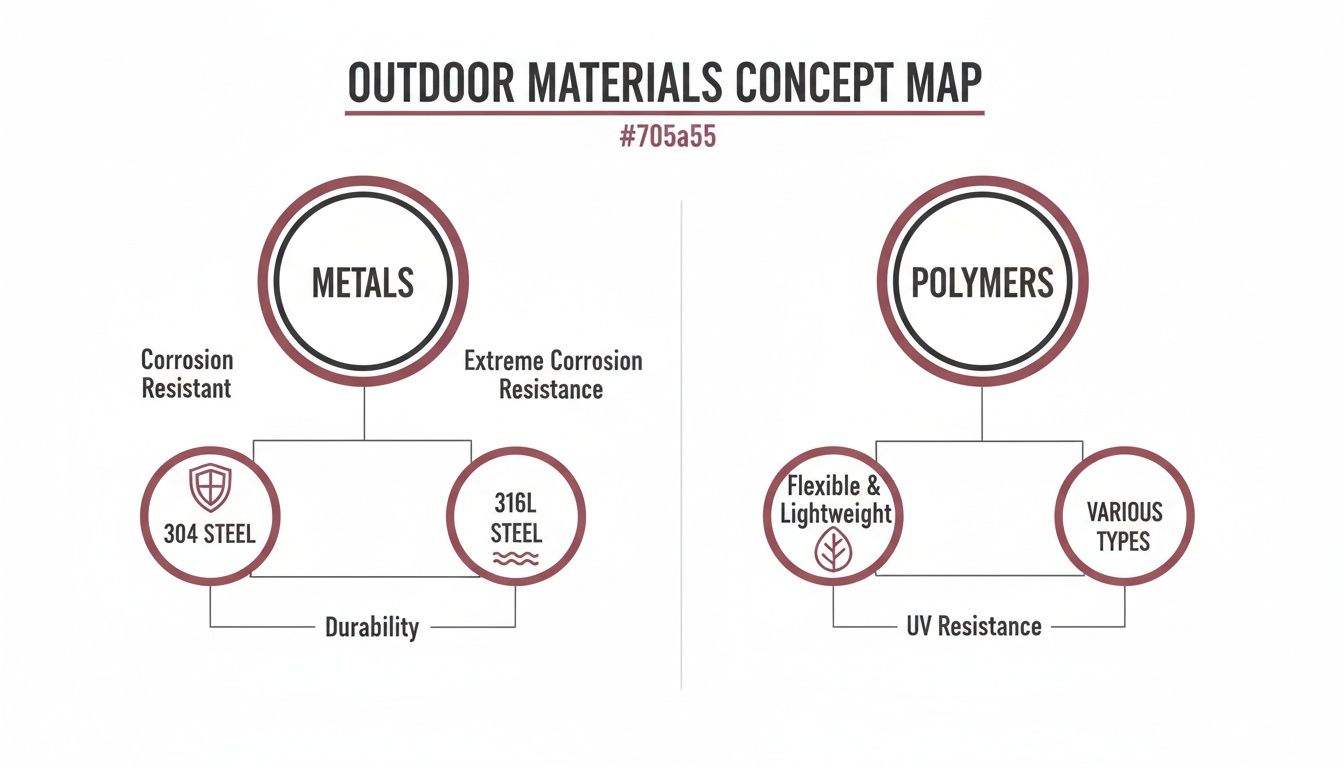
As the map shows, material choice is key. Using 316L "marine-grade" stainless steel in coastal areas, for example, is a smart move that directly supports the function and longevity of each zone.
Planning for Utilities and Safety
A great layout is more than just appliance placement. You have to plan for the utilities that bring your kitchen to life. This is a critical step, and one where you’ll almost certainly need to bring in the pros to ensure everything is safe and up to code.
Before you lock in the design, you need to have a solid plan for running:
- Gas Lines: Whether you're tapping into your home's natural gas or installing a hard-piped propane line, this must be handled by a licensed professional. There's no room for error with gas.
- Electrical Wiring: All outlets and wiring for your fridge, rotisserie motor, or lighting must be GFCI-protected and rated for outdoor use. This is a crucial safety measure to prevent shock hazards in wet conditions.
- Water and Drainage: Plumbing for a sink requires a supply line and a way to get rid of wastewater. This might connect to your home’s sewer system or, depending on local codes, a simpler dry well.
Clearances are just as important. Built-in grills throw off an incredible amount of heat and need a specific buffer zone from combustible materials like your home's siding or a wood deck. Always, always check the manufacturer's specs for each appliance. It's the only way to guarantee you’re building a space that is not only beautiful but fundamentally safe.
Answering Your Top Outdoor Kitchen Appliance Questions
As you get closer to finalizing your outdoor kitchen design, a lot of questions are bound to pop up. Getting clear, straightforward answers is the best way to feel confident in your choices. Let's tackle some of the most common questions we hear from homeowners.
What’s the First Appliance I Should Choose?
Think of the grill as the anchor for your entire outdoor kitchen. It's the natural centerpiece and, let's be honest, the appliance you'll be firing up the most.
Start there. Pick a high-quality grill that fits how you love to cook—whether you want the on-demand heat of gas, the classic smokey flavor of charcoal, or the best of both worlds with a hybrid. Once you've locked in your main cooking station, everything else, from refrigeration to storage, can be built around it.
Are Outdoor-Rated Appliances Really Necessary?
Absolutely, and this is one area where you can't cut corners. Outdoor-rated appliances are specifically built to handle what Mother Nature throws at them, from blistering summer heat to freezing winter nights and everything in between.
An indoor fridge, for example, just isn't designed to work when it's over 100°F outside. It’ll struggle, burn out, and could even become a safety risk.
UL-rated outdoor appliances are a different breed. They're constructed with durable materials like 304 stainless steel and have electrical components sealed to keep moisture out, guaranteeing they'll perform reliably for years.
How Much Should I Expect to Budget for Appliances?
Outdoor kitchen budgets can swing wildly depending on how ambitious you get and which brands you choose. For a solid starting point, you can expect a high-quality built-in grill and a reliable outdoor refrigerator to run somewhere between $5,000 and $15,000.
If you're dreaming of a fully-loaded luxury kitchen with a pizza oven, a dedicated ice maker, and all the bells and whistles, that budget can easily climb past $30,000. It's a true investment in your home and your lifestyle.
How Can I Protect My Appliances from the Elements?
Protecting your investment is key to making it last. The single best thing you can do is get a set of custom-fitted, weather-resistant covers. They’re your first line of defense against harsh sun, rain, snow, and falling leaves.
Beyond that, a simple cleaning routine with a good stainless steel polish will go a long way in preventing rust and water spots. Following the manufacturer’s guide for seasonal maintenance will keep your appliances in top shape, ready for season after season of cookouts.
At URBANMANCAVES, we live and breathe this stuff. We offer expert guidance and a curated selection of premium appliances to help you build the backyard you've always wanted. Explore our outdoor kitchen collections today and let's get your project started.


