

Gone are the days when an "outdoor kitchen" meant a lonely grill sitting on a concrete slab. Today's outdoor kitchens are so much more—they're a true extension of your home, a place built for creating amazing food and even better memories. The best ones are a perfect blend of high-end performance and personal style.
The Evolution Of Outdoor Entertaining
The backyard has completely transformed. It’s no longer just a patch of grass but the new heart of the home, a genuine outdoor living room. This isn't simply about moving the cooking outside; it's about fundamentally changing how we relax, entertain, and connect with the people we care about. We're now creating seamless transitions from our indoor spaces to the open air, turning the outdoor kitchen into a destination.
The numbers tell the same story. The global market for outdoor kitchens jumped from USD 21.81 billion in 2023 to a projected USD 23.66 billion in 2024, and it's expected to nearly double by 2032. This isn't just a fleeting trend. It points to a deep shift in how we see our properties, with more and more homeowners investing in spaces that add real value and can be enjoyed all year long. You can dive deeper into these market trends and see what they mean for your own home.
From Patio Grills To Heirloom-Quality Sanctuaries
At the heart of this movement is a focus on permanence and quality. The most incredible outdoor kitchen ideas are designed to last a lifetime, not just a few seasons. We're talking about moving past temporary setups and embracing heirloom-quality builds—spaces sturdy and beautiful enough to be passed down. It's an investment in future family gatherings.
The idea is straightforward: select materials and appliances that can stand up to Mother Nature without compromising on aesthetics or function. This guide will walk you through it all, from the first spark of an idea to the final, breathtaking result, helping you create a space that’s both incredibly luxurious and uniquely yours.
An outdoor kitchen is more than an amenity; it's the centerpiece of your home's social life. It's where casual weeknight dinners become special and weekend gatherings turn into cherished traditions.
Before we dive into the nitty-gritty of design, let's establish a baseline of what makes a luxury outdoor kitchen truly exceptional. The table below breaks down the core elements, giving you a clear snapshot of what to consider as you begin planning your space.
Essential Components Of A Luxury Outdoor Kitchen
| Component | Key Features To Consider | Why It Matters For Luxury |
|---|---|---|
| Structural Frame | Heavy-gauge 304 stainless steel, marine-grade aluminum, welded construction. | Provides a corrosion-proof foundation that won't warp, rot, or rust over time, ensuring generational longevity. |
| Cabinetry & Cladding | Powder-coated stainless steel, Ipe or Grade-A teak wood, engineered stone. | Combines all-weather durability with sophisticated finishes that match your home's architectural style. |
| Countertops | Dekton®, granite, quartzite, or other non-porous, UV-stable surfaces. | Delivers a high-end look while resisting stains, scratches, and fading from sun exposure. |
| Appliances | Professional-grade grills, side burners, pizza ovens, smokers, outdoor refrigeration. | Moves beyond basic grilling to offer true culinary versatility and pro-level performance. |
| Plumbing & Sinks | Undermount sinks, pull-down faucets, integrated cocktail stations. | Adds convenience for prep and cleanup, creating a fully self-sufficient outdoor culinary workspace. |
Think of these components as the non-negotiables for a space that is built to perform and impress for years to come.
Building Your Vision From The Ground Up
Creating your dream outdoor kitchen is about so much more than just picking out a grill. It demands a thoughtful plan that sweats the small stuff. The elements that truly set a space apart are:
- Durable, Elegant Materials: Think heavy-gauge 304 stainless steel for its unbeatable corrosion resistance, paired with the natural warmth of Grade-A teak for its legendary weather-defying strength.
- Professional-Grade Appliances: High-performance grills, versatile griddles, and authentic pizza ovens take your cooking far beyond what a standard barbecue can do.
- Functional Design: A smart layout with dedicated zones for cooking, prepping, and socializing is crucial. It creates an effortless flow, making the experience enjoyable for the chef and guests alike.
Consider this guide your personal blueprint for turning those big outdoor kitchen ideas into a stunning, functional reality.
Designing Your Ideal Outdoor Kitchen Layout
The heart of a truly spectacular outdoor kitchen isn't just the shiny new grill or the beautiful stonework—it's the layout. A smart, well-planned layout is what elevates a collection of high-end parts into a seamless, intuitive space where cooking and hosting feel like a dream. Think of it as choreographing a dance; every move should feel natural, with everything you need right where you expect it to be.
This is where we go beyond generic templates. The unique shape of your backyard, your personal cooking style, and the way you love to entertain friends and family—these are the real blueprints. It’s how we turn those big outdoor kitchen ideas into a practical, personalized plan that actually works for you.
Adapting The Classic Work Triangle For The Outdoors
Anyone who's spent time in a well-designed indoor kitchen knows about the "work triangle." It’s a time-tested concept that creates an efficient flow between the three key work areas: the stove (hot zone), the sink (wet zone), and the refrigerator (cold zone). This principle is just as crucial outside, but it needs a few tweaks for the open-air setting.
The goal is exactly the same: to cut down on the number of steps you take between these essential stations. Imagine you're grilling steaks. You should be able to turn around to grab marinade from the fridge or pivot to rinse vegetables at the sink without having to hike across the entire patio. It's all about a smooth, uninterrupted workflow.
A great outdoor work triangle means less time scrambling for ingredients and more time actually enjoying the party with your guests. It’s the invisible framework that makes hosting feel completely effortless.
This simple concept prevents traffic jams when you have multiple people helping out and keeps all your primary cooking functions consolidated right where you need them.
Choosing The Right Layout Configuration
The actual shape of your outdoor kitchen has a huge impact on both its function and its social vibe. Each configuration comes with its own set of perks, and the best choice really boils down to your available space and how you plan to use it. Some of the most popular and effective designs are:
- Linear or Galley Layout: This is the most straightforward setup, with all cabinets and appliances lined up along a single wall. It's a fantastic space-saver, making it ideal for smaller patios, long and narrow side yards, or areas running alongside the house.
- L-Shape Layout: By setting up the kitchen along two perpendicular walls, the L-shape creates a more defined and open workspace. This layout naturally improves the work triangle, giving you plenty of counter space for both prep and serving while keeping things open for guests to mingle nearby.
- U-Shape Layout: If you've got a bit more room to play with, the U-shape is the ultimate command center. It wraps around the chef on three sides, putting every appliance and utensil within arm's reach. This creates a highly social hub that’s perfect for the host who loves being right in the middle of the action while cooking.
An outdoor kitchen quickly becomes the central hub for your social life, extending your usable living space and setting the stage for unforgettable memories.
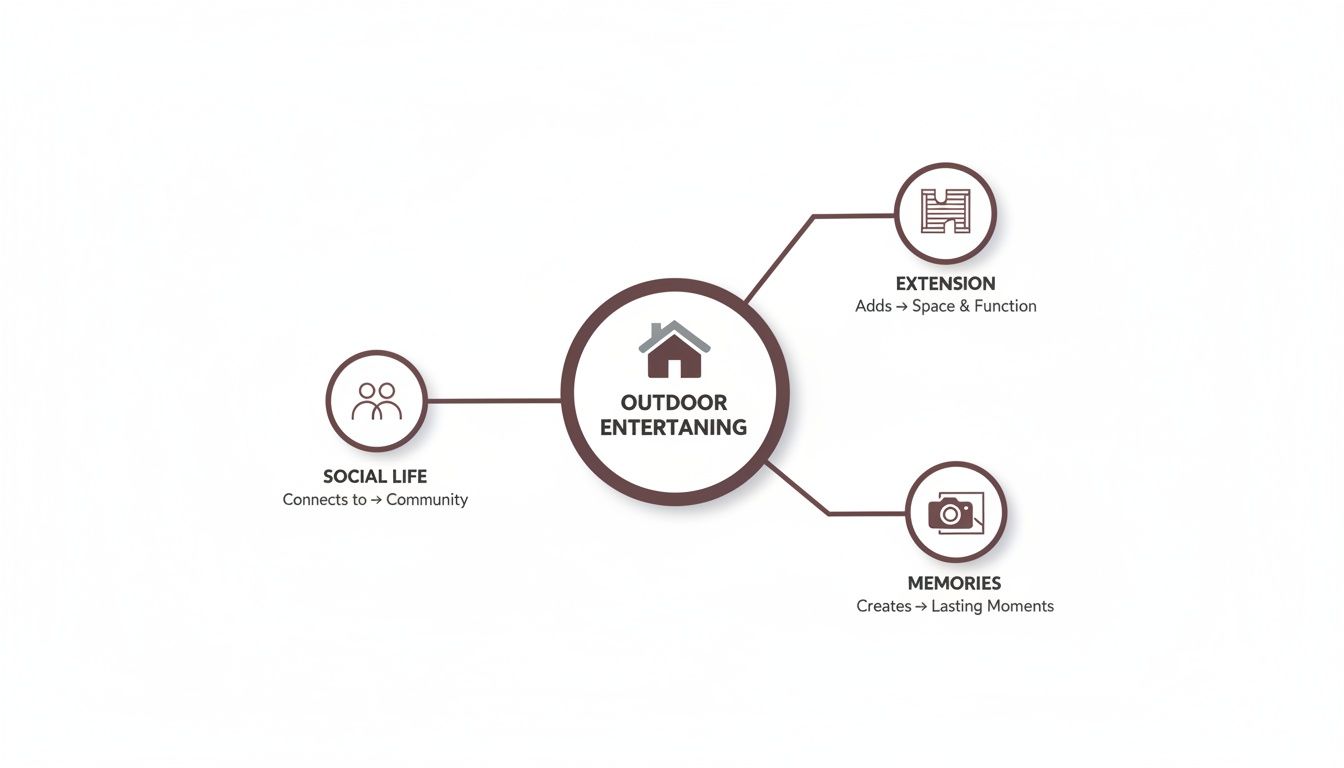
As you can see, these spaces are designed for more than just cooking. They're built for connection, making them a powerful investment in both your home and your lifestyle.
Integrating A Social Island
One of the best ways to elevate any outdoor kitchen layout is to add an island, whether it's attached or freestanding. An island instantly boosts both function and social appeal, serving as a multifunctional centerpiece for your entire outdoor living area.
Here's what an outdoor kitchen island brings to the table:
- Defines the Space: It creates a natural, low-profile boundary that separates the cooking zone from the dining or lounging areas without making the space feel closed off.
- Adds Countertop Real Estate: You can never have too much counter space. An island provides a ton of extra surface area for prepping food, staging finished dishes, or setting up a self-serve bar.
- Creates Social Seating: Adding bar-height seating turns the island into a magnet for guests. They can pull up a stool, sip a drink, and chat with the chef, making the cooking process part of the entertainment itself.
- Houses Additional Appliances: It's the perfect home for an under-counter beverage fridge, an ice maker, or even a small prep sink to make your workflow even more efficient.
Essential Environmental Considerations
Finally, even the most brilliant layout needs to work with its natural surroundings, not against them. Overlooking these simple environmental factors can turn a beautiful kitchen into one that's uncomfortable or just plain impractical to use.
- Sun and Shade: Take a day to watch how the sun moves across your yard. You'll want to position seating areas to catch the afternoon shade and make sure your grill isn't placed where the setting sun will be blinding the chef.
- Prevailing Winds: This one is huge. Nobody wants grill smoke blowing into their face or wafting back into the house. Angle your grill so that the prevailing winds carry smoke away from where people are gathering and away from any open doors or windows.
- Proximity to the House: Unless you're building a fully self-sufficient outdoor kitchen, plan the layout for easy access to your indoor one. This saves you from having to duplicate every single utensil and makes carrying food and supplies back and forth a breeze.
Selecting Enduring Materials and Premier Appliances
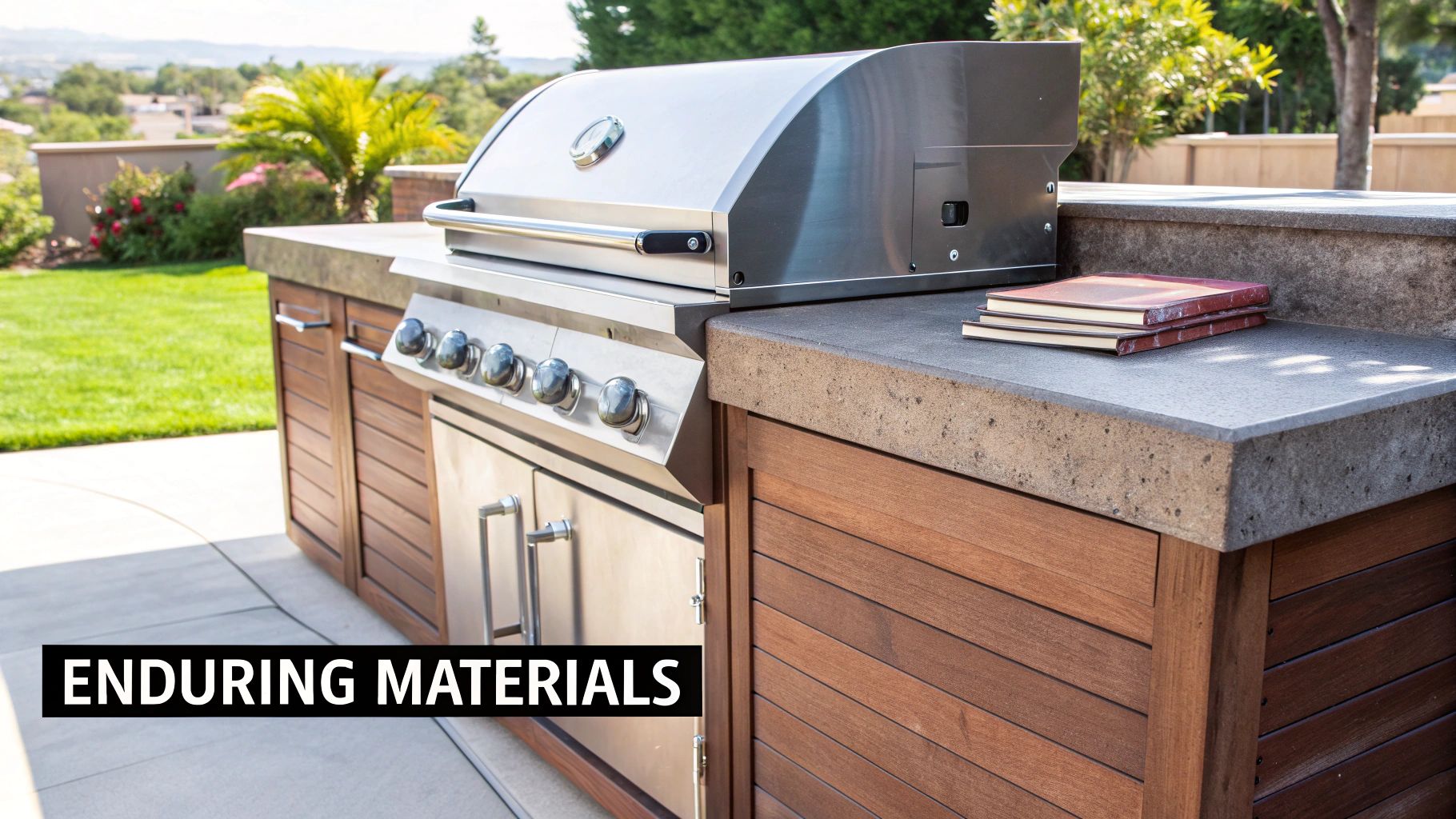
A truly exceptional outdoor kitchen is built on a foundation of pure resilience. It has to stand up to scorching sun, driving rain, and winter freezes without losing an ounce of its refined look. This is where your choice of materials becomes the single most important decision you'll make, determining whether your space lasts a few seasons or for generations.
Think of these materials as the very skeleton and skin of your kitchen. They’re not just pretty finishes; they are the functional armor protecting your entire investment. The goal is always to find that perfect sweet spot between rugged durability and sophisticated style.
This obsession with permanence is what’s fueling a massive trend. Residential outdoor kitchens now represent over 62% of the global market and are on track to become a USD 20.2 billion industry by 2028. This incredible growth, which you can read more about in these outdoor kitchen market statistics on EBD Studios, proves that homeowners are looking for heirloom-quality setups. It's a philosophy that lies at the heart of every single URBANMANCAVES project.
The Gold Standard for Outdoor Structures
When you’re talking about the core structure and cabinetry, one material stands head and shoulders above the rest for its raw performance and longevity: 304-grade stainless steel. This isn't the flimsy, thin metal you find in lesser products. We’re talking about a heavy-gauge, corrosion-resistant alloy engineered to fight off rust and handle extreme temperature swings without a hint of warping.
There’s a reason it’s the trusted choice for demanding commercial kitchens. It’s completely non-porous, so it won’t harbor bacteria, and it’s unbelievably easy to wipe down and sanitize after a big cookout.
Choosing 304-grade stainless steel for your kitchen's framework is like building your house on a solid rock foundation instead of sand. It ensures everything else you build upon it remains stable, secure, and beautiful for decades.
Of course, if you're drawn to a warmer, more organic aesthetic, there are premium alternatives that bring their own brand of durability to the table.
- Grade-A Teak: This incredible tropical hardwood is naturally packed with oils that make it exceptionally resistant to water, pests, and rot. It can be left to weather into a distinguished silver-gray patina or maintained to keep its gorgeous golden hue. We have a whole guide on the care and maintenance of outdoor teak furniture with tips from our experts.
- Marine-Grade Polymers: Essentially bomb-proof, these high-density materials are totally waterproof. They will not swell, rot, or delaminate when exposed to moisture, making them a fantastic, low-maintenance option.
Choosing Countertops That Defy the Elements
Your countertops are the workhorses of the outdoor kitchen. They take the brunt of chopping, spills, and hot pans, day in and day out. They have to be incredibly tough, non-porous to fend off stains, and UV-stable so they don’t fade under the relentless sun.
Polished concrete delivers a sleek, industrial-chic vibe that’s both durable and highly customizable. Granite has been a go-to for years because of its natural beauty and toughness, but it does need to be sealed periodically to keep it from soaking up spills.
For the absolute peak of performance, we often look to ultra-compact surfaces like Dekton®. These are engineered from a blend of raw materials used to make glass, porcelain, and quartz. The process creates a surface with nearly zero porosity, making it ridiculously resistant to stains, scratches, and extreme heat—you can literally set a hot pan right on it without a second thought.
Equipping Your Kitchen With Premier Appliances
With your durable foundation set, it’s time for the fun part: picking out the appliances that will define what you can cook. This is where your vision for an outdoor kitchen really starts to sizzle. The key is to choose components that reflect how you genuinely love to cook and entertain.
Essential Cooking Components:
- The Gas Grill: The undisputed anchor of most outdoor kitchens. Look for models built from 304 stainless steel with high-BTU burners for that perfect, powerful sear and precise temperature control.
- The Griddle: A flat-top griddle adds a whole new dimension of versatility. It's perfect for weekend breakfasts, searing delicate fish, or making a dozen smash burgers for a crowd.
- The Pizza Oven: For that authentic, wood-fired flavor, nothing comes close to a dedicated pizza oven. It's a true showstopper that gets family and friends involved in making the meal.
- Side Burners: An integrated side burner is invaluable. Use it for simmering sauces, boiling corn on the cob, or whipping up side dishes without ever having to step back inside.
Beyond the cooking gear, a truly seamless experience depends on the right support appliances. Integrated refrigeration is non-negotiable, whether it's a dedicated beverage cooler, a full outdoor refrigerator, or a kegerator for fresh draft beer on tap. An outdoor-rated sink with a pull-down faucet simplifies both prep and cleanup, finally turning your setup into a completely self-sufficient workspace. By choosing premier components from the start, you ensure your outdoor kitchen performs just as beautifully as it looks.
Creating Functional Zones For Seamless Entertaining
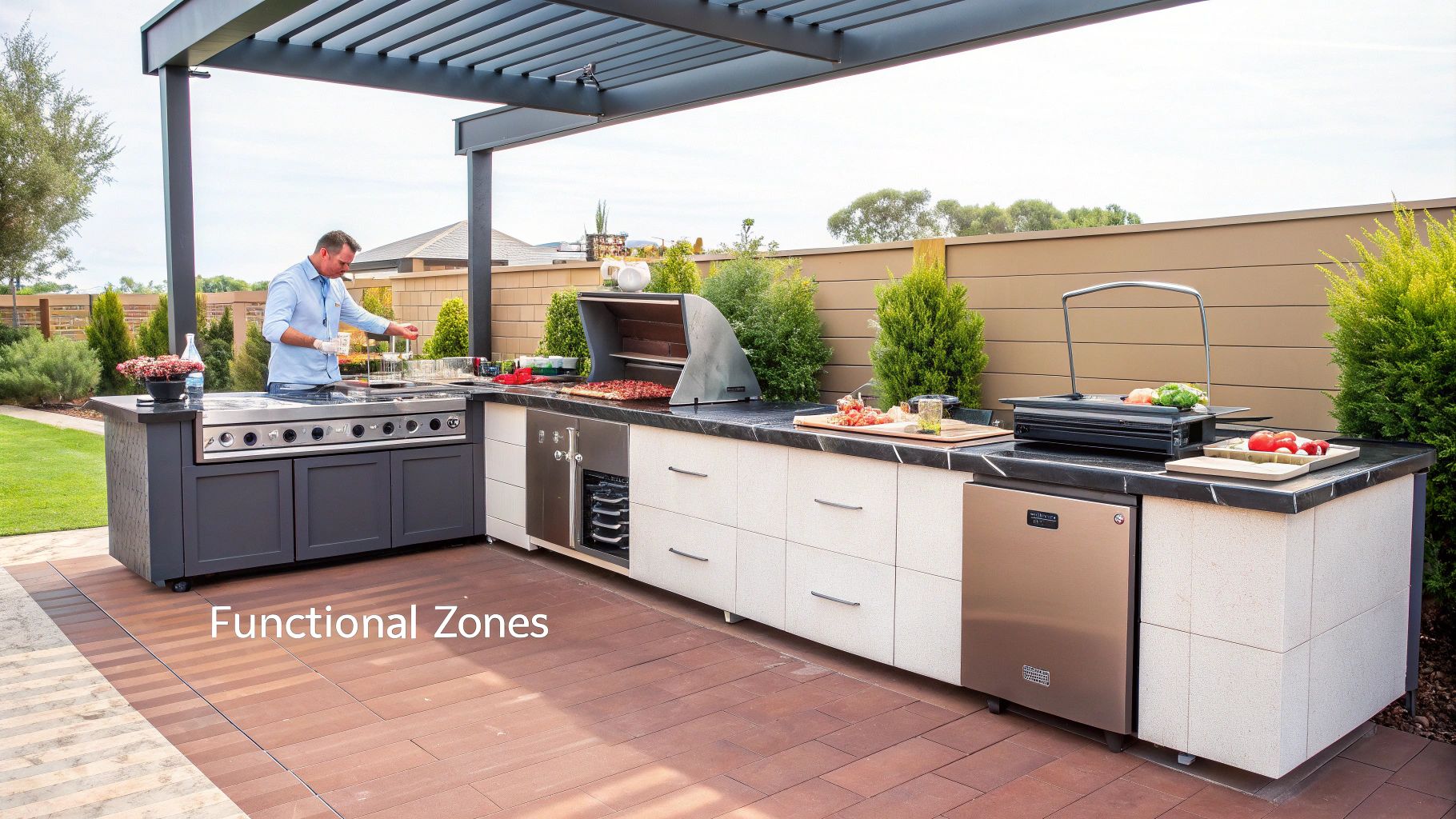
The best outdoor kitchens I've seen work just like a professional one—everything is intuitive, and every movement has a purpose. It's not about having a massive patio; it’s about making your space work smarter. The trick is to organize your layout into distinct zones, which gets rid of that chaotic feeling and creates a natural, easy rhythm for both cooking and hosting.
Think of it like the different stations in a high-end restaurant. Each zone is built for a specific job, so everything you need is right where you'd expect it. This kind of planning prevents those awkward traffic jams when friends or family are helping out, and it makes entertaining feel completely effortless.
The Hot Zone: Your Command Center For Cooking
This is the fiery heart of your outdoor kitchen. The Hot Zone is where all the action happens, and it needs to be planned for serious performance and, of course, safety. This is the one spot that requires the most thought about proper ventilation and safe distances from any combustible materials.
Naturally, your main grill is the star of the show here. But a truly great hot zone goes beyond that. By grouping all your heat-producing appliances together, you centralize the entire cooking process and stop yourself from having to carry hot pans or platters across the patio.
Key Components of the Hot Zone:
- Primary Grill: The main event, whether that’s a beast of a gas grill for perfect sear marks or a charcoal unit for that classic smoky flavor.
- Side Burners: Absolutely essential for whipping up sauces, boiling corn, or handling any stovetop cooking without ever leaving the party.
- Griddles or Flattops: Perfect for weekend pancakes, smash burgers, or even hibachi-style vegetables for a crowd.
- Pizza Ovens: A real showstopper that quickly becomes a social hub all on its own.
The Cold Zone: Keeping Everything Perfectly Chilled
Your Cold Zone is the essential support crew for both cooking and entertaining. This is where you house your refrigeration and ice. When you place this zone strategically—close to your prep area and social spaces—you'll find yourself making far fewer trips back inside the house. A well-placed cold zone keeps ingredients fresh, drinks frosty, and the party moving.
Ultimately, this zone is all about convenience. Picture yourself grabbing a cold marinade for the steaks or handing a guest an icy drink without ever turning your back on the conversation. It’s a seemingly small detail that makes a huge difference in how the space feels. A premium glass front outdoor beverage cooler can be the perfect anchor for this critical part of your design.
An effective Cold Zone is the unsung hero of outdoor entertaining. It keeps the chef supplied and the guests refreshed, acting as the silent partner that ensures every event runs seamlessly from start to finish.
The Wet Zone: Managing Prep And Cleanup
Let's be honest, every great kitchen—indoors or out—needs a dedicated Wet Zone for prepping food and cleaning up afterward. This area, centered around a good sink, is fundamental for everything from washing vegetables to rinsing dishes and, most importantly, washing your hands. This is the one feature that truly makes your outdoor kitchen a self-sufficient workspace.
Adding a sink is one of the most practical upgrades you can make. It dramatically cuts down on the back-and-forth traffic to your indoor kitchen, keeping messes contained and the whole cooking process far more streamlined.
Essential Elements for the Wet Zone:
- Outdoor-Rated Sink: Look for a deep basin made from 304 stainless steel that can handle big pots and resist corrosion.
- Pull-Down Faucet: This gives you the flexibility to easily rinse produce or spray down the whole sink for a quick clean.
- Integrated Trash and Recycling: A simple pull-out bin keeps waste out of sight, so your beautiful kitchen always looks its best.
The Dry Zone: For Storage And Serving
Finally, we have the Dry Zone. This covers all your prep surfaces and storage areas. Think of this as your countertop real estate and your cabinetry—the crucial surfaces where you'll be chopping, mixing, plating, and serving up your creations. I can't stress this enough: ample counter space is non-negotiable. It’s the difference between a cramped, stressful cooking experience and one that feels open and creative.
This zone also houses all your storage. Weatherproof drawers and cabinets are a must for protecting your grilling tools, spices, and serving platters from the elements, ensuring they're clean and ready to go whenever you are. When you plan these four zones with intention, you create an ergonomic and highly functional outdoor kitchen that is a genuine joy to use.
Crafting Ambiance With Lighting And Utilities
The real magic of an outdoor kitchen doesn't happen when the sun is high. It reveals itself slowly, as dusk settles and a warm, inviting glow begins to blanket the space. This is where your lighting and utility plan makes the difference between a simple cooking area and a truly unforgettable atmosphere. It’s the hidden framework that makes your kitchen safe, functional, and enchanting, long after the last burger has left the grill.
Before you even think about fixtures, you have to get the foundation right. That means professional utility installation—the non-negotiable first step. This is the behind-the-scenes work of running dedicated gas lines for your grill and side burners, and plumbing for sinks and ice makers. Just as important is the electrical, which demands GFCI-protected outlets for every appliance. That’s a critical safety measure to prevent shock in an outdoor environment.
A Layered Approach To Outdoor Lighting
To get that perfect evening ambiance, you have to think like a lighting designer. A single, harsh floodlight blasting down from the eaves just won't cut it; it washes everything out and kills the mood instantly. The secret is to layer three distinct types of light to create depth, ensure safety, and build that welcoming vibe you're after.
This strategy makes sure every corner of your outdoor kitchen is perfectly lit for its specific job, from dicing vegetables to enjoying a quiet conversation.
The Three Essential Lighting Layers:
- Task Lighting: This is your workhorse. It’s bright, direct light aimed squarely at your primary prep and cooking surfaces. Essential for safety and precision when you're grilling, chopping, or mixing drinks after dark.
- Ambient Lighting: This is the general, overall glow for the entire space. It’s much softer and more diffused than task lighting, creating a comfortable environment where guests can move around safely and see each other without squinting.
- Accent Lighting: This is where you get to play. Accent lights are used to highlight architectural details, beautiful stonework, or surrounding landscape features. They add drama and visual interest, turning your kitchen into a genuine showpiece.
A well-executed lighting plan does more than just illuminate; it choreographs the evening's experience. It guides the eye, sets the mood, and transforms a functional cooking area into a captivating retreat.
By weaving these three layers together, you’ll build a rich, dynamic environment that feels both incredibly practical and absolutely magical.
Implementing Your Lighting Strategy
So, how do you put this layered concept into practice? Let's break it down.
For task lighting, think about installing lights directly into a pergola or trellis right above your grill. Under-cabinet LED strips are another fantastic solution, casting bright, shadow-free light across your entire countertop. You'll never have to guess if that chicken is cooked through again.
When it comes to ambient lighting, you can’t go wrong with classic string lights or café lights draped overhead for a festive feel. Wall-mounted sconces on your house or nearby pillars also work beautifully, casting a warm radiance over seating and dining zones.
Finally, accent lighting is your chance to add that personal, custom touch. You can explore a variety of outdoor lighting options, like using powerful up-lights from our collection to graze the texture of a stone feature wall or illuminate a stunning nearby tree. Small, discreet lights tucked into stair risers or along the patio edge also add a layer of safety with a sophisticated flair. It’s these final details—the thoughtful utilities and layered lighting—that truly elevate an outdoor kitchen from great to extraordinary.
Planning Your Budget And Build Strategy
Creating a custom outdoor kitchen is more than just a home improvement project; it's a genuine investment in your lifestyle. Getting a handle on the financial side of things right from the start is the best way to make sure your big ideas line up with what you’re ready to spend. A clear, well-thought-out plan is what turns amazing outdoor kitchen ideas into reality without any frustrating surprises down the road.
The final cost for a high-end outdoor kitchen can swing pretty wildly, and it really comes down to the size of the project, the materials you fall in love with, and the appliances you choose. For a premium, fully-loaded space with top-tier materials and professional-grade equipment, it’s realistic to expect an investment anywhere from $20,000 to over $100,000. Keep in mind that labor is a big piece of that puzzle, which makes careful planning even more critical.
A well-planned budget isn't a restriction; it's a creative tool. It empowers you to allocate resources effectively, ensuring every dollar contributes directly to creating your ultimate outdoor entertaining experience.
Thinking this way allows you to put your money where it matters most. You can guarantee a stunning result that doesn't just meet your vision but blows past it, all while adding some serious value to your property.
Adopting A Phased Build Strategy
One of the smartest ways to tackle an ambitious outdoor kitchen project is to break it down into phases. This approach lets you build your dream setup over time, splitting the project into logical, manageable stages without needing a massive financial commitment all at once. It’s all about getting to enjoy the core of your kitchen now, with a clear path for adding the extras later.
This strategy gives you the flexibility to match the build-out with your timeline and budget, making that dream luxury kitchen feel much more attainable. You get the essential cooking space up and running right away and then layer in new features as you're ready.
A Sample Phased Approach:
-
Phase One: The Foundation. This is where you start with the absolute must-haves. Think of the structural framework, your main grill, and the basic countertops and cabinetry that will form the backbone of your kitchen. This gets you a fully functional cooking area from day one.
-
Phase Two: Expanding Functionality. Once the core is in place, you can start adding the appliances that really broaden your culinary horizons. This is the perfect time to bring in a side burner for sauces, an outdoor refrigerator to keep ingredients and drinks cold, or a sink to create a proper wet zone.
-
Phase Three: The Finishing Touches. The final stage is all about elevating the entire experience. This is when you can add that show-stopping pizza oven you’ve been dreaming of, an under-counter ice maker for easy cocktails, or sophisticated, layered lighting to set the perfect mood and complete your outdoor sanctuary.
Your Top Questions About Luxury Outdoor Kitchens, Answered
When you’re dreaming up a luxury outdoor kitchen, a lot of practical questions naturally come to mind. Getting straight answers is the key to turning those big ideas into a solid plan you can feel good about. Let’s tackle some of the most common things homeowners ask when they're getting started.
What’s The Absolute Best Material For Outdoor Kitchen Cabinets?
When you’re looking for something that will last a lifetime and look incredible doing it, nothing beats 304-grade stainless steel. It’s the gold standard for a reason—it stands up to rust, corrosion, and heat without breaking a sweat, and it's a breeze to keep clean.
If you prefer a warmer, more natural look, you've still got fantastic options. Marine-grade polymers or Grade-A teak are both engineered to resist the elements, so you won’t have to worry about warping or decay.
Do I Really Need A Permit To Build An Outdoor Kitchen?
This is a big one, and the answer almost always comes down to your local regulations. Here’s a good rule of thumb: if your project involves running new gas, plumbing, or electrical lines, you can bet you’ll need a permit. It’s all about safety and making sure everything is up to code.
For a simple, standalone grill island, you might not need one. But it's always worth a call. Always check with your local building authority before you break ground—it will save you massive headaches later.
A well-designed luxury outdoor kitchen can offer a substantial return on investment, often ranging from 55% to over 100%. As a highly desirable feature for buyers, it significantly enhances your property's functional living space and market appeal.
How Much Value Does An Outdoor Kitchen Actually Add To A Home?
Think of an outdoor kitchen not just as an expense, but as a serious investment in your property's value. It’s one of those major upgrades that truly expands your home's functional living area.
Potential buyers see it as a huge plus, making your home stand out in the market and boosting its overall appeal and price tag.
Ready to transform your vision into a stunning outdoor sanctuary? Explore the curated collections at URBANMANCAVES and let our concierge team help you design the perfect space.
Article created using Outrank


