

Think about your backyard. Right now, it might just be a patio or a deck. Now, imagine turning that space into a true extension of your home, a place where entertaining is effortless and every meal feels like an event. The secret lies in getting the outdoor kitchen essentials right from the start. We're talking about four key areas: cooking appliances, cooling and prep stations, durable storage, and ambiance features. This guide is your blueprint for making smart choices that you'll enjoy for years to come.
From Patio to Paradise: Planning Your Outdoor Kitchen
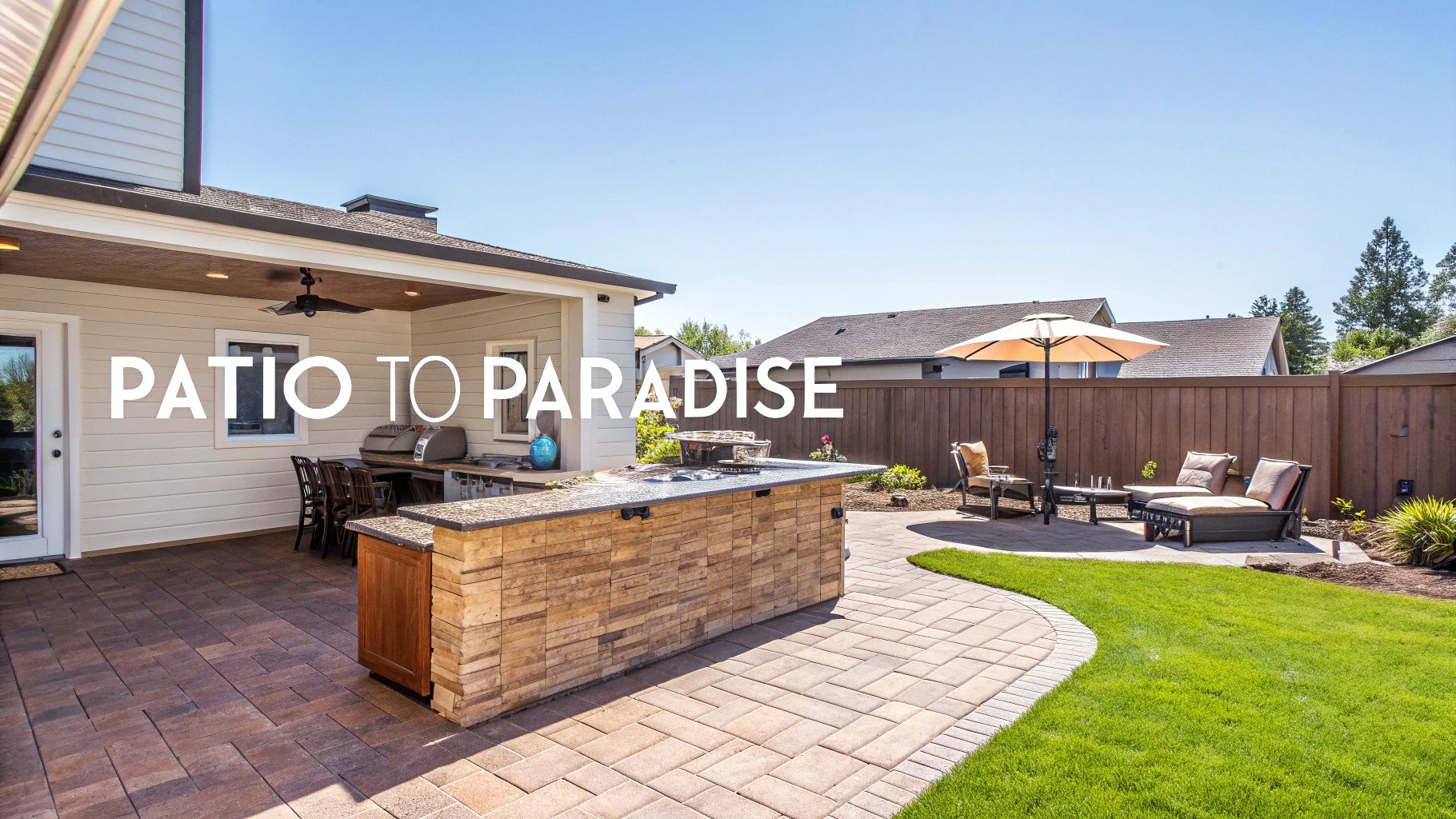
Moving beyond a lonely grill on the deck is a game-changer. It’s the difference between simply 'grilling outside' and creating a fully integrated 'outdoor living room.' The first step is understanding the core components that make the space work, transforming it from a spot of convenience into a genuine destination.
Think of it as building a chef-quality indoor kitchen, but with one major twist: it has to stand up to Mother Nature. Every single choice, from the grade of stainless steel on your grill to the type of stone for your countertops, has to be intentional. The goal is to create a seamless culinary workflow that isn't fazed by sun, rain, or snow.
The Four Pillars of an Outdoor Kitchen
Any truly functional outdoor kitchen is built on four distinct pillars. Each one solves a specific problem, ensuring your space is self-sufficient and a pleasure to use. When you start planning, thinking in these zones is the key to a design that just works.
- Cooking: This is the heart and soul of the kitchen. It starts with the main grill, of course, but it can easily expand to include specialized tools like pizza ovens, power burners for big pots, and flat-top griddles.
- Cooling & Prep: This zone is all about keeping things cold and clean. It includes outdoor-rated refrigerators for drinks and ingredients, plus sinks and dedicated counter space so you aren't constantly running back inside.
- Storage & Cabinetry: Weatherproof storage is non-negotiable. You need a secure place to keep your tools, spices, and serving ware protected from moisture and critters, with everything you need right at your fingertips.
- Ambiance & Comfort: This is what makes your kitchen usable after dark and in cooler weather. It covers everything from task lighting and fire pits to overhead shelters that protect you from the elements.
A well-planned outdoor kitchen should function as a self-contained satellite of your indoor one. The real goal is to stop the constant back-and-forth, so you can actually stay present with your guests and enjoy the open-air experience without compromise.
By focusing on these essential categories, you build a solid foundation for a space that’s not just stunning but incredibly practical. It ensures every component works together in harmony. To see how these pillars come together in real-world designs, check out our gallery of inspiring outdoor kitchen ideas for some visual fuel. Now, let’s walk through how to choose the right equipment for each zone.
Choosing Your Cooking and Grilling Appliances
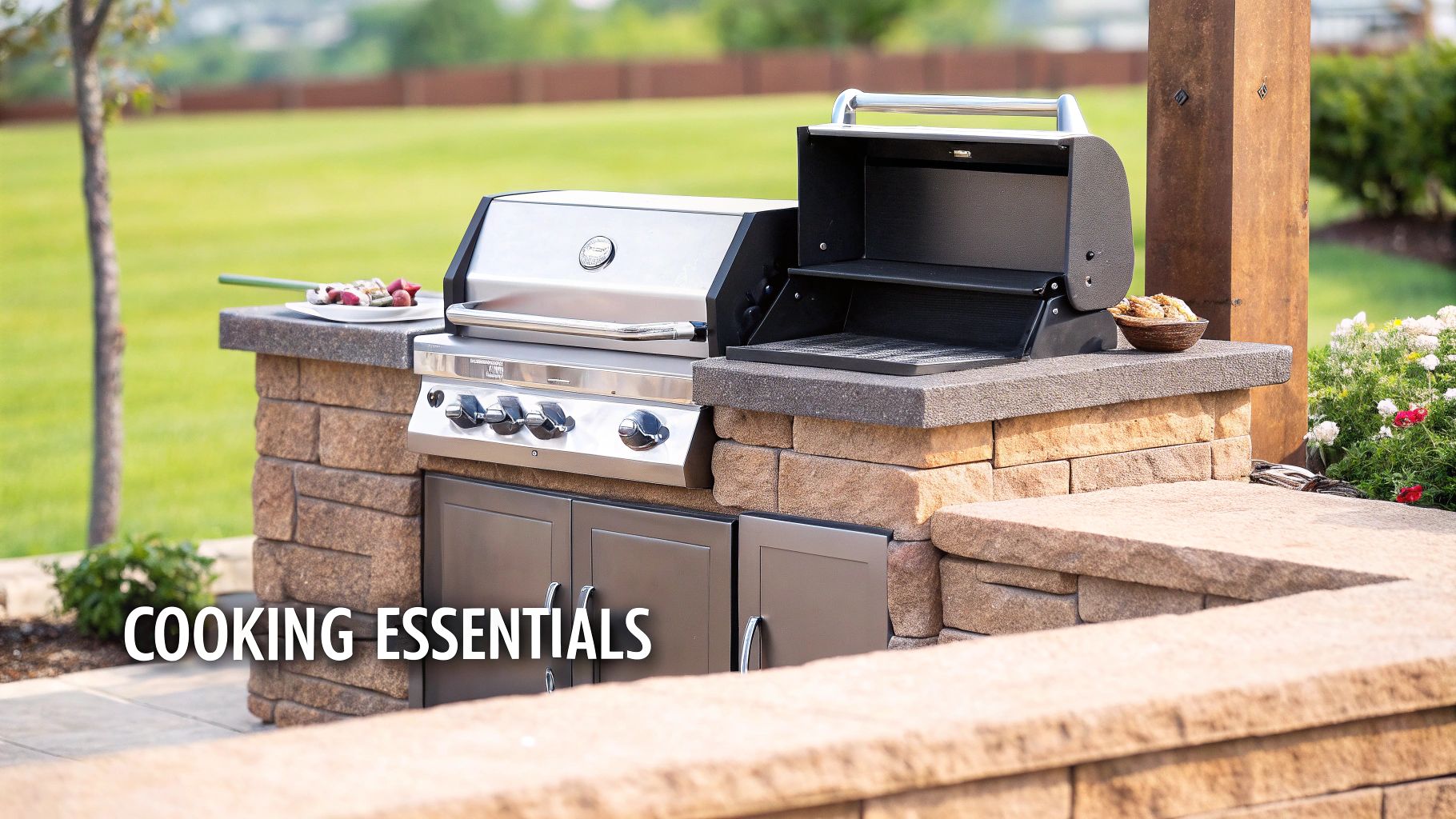
Let's start with the heart of your outdoor kitchen: the grill. This is more than just an appliance; it's the social hub, the functional core where all the magic happens. Getting this choice right is the single most important decision you'll make in this entire process.
Your cooking setup dictates how you'll actually use your new space. It should be a natural extension of your cooking style and how you love to entertain. It’s no wonder, then, that cooking equipment usually represents the biggest slice of the budget.
In the United States, cooking fixtures account for a massive 45.73% of the total outdoor kitchen market revenue. That number, highlighted in market trend analysis from Grand View Research, shows just how central these appliances are to the whole concept.
Gas Grills: The Foundation of Convenience
For most people, a high-performance built-in gas grill is the essential starting point. Think of it as your reliable workhorse, always ready to go at a moment's notice. Gas grills are all about speed and precision, heating up in minutes and giving you consistent, controllable heat with the simple turn of a knob.
This is what makes them perfect for those spontaneous weeknight dinners or for when you're juggling multiple dishes for a party. You can go from a cold start to searing hot in under 10 minutes—something you just can't do with other fuel types.
When you’re shopping, look for grills built from 304-grade stainless steel, which is the industry standard for great corrosion resistance. If you live in a coastal or particularly humid climate, it's worth upgrading to 316-grade stainless for even better protection against rust. Also, keep an eye out for premium features like rear infrared burners (a must for rotisserie) and dedicated searing zones to really elevate your cooking.
Your primary grill is the engine of your outdoor kitchen. Investing in a durable, high-performance model isn't a luxury—it's the foundation for decades of memorable meals and effortless entertaining.
For a great example, check out the Blaze LTE Pro 5-Burner Gas Grill. It’s a powerhouse unit that combines serious BTUs with smart features like interior lighting, making it a complete cooking system.
Charcoal and Smokers: The Pursuit of Flavor
Where gas grills offer convenience, charcoal delivers an experience. For many outdoor cooks, working with charcoal is a hands-on ritual that’s all about creating deep, smoky flavor. It's the go-to for weekend cookouts and slow-cooked masterpieces.
The high, dry heat from charcoal creates an incredible crust on steaks and burgers that’s hard to replicate. And if you're serious about barbecue, adding a dedicated smoker or a kamado-style ceramic grill is a game-changer. These cookers are designed for low-and-slow cooking, holding a precise low temperature for 12 hours or more on a single load of fuel—perfect for brisket, ribs, and pulled pork.
Expanding Your Culinary Arsenal With Specialty Appliances
A truly great outdoor kitchen often goes beyond a single grill. By adding a few specialty appliances, you can transform your space from a simple grilling station into a versatile culinary workshop. These are some of the most popular outdoor kitchen essentials that complete a setup:
- Side Burners: An integrated side burner is incredibly useful for warming sauces, sautéing veggies, or boiling a pot of corn. It keeps you from having to run back inside, so the entire cooking process stays outdoors where the party is.
- Power Burners: If you host big crawfish boils or fish fries, a dedicated high-BTU power burner is non-negotiable. These things are like jet engines, designed to bring massive stockpots to a boil in a hurry.
- Flat-Top Griddles: Also known as a teppanyaki or plancha, a flat-top is perfect for cooking delicate foods like fish and vegetables that might fall through a traditional grill grate. They've also become hugely popular for epic outdoor breakfasts—think pancakes, bacon, and eggs for a crowd.
- Wood-Fired Pizza Ovens: Nothing says "party" like a real wood-fired pizza oven. They can reach temperatures over 750°F, cooking a perfect pizza in just a couple of minutes. Beyond that, they're fantastic for roasting meats, baking bread, and serving as a stunning architectural centerpiece.
To help you decide, here's a quick look at how these primary cooking appliances stack up against each other.
Comparing Primary Outdoor Cooking Appliances
A breakdown of popular outdoor cooking appliances to help you choose the best fit for your culinary style and entertaining needs.
| Appliance Type | Best For | Key Features | Material Focus |
|---|---|---|---|
| Gas Grill | Weeknight convenience, large parties, precise temperature control | Quick pre-heating, multiple burners, rotisserie, searing stations | 304 or 316-grade stainless steel for durability and rust resistance |
| Charcoal Grill/Smoker | Rich smoky flavor, low-and-slow cooking, hands-on grilling experience | High heat searing, long-term heat retention, air vents for temp control | Heavy-gauge steel, cast iron grates, or thick ceramic for kamados |
| Flat-Top Griddle | Breakfasts, delicate foods (fish/veggies), smash burgers, hibachi-style cooking | Large, solid cooking surface, even heating, grease management | Heavy-duty steel or stainless steel cooktop |
| Pizza Oven | Authentic pizza, rustic baking, roasting, creating a social focal point | Extreme high-heat capability (750°F+), refractory dome for heat | Refractory brick/ceramic interiors, stainless steel or stucco exteriors |
Ultimately, your ideal setup should reflect your culinary ambitions. Whether you’re a grilling purist or an adventurous host, choosing durable, heirloom-quality appliances is the best way to ensure your outdoor kitchen brings you joy for many years to come.
Integrating Essential Refrigeration and Prep Stations
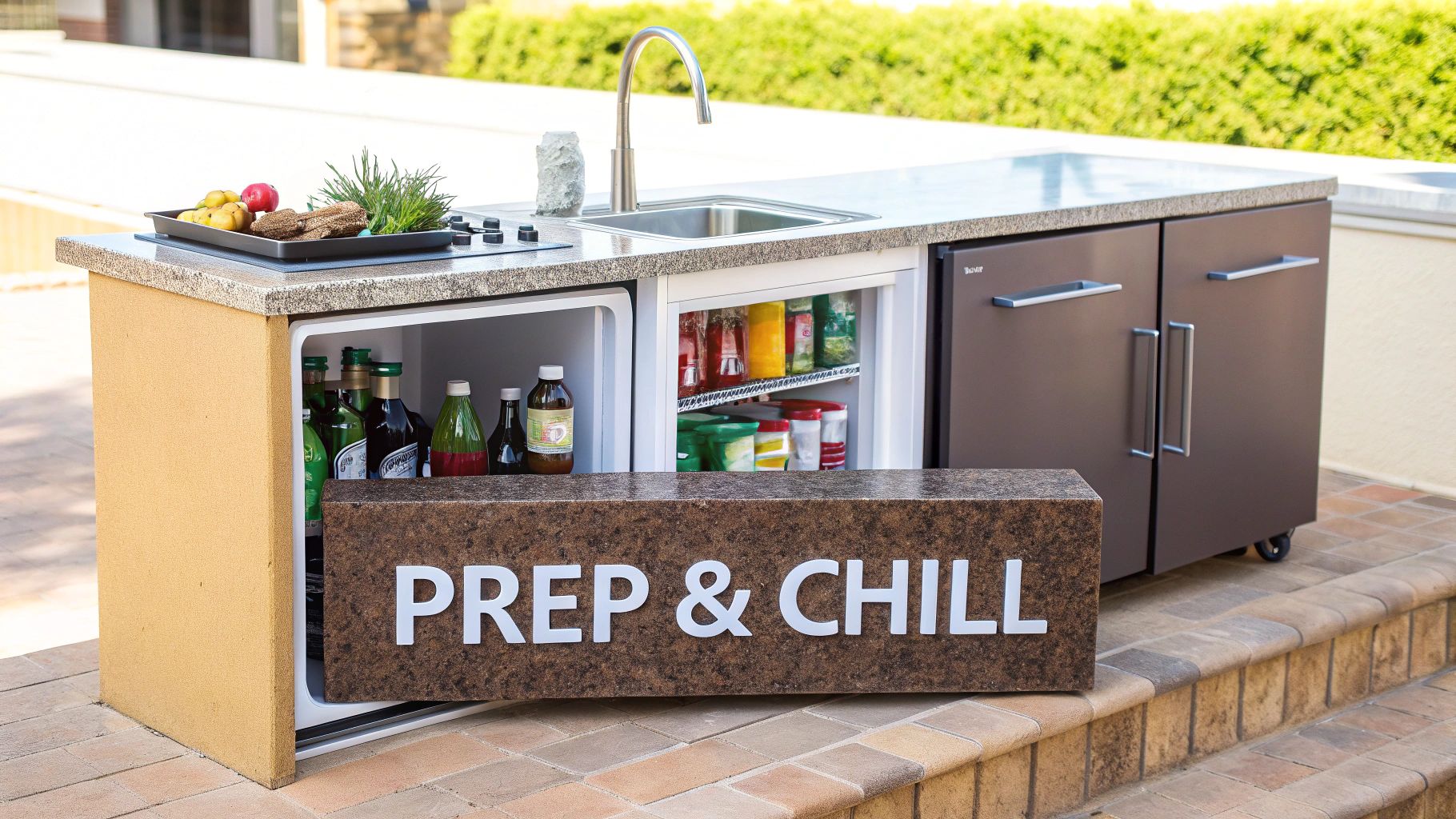
While the grill might get all the glory, it’s the supporting cast—refrigeration, sinks, and prep space—that turns a patio into a genuine outdoor kitchen. The whole point is to stop the endless parade back and forth to the house for ingredients, drinks, or just to wash your hands. These are the outdoor kitchen essentials that make everything work.
Think about it: you're hosting, and everything you need is right there. Marinated steaks, chilled wine, fresh veggies—all within arm's reach. It's more than just convenient; it lets you stay part of the party instead of being a delivery service for your own cookout.
Why Outdoor-Rated Refrigeration Is Non-Negotiable
It's tempting to shove an old indoor mini-fridge under the counter to save a few bucks. I’ve seen it tried, and it’s always a mistake. Indoor fridges are built for the stable, climate-controlled world inside your home. They just can't keep up with brutal summer heat, humidity, and temperature swings.
An outdoor-rated refrigerator is a completely different beast. It’s engineered with a more powerful compressor, better insulation, and weather-hardened components specifically to hold a safe, consistent temperature outside. It’s the difference between a reliable appliance and a food safety nightmare waiting to happen.
Beyond a primary fridge for food, think about tailoring your cooling setup to how you entertain:
- Beverage Centers: These are designed with flexible shelving, perfect for keeping everything from sodas to craft beers organized and ice-cold.
- Wine Coolers: If you’re a wine lover, an outdoor-rated unit is a must. It maintains the precise temperatures needed to protect your collection from the heat that can ruin a good bottle in minutes.
- Kegerators: For the ultimate hosting setup, nothing beats a built-in kegerator for serving up perfect, chilled draft beer.
- Ice Makers: A dedicated outdoor ice maker means no more running to the store mid-party. It produces clear, fresh ice for cocktails and coolers on demand.
An outdoor-rated refrigerator isn't just about keeping drinks cold; it's about food safety and appliance longevity. You're investing in a machine built to withstand the elements while doing its most important job: keeping everything at the right temperature, period.
Compact but powerful units like the Blaze 15-inch outdoor refrigerator are great examples of how high-performance cooling can fit seamlessly into almost any design.
The Practicality of an Integrated Sink
The first time you use a sink in your outdoor kitchen, you’ll wonder how you ever managed without it. It’s one of those outdoor kitchen essentials that completely changes the game. No more trekking greasy tongs and platters back inside or trying to rinse veggies with the garden hose.
An integrated sink establishes a proper "wet zone" for prep and cleanup. It's invaluable for washing hands after handling raw meat, rinsing produce right where you'll use it, and dealing with small spills instantly. Having hot and cold running water outside makes the whole process cleaner and more efficient, making your outdoor kitchen a truly self-sufficient workspace.
The Foundation of Functionality: Durable Countertops
Don't underestimate the importance of counter space. It's the unsung hero of any functional kitchen, inside or out. This is where you’ll chop, season, plate, and stage everything. If you skimp here, you’ll feel cramped and disorganized from day one.
The key is picking a material that’s not just handsome but tough enough to survive outdoors. Forget indoor materials like laminate or basic tile—they just won't hold up. You need a surface built for resilience.
Top Materials for Outdoor Countertops
- Granite: There's a reason it's so popular. Granite is incredibly resistant to heat, scratches, and, when sealed correctly, stains. Its natural patterns also provide a classic, high-end finish.
- Concrete: For a more modern or industrial vibe, poured concrete is fantastic. It can be customized with different colors and textures and is exceptionally durable, though it does require sealing to keep it looking its best.
- Stainless Steel: If you're going for that professional, commercial kitchen look, stainless steel is the answer. It's hygienic, heat-proof, and a breeze to clean, offering a sleek look that complements modern appliances perfectly.
These are the systems—refrigeration, sinks, and counters—that form the backbone of a great outdoor kitchen. They provide the infrastructure that lets you cook and entertain without interruption.
Choosing Materials That Last a Lifetime
An outdoor kitchen is a serious investment, and its staying power comes down to one thing: the materials. You can't just use indoor stuff like laminate or untreated wood and hope for the best. The relentless sun, rain, and temperature shifts will destroy them in no time. Choosing materials built specifically for the outdoors is the most crucial decision you'll make.
Think of it like building a boat. Every single piece, from the hull to the deck, has to be ready for whatever the weather throws at it. You need materials that won't warp, rust, fade, or fall apart. Get this right, and you'll avoid a ton of expensive repairs and keep your space looking incredible for years to come.
Stainless Steel: The Pro's Choice
When you picture a high-end outdoor kitchen, you're probably seeing the clean, sharp look of stainless steel. There's a reason it's the standard for professional-grade appliances, cabinets, and countertops. It’s tough, hygienic, a breeze to clean, and handles heat and corrosion like a champ. But here's the catch: not all stainless steel is the same.
The "grade" is what really counts. For an outdoor setup, you'll mainly see two types:
- 304-Grade Stainless Steel: This is the workhorse of the industry. It’s packed with chromium and nickel, giving it fantastic resistance to rust and corrosion in most places.
- 316-Grade Stainless Steel: Think of this as the "marine-grade" option. It has an extra ingredient—molybdenum—that gives it superpower-level protection against salt and harsh chemicals. If you live near the coast or are building by a pool, this is non-negotiable.
Choosing the right grade of stainless steel isn't a small detail; it's the single most important factor for the lifespan of your cabinets and appliances. For a coastal home, 316-grade is your best insurance policy against rust.
Homeowners are catching on. North America now makes up about 40% of the global outdoor kitchen cabinet market, driven by a demand for premium, weather-tough materials. This market is expected to grow by a massive USD 1.51 billion by 2029, proving that people are willing to invest in quality that lasts. You can dive deeper into market trends for durable outdoor materials from Cognitive Market Research.
The Beauty of Natural Stone and Wood
While stainless steel is the functional heart of the kitchen, natural materials like stone and wood bring in warmth and a classic, elegant vibe. And if you choose wisely, they’re just as tough.
For countertops, it’s hard to beat granite. It can take a searing hot pan without a problem, resists scratches from all your chopping and prep, and won’t stain as long as you seal it properly. Plus, every slab is completely unique. Quartzite is another fantastic choice, offering the look of marble with even greater durability. You could even go with poured concrete for a cool, industrial look.
Wood also has its place, but you have to be selective. Grade-A teak is the gold standard for accents or cabinet doors. It’s naturally loaded with oils that fight off water, rot, and bugs, so it doesn't need harsh chemical treatments. Over time, it weathers into a gorgeous silver-gray. You can read all about why Grade-A teak is worth the investment on our blog.
Picking the right materials from day one is the difference between an outdoor sanctuary and a constant maintenance nightmare.
Designing an Effective Outdoor Kitchen Layout
Just like a professional kitchen, a truly great outdoor kitchen is all about workflow. The secret? It's a concept called zoning. By creating dedicated areas for specific tasks, you design an intuitive space where everything is exactly where you need it, when you need it.
This simple approach gets rid of awkward shuffling and endless trips back and forth to the house. Instead, you get a natural, seamless flow from one station to the next, making cooking and entertaining a genuine pleasure. A smart layout is easily one of the most critical outdoor kitchen essentials you can plan for.
Understanding the Four Core Kitchen Zones
Think of your outdoor kitchen as a collection of specialized workstations. Each zone has a clear purpose, and how you arrange them determines how well the entire space functions. Grouping related appliances and tasks together is the key to minimizing movement and maximizing your efficiency.
Here are the four primary zones to build around:
- Hot Zone: This is the heart of the action—where all the cooking happens. It includes your main grill, any side burners, a pizza oven, or a smoker. Keep your grilling tools, rubs, and oils close by in this zone for immediate access.
- Cold Zone: This is your station for all things chilled. It’s where you'll have an outdoor-rated refrigerator, a wine cooler, or even a kegerator. It keeps ingredients fresh and drinks cold, right at your fingertips.
- Wet Zone: Centered around your sink, this zone is for all prep and cleanup. It's the designated spot for rinsing vegetables, washing hands, and tackling messes as they happen, keeping the rest of your kitchen clean.
- Dry Zone: This is your main countertop workspace for prep and plating. You need plenty of clear, open counter space here for chopping ingredients, mixing marinades, and arranging finished dishes before serving.
A well-zoned layout is like choreography for your cooking. By arranging the hot, cold, wet, and dry zones in a logical sequence, you create a dance floor where every move is fluid, efficient, and intuitive.
Planning for Essential Utilities
Beyond the appliances and countertops you can see, a safe, high-functioning outdoor kitchen depends on the infrastructure hidden beneath. You absolutely have to plan for gas, electricity, and plumbing from day one to avoid expensive and complicated changes down the road. Proper utility planning is what makes your appliances run correctly and ensures your space is up to code.
This visual guide breaks down some of the core material considerations that impact both your layout and the long-term durability of your kitchen.
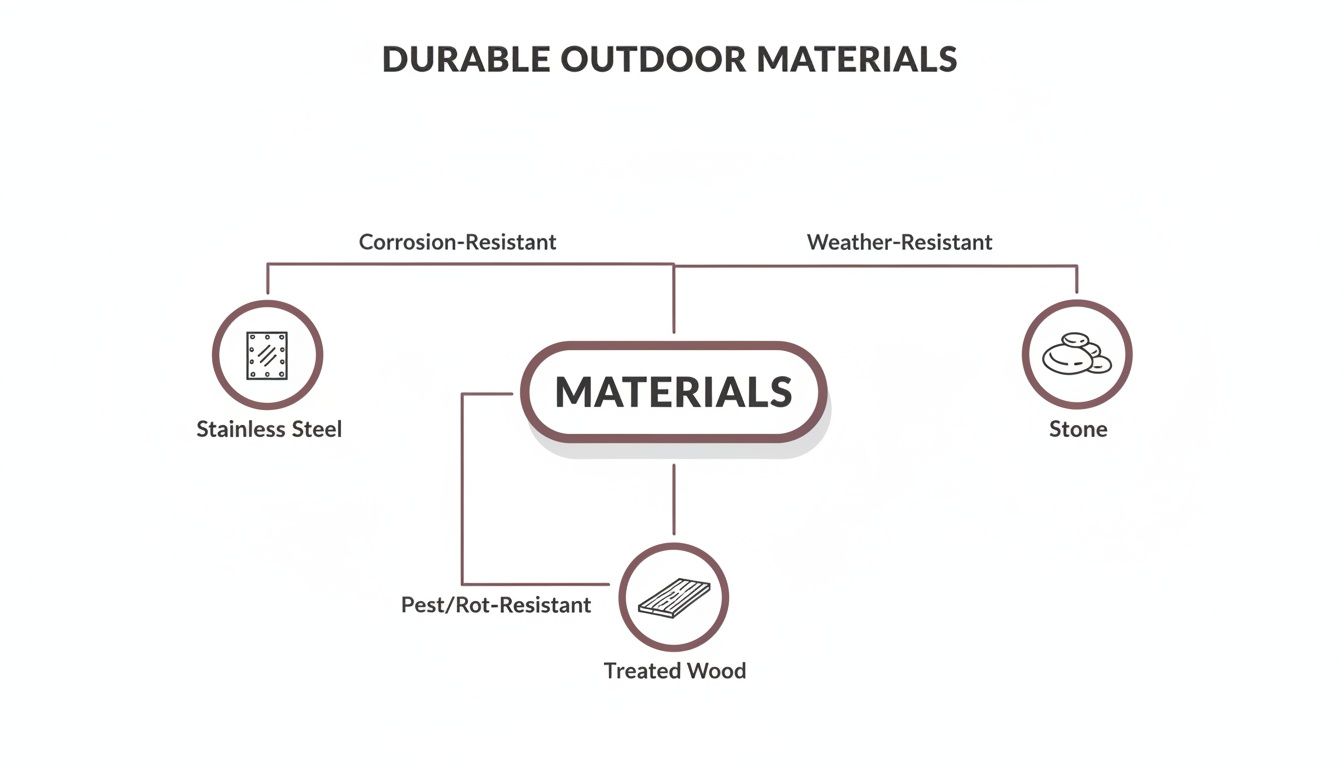
As the image shows, your choice of foundational materials like stainless steel, stone, and treated wood is just as important as the layout for creating a kitchen that can stand up to the elements year after year.
Here’s a quick rundown of what you’ll need to think about for each utility:
- Gas Lines: Your first big decision is whether to run a natural gas line from your house or rely on propane tanks. A permanent gas line gives you a constant, uninterrupted fuel source, but it requires professional installation to be done safely.
- Electrical Circuits: An outdoor kitchen needs several GFCI (Ground Fault Circuit Interrupter) outlets to protect against shock. Plan on dedicated circuits to handle the power demands of a refrigerator, rotisserie motors, lighting, and any countertop appliances you plan to use.
- Plumbing and Drainage: If you're including a sink, you'll need to run both hot and cold water lines. You also need a plan for drainage, which might involve tying into your home's main sewer line or installing a separate dry well, depending on what your local codes permit.
By carefully designing your zones and mapping out your utilities in advance, you’re not just building a beautiful space—you're creating a practical, safe, and incredibly enjoyable outdoor kitchen that will last for years.
Creating Ambiance With Lighting and Fire Features
A truly incredible outdoor kitchen doesn't just clock out when the sun goes down—it comes alive. Your grill and fridge are the workhorses, no doubt. But the elements that create a real vibe—lighting and fire—are what turn a functional cooking space into a place people just don't want to leave. They're the secret to stretching a pleasant afternoon into a memorable evening.
Good lighting design is all about layers, just like you’d find in a well-designed home. You have to start with the practical stuff: task lighting. This means putting bright, focused, waterproof LEDs right where you need them most, like directly over the grill grates or your main prep counter. It lets you see if that steak is perfectly seared without having to blast the whole patio with a single, harsh floodlight.
Setting the Mood With Ambient Light
Once you can see what you're doing, you can start having fun with ambient lighting. This is that soft, warm glow that makes a space feel intimate and welcoming. The trick is to use several smaller, gentler light sources instead of one big, overpowering one.
- Under-Counter Lights: Tucking LED strips under your countertops casts a beautiful, indirect glow. It highlights the architecture of your kitchen and keeps it from looking like a dark, heavy block at night.
- Stair and Pathway Lighting: Low-voltage lights built right into steps or along walkways aren't just for safety. They add a touch of sophistication that makes the whole area feel like a high-end resort.
- String Lights: If you're going for a more casual, festive feel, you can't beat commercial-grade string lights. Strung over a dining table or seating area, they create a magical canopy of light.
The best outdoor lighting is about what you don't see. You want to experience the warm, immersive glow without ever noticing the bulbs or fixtures themselves. It should feel completely natural, like the space is lit from within.
The Irresistible Pull of a Fire Feature
There's something primal and captivating about a live flame. On a cool evening, a fire feature offers more than just warmth; it creates a natural gathering spot, a focal point that encourages everyone to pull their chairs closer, relax, and talk. It’s the social heart of your outdoor space.
You generally have two main options here. First is the grand, integrated outdoor fireplace. This is a major architectural statement, often finished in stone or stucco to match your home. A fireplace anchors the space, creating a cozy, almost room-like atmosphere. It defines a seating area and throws off some serious heat, making it the perfect centerpiece for a true outdoor living room.
Your other choice is a more versatile fire pit. Whether it's custom-built into your patio or a stylish freestanding unit, a fire pit fosters a more communal, campfire-like experience where conversation flows easily from all sides. For those looking for a powerful, ready-to-go centerpiece, a 48-inch complete fire pit can be a fantastic high-performance option.
By thoughtfully layering light and adding the elemental draw of fire, you create an outdoor kitchen that's every bit as enchanting by night as it is functional by day.
Answering Your Outdoor Kitchen Questions
When you start dreaming up an outdoor kitchen, the excitement is quickly followed by a flood of questions. It's a big project, and you want to get it right—from how much to budget, to how to keep it looking great for years, and whether it's truly a good investment. Let's tackle the questions we hear most often.
One of the first things people wonder is if an outdoor kitchen is just a fun luxury or a smart home improvement. The market has a pretty clear answer on that. The global outdoor kitchen market was valued at USD 24.45 billion and is forecast to soar to USD 52.75 billion by 2033. That kind of growth isn't just a fad; it shows that more and more homeowners see these spaces as a core part of a modern home. You can dig into the numbers yourself with these outdoor kitchen market projections.
What’s a Realistic Budget for an Outdoor Kitchen?
This is where things can get tricky, because the price range is huge. Think of it like buying a car—you could get a solid, reliable sedan or a fully loaded luxury SUV. The same principle applies here.
For a great starting point, a basic setup with a quality built-in grill, some functional counter space, and an outdoor fridge will typically land in the $10,000 to $15,000 range. If you want to step it up to a more complete mid-range kitchen—adding a sink, more storage, and better appliances—you should plan on budgeting between $20,000 and $40,000. For the truly high-end projects with premium stone, multiple cooking stations like a pizza oven, custom lighting, and a full-on pergola or pavilion, costs can easily climb past $50,000.
What drives the final price? It really comes down to three things:
- The Appliances: How many cooking and cooling units you want, and their quality.
- The Materials: Your choices for countertops, cabinets, and finishes.
- The Labor: How complex it is to run the gas, electrical, and plumbing lines.
How Do I Keep My Outdoor Kitchen Looking New?
Good maintenance is what separates an outdoor kitchen that looks great after one season from one that looks great after twenty. Every material has its own needs, so it’s smart to understand the upkeep before you commit.
The secret to long-term durability isn't finding materials that are "maintenance-free." It's about choosing a maintenance schedule you can actually stick to. Consistency is everything.
Stainless steel appliances and cabinets are pretty easy; a quick wipe with a microfiber cloth and gentle cleaner does the trick most of the time. To really make them gleam and fight off fingerprints, a dedicated stainless steel polish a few times a year works wonders. For granite or other natural stone countertops, you absolutely need to seal them (usually once a year) to keep spills from becoming permanent stains. If you have teak accents, you can clean and oil them each season to maintain that deep, honey-brown color, or just let them be and they'll slowly weather to a beautiful, silvery gray. This kind of regular care is one of the most important outdoor kitchen essentials for making your investment last.
At URBANMANCAVES, we don’t just sell equipment; we provide the heirloom-quality gear and expert guidance you need to build a true outdoor sanctuary. Explore our curated collections and start planning your perfect space today at https://www.urbanmancaves.com.


