

Let's be honest, a custom fire pit isn't just about warmth—it’s the magnetic heart of your outdoor space. It’s a move away from those generic, store-bought fire bowls and toward a personal fire feature that truly defines the area.
Whether you're picturing a rustic, crackling wood-burning pit for that classic campfire feel or a sleek gas fire table that springs to life with the push of a button, the real magic is in tailoring it to your lifestyle. These custom fire pit ideas are all about crafting a centerpiece that’s a direct reflection of your personal style and completely elevates how you entertain outdoors.
Crafting Your Ultimate Backyard Centerpiece
Think of a custom fire pit as the anchor for your outdoor living room. It’s the natural spot where friends gather, conversations flow, and families make memories roasting marshmallows under the stars. Unlike that standard metal bowl you can grab at any big-box store, a custom design is woven right into the fabric of your backyard’s aesthetic, using materials that perfectly complement your home and patio.
The whole approach is about creating a feature that feels both beautiful and incredibly functional. We're building something that looks intentional and permanent, like a true extension of your home. You get to call the shots on every single detail, from the exact size and shape to the fuel source and the ignition system.
Why Go Custom Instead of Prefabricated?
Choosing to build a custom fire pit gives you a massive leg up over the off-the-shelf alternatives. Let's face it, most prefabricated models come with some serious drawbacks that can cramp your style and performance.
- Design Limitations: You're stuck with standardized looks and a pretty narrow selection of materials, which means sacrificing that personal touch.
- Compromised Size and Fit: Their fixed dimensions often just don't jive with your available space or the seating arrangement you have in mind.
- Fixed Functionality: You get what you get. There's no choice in BTU output or ignition type, leaving you with a one-size-fits-all burner system.
- Questionable Durability: The construction quality and materials used in mass-produced pits rarely come close to what you get with a professionally crafted feature.
The trend toward personalized outdoor spaces is absolutely exploding. In fact, the global fire pits market is projected to hit USD 14.06 billion by 2034, a surge driven by our collective desire for unique, year-round gathering spots. You can see more on this market growth and its connection to outdoor living trends over at PolarisMarketResearch.com.
A well-designed custom fire pit doesn't just improve your lifestyle—it becomes a valuable, lasting investment in your property. To get more inspiration for elevating your entire backyard, check out our guide on unique patio design ideas.
Planning Your Location and Layout
Long before you even think about striking the first match, the real work of a custom fire pit begins. The success of your entire project hinges on smart planning, and that starts with finding the perfect spot. It's about more than just aesthetics; it's a careful balance of safety, function, and how the fire pit will integrate into the natural flow of your backyard.
First thing’s first: step outside and get a feel for the elements. Where does the wind typically come from? This is a small detail that makes a massive difference. You don't want to spend your evenings playing musical chairs to dodge smoke blowing back into your seating area or, even worse, into your house. A little observation upfront saves a lot of frustration later.
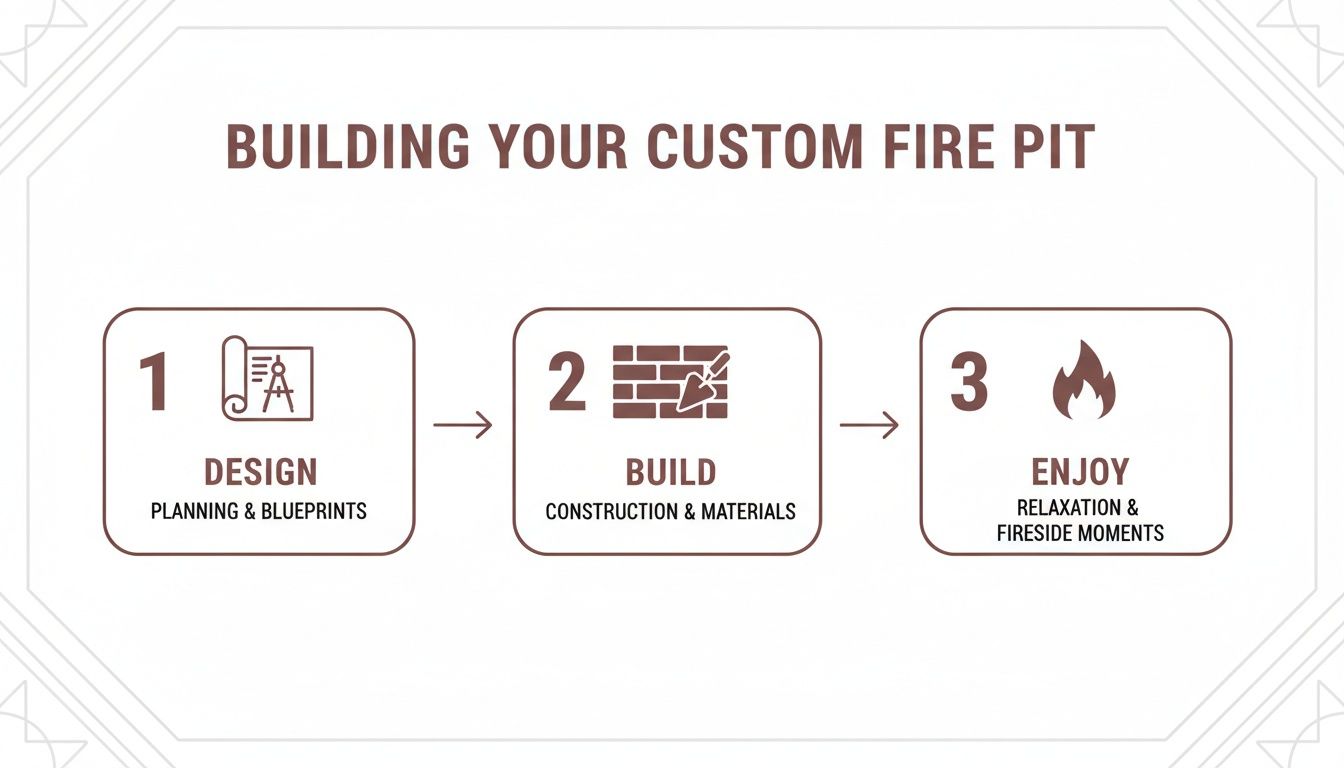
This process really boils down to those three phases: a solid design, quality construction, and then years of enjoyment. Nail the first two, and the third one is guaranteed.
Navigating Safety and Local Codes
Let’s be clear: safety isn't optional. It’s governed by strict regulations, and ignorance is not an excuse. Most towns and cities have rules mandating a minimum distance from any combustible structure—we’re talking your house, deck, shed, fences, and even trees with low-hanging branches. This buffer zone is usually between 10 to 25 feet, but you absolutely must confirm the exact requirements with your local fire marshal or building department.
Skipping this step is one of the most common and costly mistakes I see. You have to check local codes before you get too attached to a design or location.
- Gas Lines: If you're dreaming of a natural gas fire pit, expect to pull a permit. This work involves running a dedicated gas line, which requires a licensed professional.
- Wood-Burning Rules: Many areas, especially those prone to wildfires, have specific rules for wood-burning pits. These can dictate everything from maximum size to mandatory spark screens.
- HOA Approval: And don't forget the Homeowners' Association. Their rules can be even more restrictive than the city's, covering everything about outdoor structures and open flames.
A bit of due diligence upfront will save you from the nightmare of fines, being forced to tear out your brand-new fire pit, or having an insurance claim denied after an accident.
Establishing a Solid Foundation
Once you've scouted a safe and approved spot, it's time to prep the site. A custom fire pit, particularly one built with heavy materials like stone or concrete, needs an absolutely solid base. Without it, you're looking at shifting, cracking, and settling down the road.
A level, non-combustible surface is non-negotiable. Building directly on grass is a major fire hazard, and putting a heavy masonry pit on a standard wooden deck is just asking for trouble. Your best bets for a proper foundation are:
- Compacted Gravel: A deep base of several inches of compacted gravel offers fantastic stability and drainage.
- Poured Concrete Slab: For heavy-duty masonry fire pits, a reinforced concrete pad is the gold standard. It's the ultimate in durability.
- Paver Patio: Integrating the fire pit into a new or existing paver patio is a great approach, as the pavers themselves create that necessary non-combustible surface.
For a more detailed walkthrough of the hands-on building process, our guide on how to build a fire pit breaks it down further.
Finally, think about how the layout serves the overall experience. Your fire pit should be a magnet for people, a natural focal point that encourages conversation. Consider its relationship to your outdoor kitchen, pool, or patio furniture. A well-designed layout creates an intuitive flow, making the fire pit feel like the true heart of your outdoor living space, not just a random add-on.
2. Choosing Your Fuel Source: Wood, Gas, or Hybrid?
The decision on how you'll fuel your fire pit is one of the most critical you'll make. It fundamentally shapes the entire experience—from the ambiance and maintenance to the very moments you'll create around it.
Are you looking for that rustic, hands-on feel of a traditional campfire? Or do you lean toward the clean, effortless convenience of a modern appliance? Let’s dig into the options to find the perfect fit for your lifestyle and backyard vision.
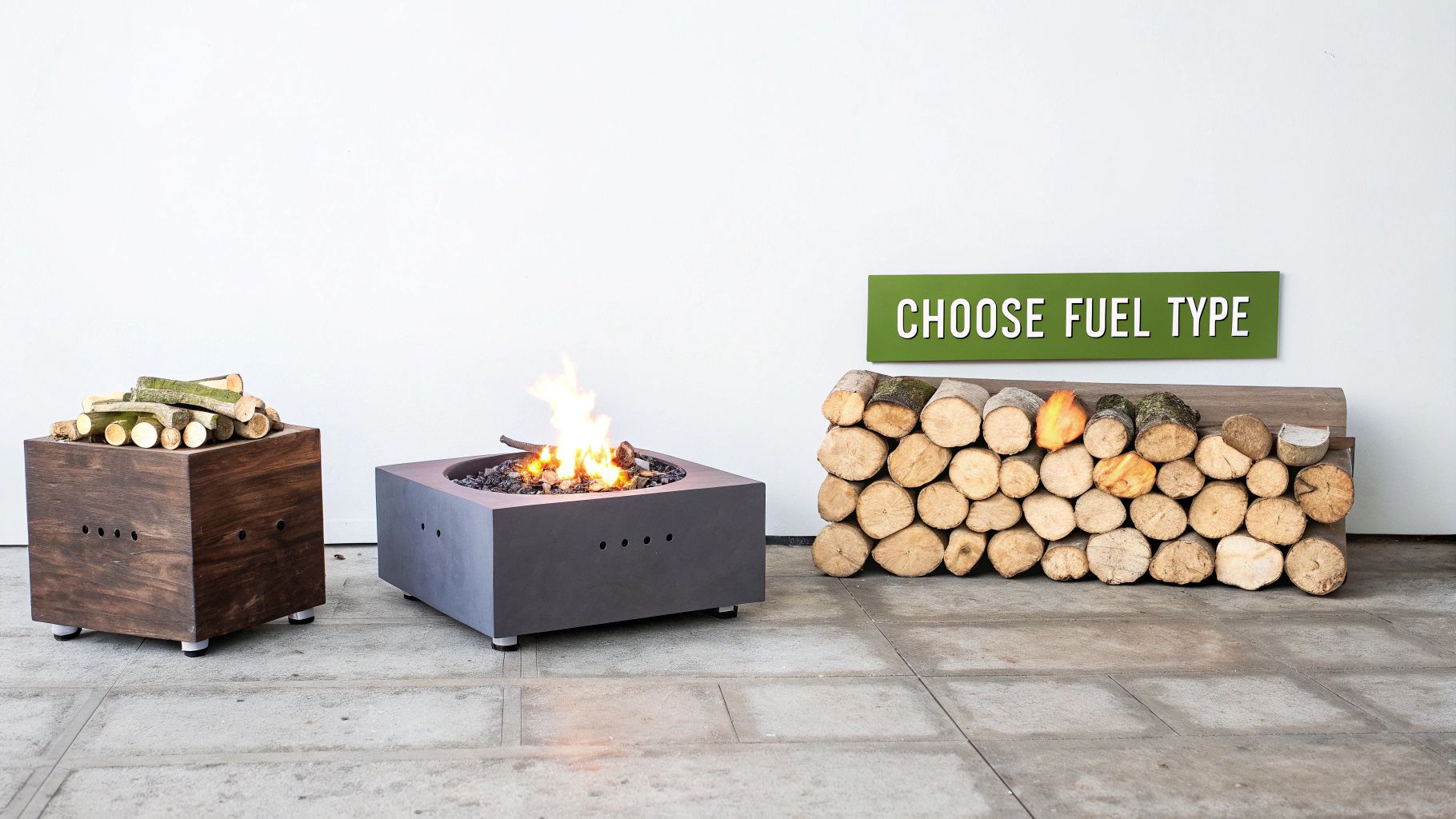
The Timeless Allure of a Wood-Burning Fire
For many people, a real fire is a wood fire. There's just something deeply satisfying about the snap and crackle of logs, the rich, smoky aroma, and the tall, dancing flames. It’s an authentic, multi-sensory experience that connects us to the outdoors in a way nothing else can.
A wood-burning pit is also unmatched for generating intense, radiant heat, making it perfect for keeping a larger group warm on a chilly Texas evening. And let's not forget, it allows for classic campfire fun like roasting marshmallows and hot dogs—a non-negotiable for many families.
Of course, this classic experience comes with a hands-on commitment. You’ll need a dedicated, dry space to store firewood, and getting a fire going takes a bit of skill and patience. The biggest drawback for many is the smoke, which can be a real nuisance depending on the wind. Then there's the unavoidable cleanup of ash and soot after every use. You also have to stay mindful of local burn bans, which are increasingly common.
The Clean Convenience of a Gas Fire Pit
If you want the beauty of a fire without the work, a gas fire pit is your answer. With the simple flip of a switch or the turn of a key, you get instant, consistent flames. No wood to haul, no smoke to dodge, and zero messy ash to clean. This is pure ambiance, on demand.
Gas fire pits also offer incredible control. You can adjust the flame height to match the mood, from a low flicker for quiet conversation to a robust roar for a lively gathering. This level of control makes them an extremely popular choice for integrating into outdoor kitchens or poolside patios where convenience is king.
You’ll have two primary gas sources to consider:
- Natural Gas: This is the ultimate "set-it-and-forget-it" option. By running a dedicated gas line from your home’s main supply, you have an endless source of fuel. The upfront installation cost is higher, but the long-term running costs are significantly lower than propane.
- Propane: This option offers more flexibility in placement since it relies on a refillable tank, which can often be hidden right inside the fire pit's structure. It's a fantastic solution for spots where running a natural gas line is impractical or too expensive. The only trade-off is needing to monitor your fuel levels and swap out tanks.
Deciding between the two really boils down to your priorities. To help you weigh the pros and cons, here’s a quick breakdown.
Wood vs Gas Fire Pit Comparison
| Feature | Wood-Burning Fire Pit | Gas-Powered Fire Pit (Propane/Natural Gas) |
|---|---|---|
| Ambiance | Authentic crackle, smoky aroma, tall dancing flames | Consistent, controlled flames; no smoke or sparks |
| Heat Output | High, radiant heat. Excellent for warmth. | Moderate, consistent heat. Good for ambiance. |
| Convenience | Manual start, requires tending and cleanup | Instant on/off with a switch or key; no cleanup |
| Maintenance | Regular ash removal, chimney/pit cleaning | Minimal; occasional burner check and cleaning |
| Fuel Source | Requires dry storage for firewood | Connected to home's natural gas line or uses propane tanks |
| Safety | Emits sparks and embers; requires constant supervision | Contained flame, no sparks; often has auto shut-off |
| Cost (Ongoing) | Cost of firewood, kindling, and starters | Cost of natural gas or propane refills |
| Best For... | Traditional campfire experience, cooking, maximum warmth | Hassle-free entertainment, modern designs, ease of use |
Ultimately, your choice depends on whether you value the raw, authentic experience of wood or the controlled, clean elegance of gas.
Hybrid Systems and Alternative Fuels
Can't decide? For those who want the best of both worlds, innovative hybrid systems are hitting the market. These designs let you enjoy a real wood fire but feature a gas-powered log starter to get things going quickly. It completely eliminates the need for kindling and lighter fluid—a fantastic blend of classic ambiance and modern convenience.
Another option gaining traction is bio-ethanol. These fire pits are self-contained, ventless, and burn cleanly with zero smoke or ash. While they don't produce the same intense heat as wood or gas, they offer incredible design flexibility and are perfect for creating a sophisticated, modern focal point.
No matter which fuel you choose, selecting the right internal components is just as important. High-quality parts, like a properly sized 36" fire pit burner, are essential to ensure your system performs flawlessly for years to come.
Selecting High-End Materials and Components
The real soul of a custom fire pit isn't just its shape or where you put it—it's in the materials you can touch and the hard-working components hidden inside. This is the difference between a simple backyard fire ring and a true luxury centerpiece. Getting the combination of surround materials and internal hardware right is what ensures your fire pit not only looks incredible but works reliably for years.
The most visible part, the exterior structure or "surround," sets the aesthetic tone for the entire space. It has to be tough enough to handle intense heat and whatever the weather throws at it, all while matching your home's style. This is where your custom vision really starts to take shape.
Choosing the Perfect Surround Material
The material you choose for your fire pit’s exterior is a huge decision. It dictates the look, the feel, and how much work it'll be to maintain down the road. Each option has its own personality.
- Natural Stacked Stone: For that timeless, rustic charm that feels like it grew right out of the landscape, you can't beat natural stone. I've seen incredible results with limestone and flagstone, often pulled from local Texas quarries, that add rich texture and blend perfectly into a garden or patio. It creates an organic, rugged feature that feels like it’s always been part of the property.
- Polished Concrete: If you're chasing a more modern, minimalist vibe, polished concrete is a fantastic choice. It delivers clean lines, a smooth finish, and a neutral palette you can tint to match anything. Concrete is also incredibly versatile, letting you create bold rectangular tables or sleek, curved bowls that feel both sophisticated and substantial.
- Corten Steel: Known for its signature weathered, rust-like finish, Corten steel gives you an industrial-chic look that is as much art as it is architecture. It develops a stable, protective patina over time that stops corrosion in its tracks, so it genuinely gets better with age. It’s a great way to add a sculptural element to your outdoor design.
Your surround material does more than just look good; it acts as a critical heat shield and structural support for the entire fire pit. Investing in quality masonry and materials is a direct investment in the safety and longevity of your feature.
The Heart of the Flame: Burners and Pans
While the surround gets all the visual credit, the burner and pan are the engine of any gas fire pit. These components are what shape the flame, ensure gas is distributed evenly, and provide a safe base for your fire media like glass or lava rock. Cutting corners here is a classic mistake I see all the time, and it always leads to poor performance and early failure.
A high-quality stainless steel burner pan is non-negotiable. It creates a stable, recessed platform for your burner, which keeps water from pooling around the gas lines and ensures everything drains properly. This one component can dramatically extend the life of your entire system.
Burners themselves come in all sorts of shapes—round, linear, star-shaped—each creating a different flame pattern. If you're designing a long, dramatic fire table, a linear trough burner is the only way to go. For a classic round pit, a star or penta-burner gives you a much fuller, more realistic-looking fire. Always, always insist on 304-grade stainless steel for the best corrosion resistance.
Upgrading Your Ignition System
How you light your fire pit makes a huge difference in convenience and safety. While you can go with a basic setup, upgrading to a better system is what elevates the experience from a chore to effortless luxury.
Here are the common options, from simple to sophisticated:
- Match Lit Ignition (MLI): This is the most basic system out there. You turn a key valve to let the gas flow and use a long lighter to get it going. It's dead simple and bulletproof because there are no electronic parts to break.
- Push-Button Ignition: Sometimes called a "spark ignition," this is a nice step up. A battery-powered igniter creates a spark at the push of a button, lighting the gas. It’s definitely more convenient than using a match, but you still have to be right there at the pit.
- Electronic Ignition (EI): This is the gold standard for high-end custom fire pits, period. These systems can be wired to a wall switch, controlled with a handheld remote, or even tied into your smart home system. They also have critical safety features, like a flame sensor that automatically cuts the gas if the flame ever blows out.
An electronic system truly turns your fire pit into an appliance. Being able to ignite it from inside the house or with the tap of a button on a remote is the kind of detail that defines a luxury outdoor living space. For a project of any significant scale, it’s smart to look at a complete stainless steel drop-in fire pit pan with an electronic ignition system. This ensures all the parts were designed to work together perfectly, which simplifies the install and guarantees performance.
Inspiring Custom Fire Pit Design Concepts
Ready to see what’s possible? Once you’ve sorted out the materials and fuel source, the real fun begins: the design. A truly custom fire pit is more than just a source of heat; it's a piece of architecture that becomes the soul of your outdoor space.
These concepts are designed to anchor a modern outdoor living area, with each one bringing a completely different vibe and function to the table.
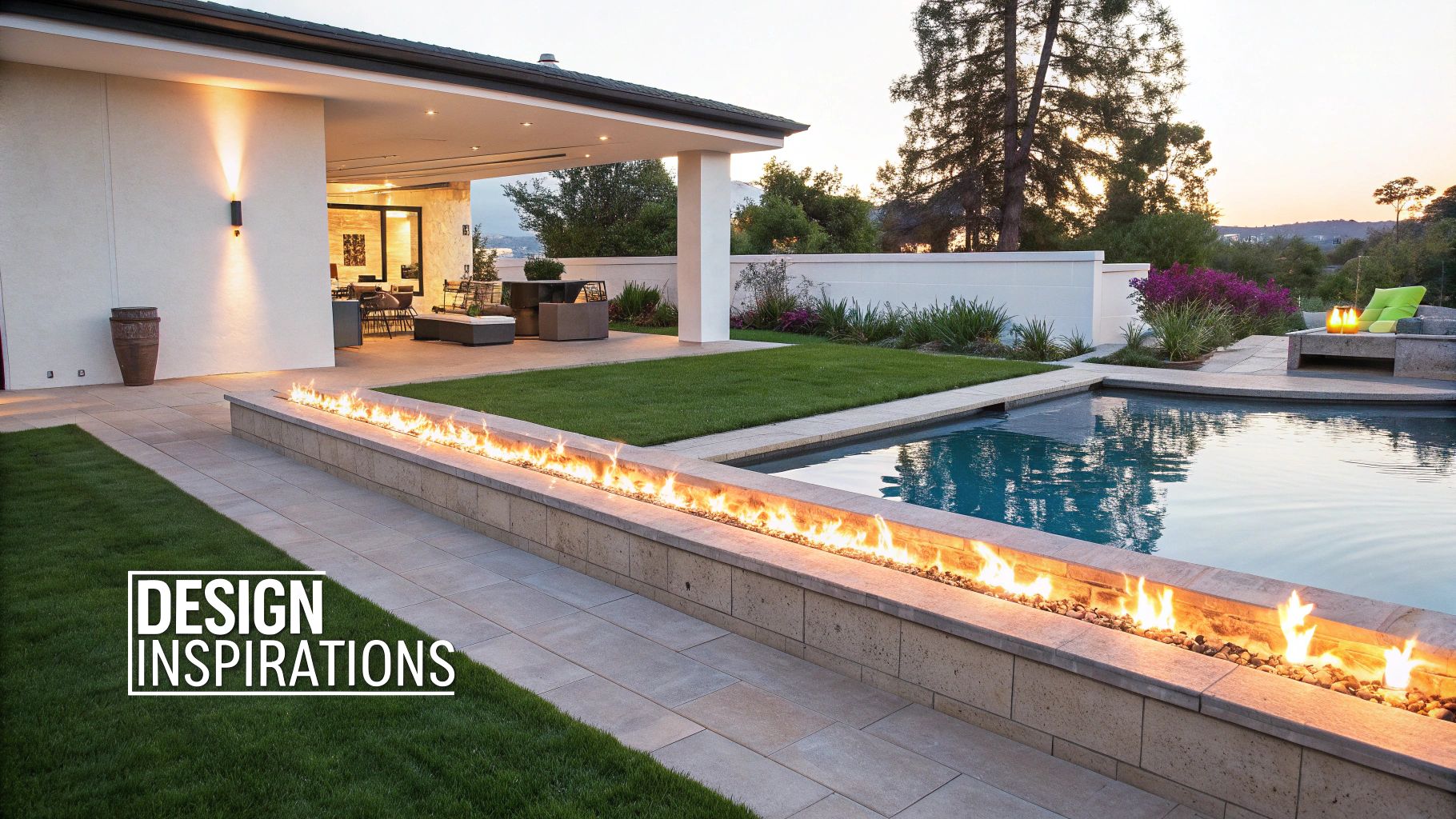
Let's dig into a few high-end ideas you can adapt to turn your backyard into a genuine retreat. From intimate nooks to show-stopping centerpieces, the right design will completely change how you use your property.
The Intimate Sunken Conversation Pit
One of my favorite and most compelling designs is the sunken conversation pit. It’s a classic for a reason. Here, the seating is built right into the structure, creating a cozy, self-contained area with the fire at its heart. Think of it as an outdoor den, purpose-built for connection.
Dropping the seating area below the main patio level instantly creates a distinct "room" in your backyard. It’s a smart design that naturally buffers against wind and traps warmth, making it incredibly comfortable on cooler nights. This is an intentional space that encourages people to put their phones down and settle in for hours of real face-to-face conversation.
A sunken pit feels permanent and grounded. It establishes the fire as the undeniable main event, creating a private zone for relaxation that feels completely separate from the hustle and bustle of the rest of the yard.
The Multifunctional Fire Table
Blurring the line between furniture and fire feature, the custom fire table is a workhorse for anyone who loves to entertain. These designs brilliantly merge the ambiance of a fire with the utility of a high-end table, giving you a perfect spot for drinks and appetizers.
Picture a sleek, coffee-table-height fire feature at the center of a plush outdoor sofa set. The flames dance at eye level, setting a relaxed, sophisticated mood. Or, you could opt for a dining-height fire table to keep dinner parties going long after the sun goes down, offering a far more elegant and engaging source of warmth than those clunky patio heaters.
This approach is incredibly popular because it’s both gorgeous and practical. It anchors your entire seating arrangement while serving a real purpose, making it a savvy investment for homeowners looking to get the most out of their patio.
Dramatic Linear Fire Features
For a clean, contemporary statement, absolutely nothing beats a linear fire feature. These long, narrow fire pits create a stunning ribbon of flame that can define the edge of a patio, trace the length of a swimming pool, or act as a striking visual divider between different outdoor "rooms."
A linear design immediately draws the eye and injects a sense of sophisticated grandeur. It's a powerful architectural move that feels clean and modern. When you place one alongside a pool, the flickering flames reflecting on the water's surface create a breathtaking effect that just screams luxury.
These features are also incredibly versatile—we can design them to almost any length, scaling them perfectly to your space. A well-placed linear fire pit can make a smaller patio feel much larger or add a spectacular focal point to an expansive backyard.
Combining Fire and Water Elements
The ultimate power move in custom outdoor design is pairing fire and water. This elemental combination creates a mesmerizing and dynamic environment that you can see, hear, and feel. The contrast between the flickering heat of the flame and the cool, calming movement of water is just captivating.
There are a few ways we see this come to life:
- Integrated Features: A fire pit built right onto the edge of a pool or spa, making the flames appear to float on the water.
- Scupper Bowls: Fire bowls that also feature a spout, spilling a gentle stream of water into the pool below.
- Parallel Design: A long linear fire pit running alongside a sleek, modern water feature or a dark reflecting pool.
This trend is part of a massive shift in how people view their properties. The global outdoor fire pit market has exploded to USD 196.8 million, with North America leading the way. This growth is all about the desire to create exceptional outdoor living experiences, and it pays off—custom features have been shown to boost property values by up to 12%. You can dig into more of the data on this trend over at CognitiveMarketResearch.com.
Each of these concepts offers more than just warmth; they create an entire experience. Whether you're drawn to the cozy enclosure of a sunken pit or the sleek drama of a linear feature, a thoughtful design will transform your backyard into an extraordinary escape. For some great product inspiration, take a look at a design like this Cirvalo round fire pit.
Answering Your Custom Fire Pit Questions
As you get closer to breaking ground, the big picture dreams start to meet the real-world details. This is where the practical questions pop up—the ones that make the difference between a project that just looks good and one that's built right, safe, and ready for years of enjoyment.
Let's walk through some of the most common questions we get from homeowners. Getting these details sorted out now means you can move forward with total confidence.
How Much Does a Custom-Built Fire Pit Cost?
This is always the first question, and for good reason. The truth is, the cost can vary wildly depending on what you're imagining.
A simple, DIY-style fire ring made from basic pavers might only set you back a few hundred dollars. It's a fantastic, budget-friendly way to get started. But when you step up to a professionally installed, high-end design, the investment scales up.
A custom natural gas fire pit, maybe wrapped in a beautiful stone veneer with a slick remote-controlled ignition system and built-in seating, could easily land in the $5,000 to $15,000 range, and sometimes even higher.
What drives that price tag? A few key things:
- The Surround: Locally sourced stacked stone or custom-poured concrete will naturally cost more than standard paver blocks.
- The Guts: The quality of the internal components—the burner, pan, and ignition system—is a huge factor. A premium electronic ignition adds convenience and can tack on a few thousand dollars to the final bill.
- Labor & Utilities: Don't forget the cost of skilled masons and licensed professionals to run gas lines or any electrical wiring. This is a significant part of the budget.
Do I Need a Permit to Build a Fire Pit?
More than likely, yes—especially if you're installing a gas fire pit. This is one step you absolutely cannot skip. Every town and county has its own specific rules about open flames, and they can differ dramatically from one zip code to the next.
For wood-burners, many places have strict rules about their size and how far they need to be from anything combustible, like your house, a deck, or even the fence line. For any fire pit that’s being hooked up to your home's natural gas line, a permit is almost always required. The work has to be done by a licensed pro to make sure it’s up to code.
Before you buy a single block or burner, your first call should be to your local building department or fire marshal. A quick chat with them upfront can save you from a world of headaches, potential fines, or the nightmare of having to tear down a finished project that isn't compliant.
What Is the Safest Base for a Fire Pit?
Safety starts from the ground up, and that means a non-combustible, perfectly level base is non-negotiable. Building a fire pit directly on a wood deck or even just dry grass is a serious fire hazard. The foundation has to be stable and completely fireproof.
Your best bets for a safe base include:
- Gravel or crushed stone
- Sand
- A poured concrete slab
- A stone or paver patio
These materials create a solid barrier, preventing any stray embers or intense heat from causing trouble. If you're building a heavy masonry fire pit, a compacted gravel foundation or a concrete slab is essential. This prevents the whole structure from shifting, settling, or cracking over time, keeping it solid and safe for the long haul.
How Should I Maintain a Custom Gas Fire Pit?
One of the best things about a gas fire pit is how little upkeep it needs. But low-maintenance doesn't mean no-maintenance. A few simple habits will keep it running perfectly and looking sharp.
Every so often, use a soft brush to clear leaves, twigs, or other debris from the burner ports. This is a simple trick to ensure you always get that full, even flame pattern. You can also give your fire glass or lava rocks a quick rinse with water now and then to wash away dust and keep them sparkling.
But the single most important thing you can do is invest in a high-quality, waterproof cover. Keeping the burner and ignition components protected from rain, dirt, and critters when it’s not in use is the key to longevity. Finally, it's always a smart move to have the gas connections checked for leaks once a year. It’s a quick inspection that provides a lot of peace of mind.
Ready to bring your own custom fire pit ideas to life? At UrbanManCaves.com, we offer a curated selection of premium fire pit components, from high-performance burners and ignition systems to complete drop-in kits that make building your dream fire feature easier than ever. Explore our collection and start designing the ultimate backyard escape today at https://www.urbanmancaves.com.


