

When we talk about luxury outdoor furniture, we're not just talking about a higher price tag. We're talking about a deliberate fusion of superior materials, impeccable construction, and timeless design built to endure, year after year.
Beyond the Price Tag: What Truly Defines Luxury Outdoor Furniture
Think about the difference between a finely crafted Swiss watch and a cheap plastic one. They both tell time, but only one is engineered with precision, built from premium materials, and designed to become a family heirloom. The same logic applies here. This is a conscious step away from the disposable, "buy-it-and-replace-it" cycle that dominates the mass market.
True luxury isn't about chasing fleeting trends. It's about creating an outdoor space that feels like a seamless extension of your home—a place for real connection, deep relaxation, and lasting memories. That vision requires furniture that not only looks stunning on day one but performs just as beautifully through years of scorching sun, driving rain, and freezing winters.
The Three Pillars of Lasting Quality
To really grasp what separates a luxury piece from the rest, you have to look past the surface. It all comes down to three foundational pillars that work in harmony to deliver incredible value and an unmatched ownership experience.
-
Superior Materials: This is the starting point. We’re talking about materials like Grade-A teak, which is packed with natural oils that make it inherently resistant to rot and insects. Or heavy-gauge, powder-coated aluminum and marine-grade stainless steel, which provide incredible, rustproof strength without the back-breaking weight of cheaper metals.
-
Impeccable Construction: The world's best materials are meaningless if they aren't assembled with skill. This is where you see details like fully welded frames—creating a single, rigid structure—instead of bolt-together kits that inevitably wiggle and loosen. It's about joinery that stays true and hardware that shrugs off corrosion.
-
Timeless and Functional Design: Luxury design is where form and function meet. The pieces are ergonomically shaped for genuine comfort and thoughtfully scaled for how people actually live. The look is sophisticated but built to last, ensuring your investment won’t feel dated in a few seasons.
The real test of luxury isn't how a piece of furniture looks in a pristine showroom. It's how it performs, feels, and ages in your own backyard. It’s the peace of mind that comes from owning something truly built to last.
An Investment in Your Lifestyle
At the end of the day, choosing high-end outdoor furniture is about more than just filling a patio. It’s a serious investment in your home's value and, just as importantly, in your quality of life. Understanding what really matters in materials and build quality helps you make a smart decision that will pay you back for years. For instance, knowing why Grade-A teak is worth the investment can completely reframe how you look at your options.
This guide is here to walk you through everything you need to know, from decoding material specs to laying out a stunning and functional outdoor retreat. Let's get past the price and dive into what lasting quality is all about.
Understanding the Materials Behind the Price Tag
When you look at a piece of luxury outdoor furniture, you're not just seeing a beautiful design. You're seeing a collection of the world's most resilient materials, carefully chosen to stand up to anything nature throws at them. That price tag? It's a direct reflection of a conscious decision to use elements engineered to defy the elements, creating the fundamental difference between furniture that lasts a season and furniture that becomes a family heirloom.
It's a lot like building a high-performance car. You wouldn't use standard parts for a vehicle designed to win races; every component is selected for its ability to perform under extreme stress. The same thinking applies to premium outdoor furniture built to withstand relentless sun, torrential rain, and wild temperature swings without breaking a sweat.
The Gold Standard of Natural Wood
At the very top of the list is Grade-A teak. This isn't your average backyard decking wood. It’s the heartwood from mature teak trees, a dense, heavy material packed with a high concentration of natural oils and silica. This unique blend acts as a built-in, self-renewing shield against water, rot, and destructive insects like termites.
Unlike pressure-treated pine or cedar that demand constant sealing to survive, Grade-A teak protects itself from the inside out. There's a reason it’s been the top choice for shipbuilding for centuries—it was born to be outdoors.
But not all teak is the same. The grade makes all the difference:
- Grade-A Teak: Harvested from the very center of trees over 30 years old, it has a gorgeous, uniform golden-honey color and the highest oil content for maximum durability.
- Grade-B Teak: Cut from the outer heartwood, this grade has a lighter color, some uneven grain, and far less of those protective natural oils.
- Grade-C Teak: Taken from the soft, outer sapwood, this grade is blotchy, has very little oil, and simply won't last long outdoors.
The Unyielding Strength of Modern Metals
While teak offers timeless, organic beauty, premium metals deliver sleek, modern resilience. Here again, the specific alloys and finishes used are what separate a high-end piece from a rust-stained patio disaster waiting to happen.
Heavy-gauge aluminum is a modern workhorse. It’s incredibly strong yet surprisingly lightweight, making it easy to rearrange your layout on a whim. Most importantly, it's naturally rustproof. Top manufacturers then add a powder-coated finish—a process where dry powder is electrostatically applied and baked on. This creates a thick, uniform coating that’s worlds better than standard liquid paint, which can easily chip, peel, and expose the metal underneath.
This diagram shows how these three elements—materials, craftsmanship, and design—come together to create true luxury.
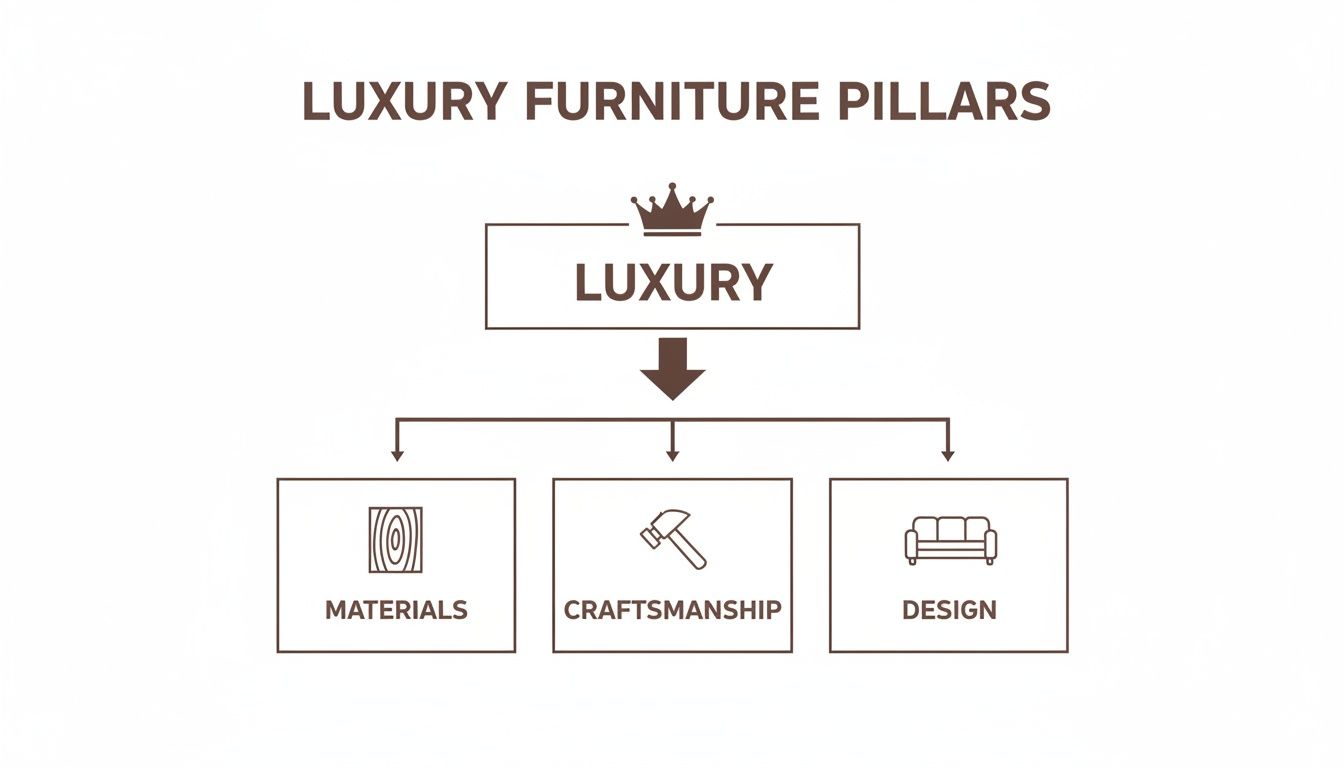
As the visual makes clear, superior materials are the foundation of any investment-grade furniture.
For settings that demand the absolute toughest performance—especially coastal areas with corrosive salt in the air—marine-grade 316 stainless steel is the undisputed champion. This specific alloy contains molybdenum, an element that gives it superior resistance to chlorides and corrosion. The same principles of metal durability are covered in our guide comparing stainless steel vs cast iron for grills, which is a great read if you want to dive deeper.
A quick look at the top-tier materials can help you decide what’s right for your space.
Comparing Premium Outdoor Furniture Materials
| Material | Key Benefits | Best For | Maintenance Level |
|---|---|---|---|
| Grade-A Teak | Unmatched natural resistance to rot & pests, weathers to a beautiful silver patina. | Classic, timeless aesthetics; spaces that blend with nature. | Low (can be left to age) to Medium (if maintaining original color). |
| Powder-Coated Aluminum | Lightweight, rustproof, and available in endless colors and finishes. | Modern, contemporary designs; areas where furniture is frequently moved. | Very Low. Just needs occasional cleaning. |
| 316 Stainless Steel | Maximum strength and corrosion resistance, especially against salt. | Coastal environments, poolside, and high-end modern outdoor kitchens. | Low. Requires periodic cleaning to maintain its luster. |
Ultimately, the right material balances your aesthetic vision with the practical demands of your local climate.
High-Performance Fabrics That Defy the Sun
Finally, what good is a bulletproof frame if the cushions fade and fall apart after one summer? This is where high-performance fabrics like Sunbrella completely changed the game. The secret is in how the fibers are made: they are solution-dyed.
Instead of just dipping a finished yarn in dye, the solution-dyeing process infuses color pigment straight into the fiber’s core while it’s still in a liquid state. The color becomes an inseparable part of the fiber itself.
Because the color goes all the way through, it's physically impossible for it to fade from sun exposure or wash out. This process also makes the fabric inherently resistant to mildew, stains, and water. It’s the difference between a painted surface that can chip away and solid-colored material that looks vibrant for years.
Once you know what to look for in these core components, you can read any product description and instantly spot the markers of true, lasting quality.
How to Spot Superior Craftsmanship
Choosing premium materials is like picking the best ingredients for a gourmet meal—it's the critical first step. But the real magic, the thing that separates a good meal from an unforgettable one, is how those ingredients are put together. For outdoor furniture, that magic is craftsmanship. It’s what transforms raw teak and steel into a piece that can stand up to decades of sun and rain, turning a simple chair into a family heirloom.
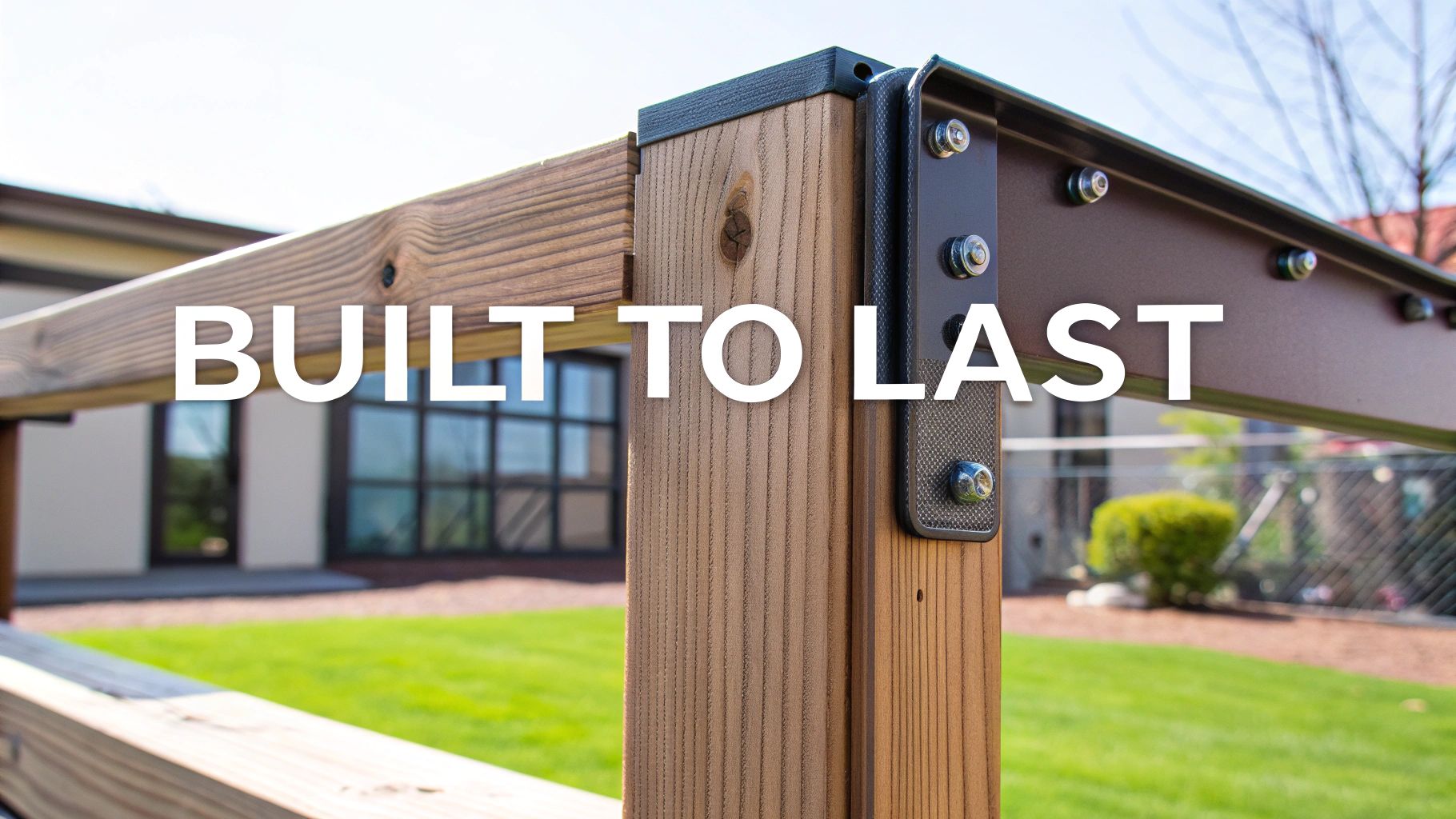
This is where you learn to see furniture through the eyes of an artisan. It’s about spotting the small, crucial details that separate a piece built for a lifetime from one designed to last a season. Once you know what to look for, you can tell the difference instantly.
The Art of Strong Connections
How a piece of furniture is held together is probably the single best indicator of how long it will last. Most mass-market stuff relies on simple screws and bolts. It’s a fast and cheap assembly method, but those connections will inevitably loosen, leading to wobbly legs and shaky frames. True craftsmanship, on the other hand, leans on time-honored joinery techniques that create unbreakable bonds.
Think of it like an intricate puzzle. Mortise-and-tenon joinery, a classic woodworking skill, involves fitting a precisely cut tenon (a projecting piece of wood) into a matching mortise (a hole or slot). This interlocking connection spreads stress over a huge surface area, creating a joint that's often stronger than the wood itself.
That’s a world away from furniture held together by a few screws, where all the force is concentrated on tiny, vulnerable points. It's only a matter of time before those fail.
Superior joinery isn't just a construction detail; it's a philosophy. It signals a commitment to creating a piece that holds its form and function for generations, rather than just surviving until the next catalog arrives.
Welded Frames vs Bolt-Together Kits
This same thinking applies directly to metal furniture. You’ve probably seen the less expensive aluminum or steel sets that come in a box, waiting for you to piece them together with an Allen wrench. While they’re easy to ship, every one of those bolt-together joints is a weak point waiting to loosen, wobble, or corrode.
By contrast, high-end luxury outdoor furniture almost always features fully welded frames. Every joint is permanently fused together, creating a single, solid unit.
- Superior Strength: A welded frame behaves like one solid piece of metal. There are no joints to work loose or fail over time.
- Enhanced Durability: Welding completely seals the joints, which stops moisture from creeping into hollow frame tubes and causing rust from the inside out.
- Clean Aesthetics: The smooth, uninterrupted lines of a welded frame just look better. It’s a cleaner, more refined silhouette.
It's the difference between a unibody car frame, designed for maximum rigidity and safety, and a go-kart bolted together in a garage. One is engineered for performance and longevity; the other is not.
The Details That Define Quality
Beyond the big construction methods, a few smaller details really scream quality. These are the finishing touches that show a manufacturer didn’t cut corners anywhere.
Keep an eye out for these markers:
- High-Density Cushion Foam: Always ask about the foam density in the cushions. Low-density foam feels nice at first but quickly flattens into a sad, saggy pancake. High-density foam, however, provides lasting support and keeps its shape for years.
- Stainless Steel Hardware: Look at the small stuff—the screws, bolts, and hinges. Quality pieces will only use 304 or 316 stainless steel hardware. Anything less will eventually rust, leaving ugly orange stains on your furniture and patio.
- Flawless Finishes: Run your hand over the surface. Whether it’s a powder-coated aluminum frame or a finished teak table, the finish should be perfectly smooth and even. No drips, no bubbles, no rough patches.
By training your eye to spot these signs of superior craftsmanship, you stop being just a consumer and become an informed investor. You're not just buying a table; you’re acquiring a meticulously engineered product built for a lifetime of enjoyment.
Designing a Functional and Timeless Outdoor Living Space
Having beautiful, well-crafted furniture is a great start, but arranging it to create a genuinely inviting outdoor oasis? That's a whole different ballgame. This is where we stop just placing chairs and start thinking like a designer. The real goal is to make your patio, deck, or backyard feel like a seamless extension of your home—a place that truly works for how you live, whether you're hosting a huge party or just enjoying a quiet morning coffee by yourself.
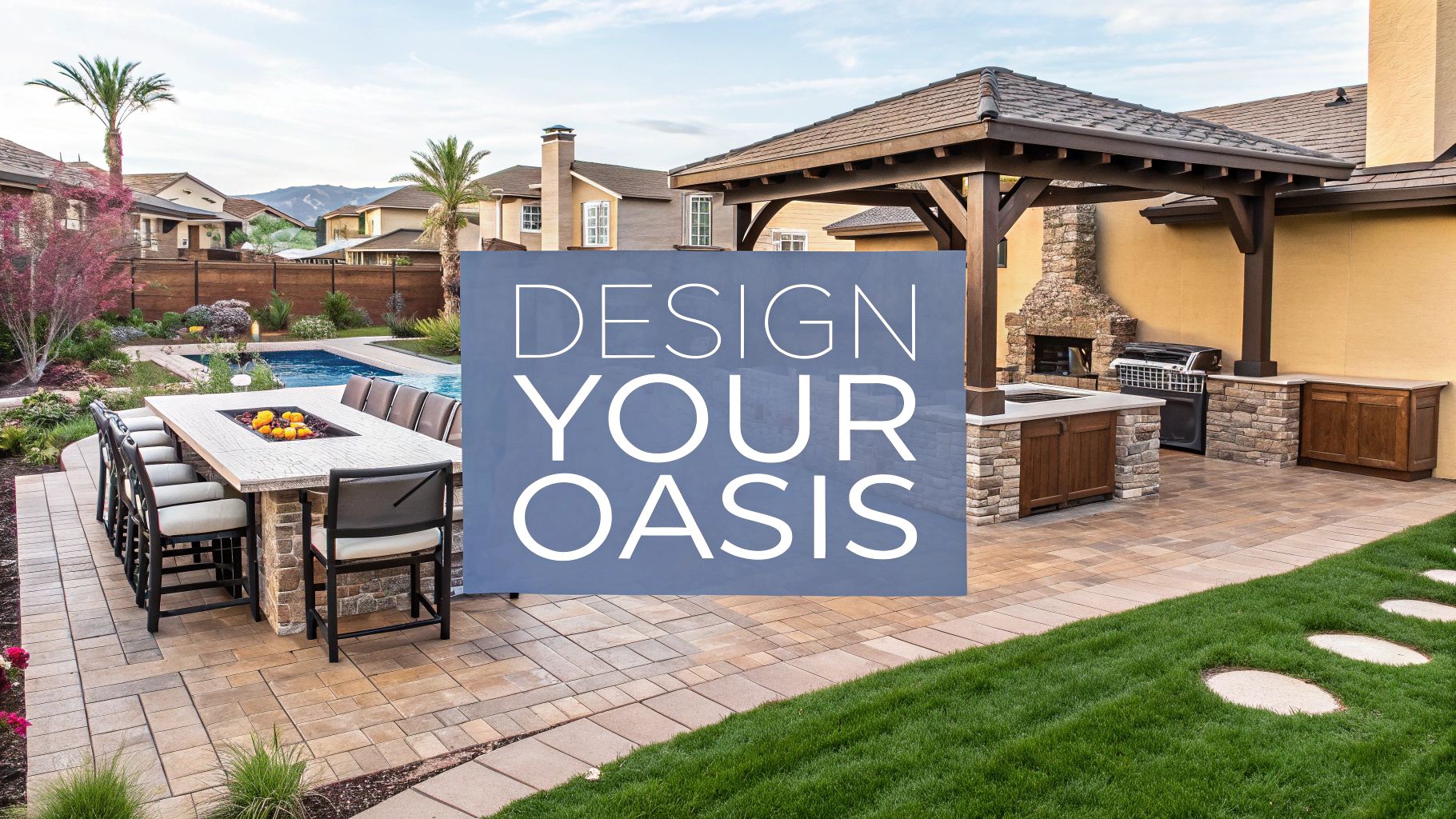
This shift toward creating true "outdoor rooms" isn't just a trend; it's a reflection of how our priorities have changed. The global market for luxury outdoor furniture, valued at around $3.45 billion in 2025, is expected to climb to $4.85 billion by 2031. That kind of growth tells us that people are seeing high-end outdoor pieces as a real, long-term investment in their homes and lifestyles. You can dig into the numbers yourself in this detailed report on TechSci Research.
Define Your Zones Before You Design
Before you move a single piece, the first step to a great layout is figuring out its purpose. Think about it: your home has a kitchen, a living room, and a dining room for a reason. Your outdoor space should be no different, with distinct zones for different activities. When you try to make one area do everything, you usually end up with a cluttered, impractical mess.
Instead, map out your space in terms of "activity hubs." Are you dreaming of a spot for grilling and dining al fresco? A cozy nook for late-night conversations around a fire? Maybe a quiet corner to get lost in a good book? Each of these activities calls for a different kind of furniture and a specific layout.
The most successful outdoor living spaces are the ones with a clear, intuitive flow. Guests should be able to move effortlessly from the grill to the dining table, or from the pool to a lounge chair, without feeling like they're navigating an obstacle course.
Master Scale and Flow
Once your zones are defined, the two most critical design principles to get right are scale and flow.
Scale is all about how the size of your furniture relates to the size of your outdoor area. A massive sectional might look incredible in a showroom, but it will completely swallow a small patio, leaving no room to actually walk around. On the flip side, a tiny bistro set will look lost and out of place on an expansive deck.
Flow is about creating clear, easy pathways for people to move. A good rule of thumb is to leave at least 36 inches for your main walkways. This ensures everyone can move around comfortably without having to squeeze past furniture or each other. This is absolutely essential in high-traffic areas, like the path from the back door to the grill or the pool.
Here are some quick measurements to keep in mind:
- Dining Areas: Aim for at least 3 feet of clearance behind each chair. This gives guests enough room to pull their chairs out and sit down without a struggle.
- Conversation Pits: The sweet spot between a sofa and a coffee table is 14-18 inches. It's close enough to set down a drink but leaves plenty of legroom.
- Walkways: Major pathways should be at least 3 feet wide to prevent frustrating bottlenecks when you have guests over.
Creating Inviting Layouts for Every Purpose
With your zones and design principles sorted, you can start building your layout. The trick is to arrange your furniture in a way that naturally encourages the activity you've planned for that space.
The Intimate Conversation Pit For a lounging zone, nothing beats a classic conversation pit. Arrange your sofas, loveseats, or deep-seating armchairs to face each other, creating a setup that practically begs for good conversation. A fire table or a large outdoor coffee table works perfectly as an anchor, giving the area a central focal point and a handy surface for drinks and snacks.
The Effortless Dining Area When you’re setting up an outdoor dining space, especially one near an outdoor kitchen, function is king. Place the dining table close enough to the grill to make serving a breeze, but not so close that your guests get a face full of smoke. Make sure there’s plenty of room to walk around the table, and consider adding an outdoor rug to visually define the dining zone and make it feel more intentional.
The Solo Relaxation Nook Don’t underestimate the power of a quiet corner. Even a tiny balcony or an unused spot in the yard can become a personal retreat. All it takes is a single comfortable chaise lounge, a small side table, and maybe a stylish planter. Just like that, you have a dedicated spot for unwinding away from the main social hubs.
For more inspiration on putting it all together, check out our guide on unique patio design ideas. By thoughtfully planning your layout, your luxury outdoor furniture becomes more than just a collection of beautiful objects—it becomes the foundation of a truly exceptional outdoor lifestyle.
Protecting Your Investment with Proper Care
Your luxury outdoor furniture is built from some of the toughest materials on the planet, chosen specifically to stand up to intense sun, driving rain, and whatever else the seasons throw at it. But even the most durable pieces deserve a little attention to stay looking their best for decades to come.
Think of it less as a chore and more as simple stewardship. A consistent, straightforward care routine is all it takes to protect your investment, ensuring it remains a source of pride and enjoyment year after year. It's not about complicated tasks, just a few smart habits.
A Seasonal Approach to Maintenance
The easiest way to keep everything in top shape is to follow the rhythm of the seasons. Breaking down care into a simple schedule prevents small cleanups from turning into big projects.
-
Spring Refresh: As you start using your outdoor spaces again, give everything a gentle wash. A mild soap and water solution is perfect for wiping away winter's dust from aluminum, steel, and performance fabrics. It’s also a great time to check for any loose hardware and give it a quick tighten.
-
Mid-Summer Check-In: During the peak season, it’s all about quick spot treatments. Wipe up spills on cushions right away and give the frames a rinse, especially if you're near a pool where chlorine can settle. This prevents buildup and keeps your set looking pristine for every impromptu gathering.
-
Autumn Preparation: Before the weather turns, a more thorough cleaning will remove summer's accumulated pollen, dirt, and oils. If you plan to use protective covers, now is the time to put them on, giving your furniture a shield against the harshest winter elements.
Material-Specific Care Checklists
Different materials have different personalities, which means they have different needs. Powder-coated aluminum is the definition of low-maintenance, while teak gives you a beautiful choice to make about its appearance.
For Powder-Coated Aluminum and Stainless Steel
These materials are incredibly forgiving. All they really ask for is a good cleaning now and then.
- Routine Cleaning: Wipe down frames with a soft cloth, a bit of mild soap, and water.
- Rinse Thoroughly: Always rinse with clean water to make sure no soap residue is left behind to dull the finish.
- Avoid Abrasives: Stick to soft sponges. Harsh chemical cleaners or abrasive scrubbers can easily scratch and damage the protective coating.
For Performance Fabrics like Sunbrella
These amazing fabrics are designed to shrug off stains and mildew, but a little regular attention goes a long way.
Most spills on high-performance fabrics can be cleaned with just mild soap and water. The key is to blot—never rub—the stain and let the cleaning solution sit for a few minutes before rinsing thoroughly.
For Grade-A Teak
Teak is unique because it lets you choose its destiny. Do you want to maintain its original, warm golden-honey color, or let it mature into a distinguished, silvery-gray patina? Your care routine depends entirely on the look you love.
For a deep dive, our guide on the care and maintenance of outdoor teak furniture breaks down the step-by-step process for both finishes.
If you’re a fan of the classic honey glow, you’ll want to clean it and apply a teak sealant once a year. If you prefer the elegant silver patina, your job is even easier. A simple annual cleaning with soap and water is all it takes to keep it looking beautiful. Honestly, that minimal upkeep is one of the biggest reasons people fall in love with high-quality teak in the first place.
Why High-End Outdoor Furniture Is a Smart Investment
Let’s shift how we think about this. An investment in high-end outdoor furniture isn't just another expense—it’s a strategic move that pays you back for years. It's not about being extravagant; it’s about securing real, long-term value for your home and your lifestyle.
This isn’t just a niche idea, either. Homeowners are catching on, making North America the largest market for luxury outdoor furniture, accounting for over 40% of worldwide revenue. The U.S. market alone is expected to grow by a staggering $1.71 billion between 2024 and 2029. That kind of growth tells you one thing: smart buyers see the lasting value. You can dig deeper into these numbers in the latest industry analysis from Cognitive Market Research.
The Financial Return on Your Investment
A professionally designed outdoor living space is a genuine asset. It doesn't just add to your home's usable square footage; it can seriously boost its resale value. When potential buyers walk onto a beautifully furnished patio, they don't see work—they see a turnkey oasis ready to be enjoyed. That’s a powerful selling point.
Think about it: cheap, flimsy patio sets can make a property feel temporary and neglected. In contrast, luxury outdoor furniture signals permanence and quality. It’s a clear sign that a home has been cared for at the highest level, a detail that never gets lost on savvy buyers.
The Lifestyle and Durability Payoff
Beyond the bottom line, the most immediate return is on your quality of life. This is about creating your personal retreat, a place to unwind after a long day or host gatherings that people will talk about for years. This is where your house really starts to feel like a home. A well-designed space with premium furniture naturally becomes the heart of your property, from intimate family dinners to larger social events. You can explore our guide on inspiring outdoor kitchen ideas to see how these spaces come to life.
The real savings come from breaking the endless cycle of replacement. Instead of buying a new, mediocre patio set every two or three years, a single investment in quality furniture eliminates that recurring cost and hassle for a decade or more.
Ultimately, choosing high-end pieces is an investment in confidence. You're getting durability that laughs at the weather, timeless design that sidesteps fleeting trends, and a richer outdoor lifestyle. It’s a decision that pays you back from every possible angle.
Your Questions, Answered
Even after getting familiar with the best materials and construction methods, taking the plunge on a significant investment like luxury outdoor furniture can still leave you with a few nagging questions. Let's tackle the most common ones so you can move forward with total confidence.
Is High-End Outdoor Furniture Really Worth the Price Tag?
Without a doubt. That initial investment gets you premium materials like Grade-A teak and robust construction that simply won't rust, fade, or fall apart. You're buying yourself out of the frustrating cycle of replacing cheap sets every couple of years.
In the long run, it's not just a better financial decision—it’s a smarter one for your time and sanity.
The real return on investment isn't just that the furniture lasts. It's in the years of memories you'll make without ever having to worry about maintenance, repairs, or replacements. You're investing in quality you can feel and peace of mind you can't put a price on.
What Is the Toughest, Most Durable Material I Can Get?
For pure, rugged longevity, you can't go wrong with Grade-A teak or powder-coated, heavy-gauge aluminum. They have very different vibes, but both are absolute champions when it comes to shrugging off harsh weather.
- Grade-A Teak: This is the gold standard for a reason. Its dense, oily nature makes it naturally impervious to rot and pests. A classic teak set isn't just for a lifetime; it's something you can pass down.
- Heavy-Gauge Aluminum: If you lean more modern, this is your material. It's light, incredibly strong, and completely rustproof. It gives you that sleek, architectural look with almost zero upkeep.
Can I Actually Leave This Furniture Outside All Year Round?
Yes, that’s exactly what it’s built for. High-end outdoor furniture is engineered for full-time exposure to the elements. The materials are specifically chosen for their resilience—think marine-grade stainless steel that scoffs at rain and solution-dyed fabrics that won't fade under a blazing sun.
While throwing on a protective cover during the harshest months is always a good idea to keep things looking brand new, these pieces are designed to live outdoors, season after season.
How Do I Figure Out the Right Size Furniture for My Patio?
It’s all about finding that sweet spot between form and function. First, measure your space, but don't just fill it up. You need room to move comfortably. A good rule to live by is to leave at least 3 feet of clear walkway around your main dining or seating areas.
Then, think about scale. A huge, sprawling patio can easily handle a substantial sectional and a ten-person dining table without feeling cluttered. On the other hand, if you're working with a cozy balcony or a small garden nook, a pair of sleek lounge chairs or a chic bistro set will feel intentional and inviting, not cramped.
Ready to create an outdoor space that’s built to last? Dive into the curated world of premium outdoor living at Samal Holding Company LLC dba urbanmancaves.com and discover the pieces that will redefine your retreat.
Explore our collections at https://www.urbanmancaves.com.


