

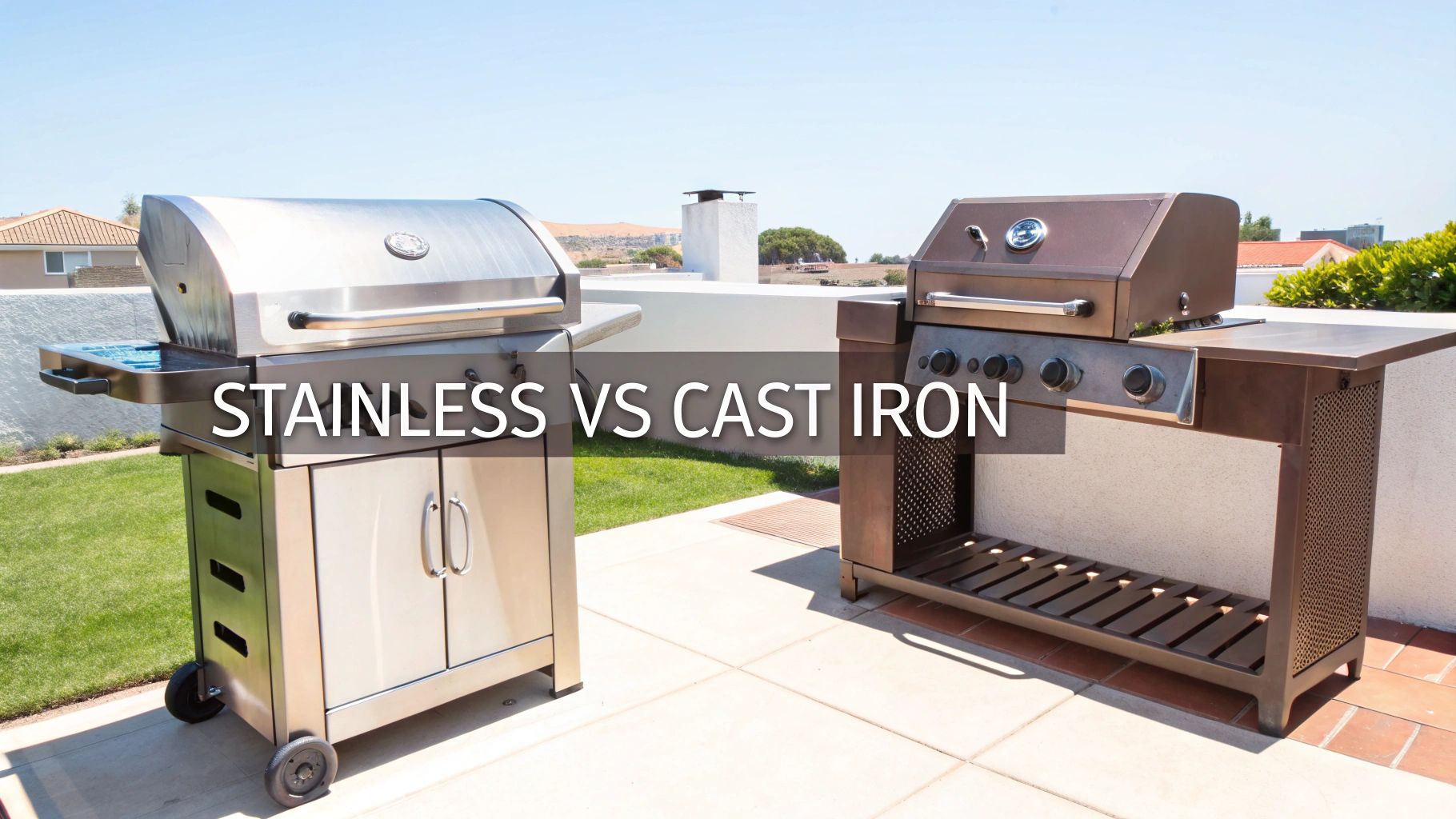
When it comes to outfitting a high-end outdoor kitchen, the choice between a stainless steel and a cast iron grill is a classic dilemma. It's really a conversation about modern convenience versus traditional, raw cooking power. Stainless steel brings a sleek, low-maintenance profile with fantastic rust resistance, while cast iron is the undisputed king of heat retention for that perfect, steakhouse-quality sear.
Ultimately, the best grill for you boils down to a simple question: Do you value effortless upkeep for frequent entertaining, or do you relish the hands-on process and time-honored results of classic grilling?
Defining Your Outdoor Cooking Style
Picking the right grill for your luxury outdoor kitchen goes far beyond the spec sheet. It's about defining your entire approach to outdoor cooking and entertaining. This single decision influences everything from the flavor of your food and your cleaning routine to the very look and feel of your patio.
Getting a handle on the core differences between these two materials is the crucial first step. It ensures the heart of your outdoor kitchen perfectly matches your culinary goals and hosting style.
Key Differences at a Glance
Before we get into the nitty-gritty, a quick side-by-side look can be incredibly helpful. Each material has its own personality and brings something unique to the table. Think of stainless steel as the precise, reliable tool for the modern host who values consistency and ease. Cast iron, on the other hand, is the seasoned, powerful workhorse for the purist who chases flavor above all else.
If you want to explore this topic further, our complete guide on how to choose a gas grill is a great next step.
The core trade-off is simple: Stainless steel provides unmatched durability and ease of use, making it perfect for frequent, hassle-free entertaining. Cast iron demands more care but rewards the user with exceptional, even heat that creates a legendary crust on steaks and burgers.
To give you a quick reference, here's a high-level summary of the key characteristics of each grill type. This will help you grasp the fundamental differences before we dive into the detailed analysis.
At a Glance Stainless Steel vs Cast Iron Grills
| Feature | Stainless Steel Grill | Cast Iron Grill |
|---|---|---|
| Heat Retention | Moderate; heats up and cools down quickly | Excellent; holds heat for a long time |
| Durability | Highly resistant to rust and corrosion | Extremely durable but prone to rust if not seasoned |
| Maintenance | Low; easy to clean with minimal effort | High; requires regular seasoning and careful cleaning |
| Best For | Versatile cooking, delicate foods, and convenience | Searing meats, high-heat cooking, and flavor |
| Aesthetics | Modern, sleek, and professional | Classic, rustic, and substantial |
| Cost | Generally higher upfront investment | Often more affordable initially |
This table sets the stage for a deeper comparison. Now, let's break down what these differences truly mean for your cooking experience.
Heat Performance and Cooking Style
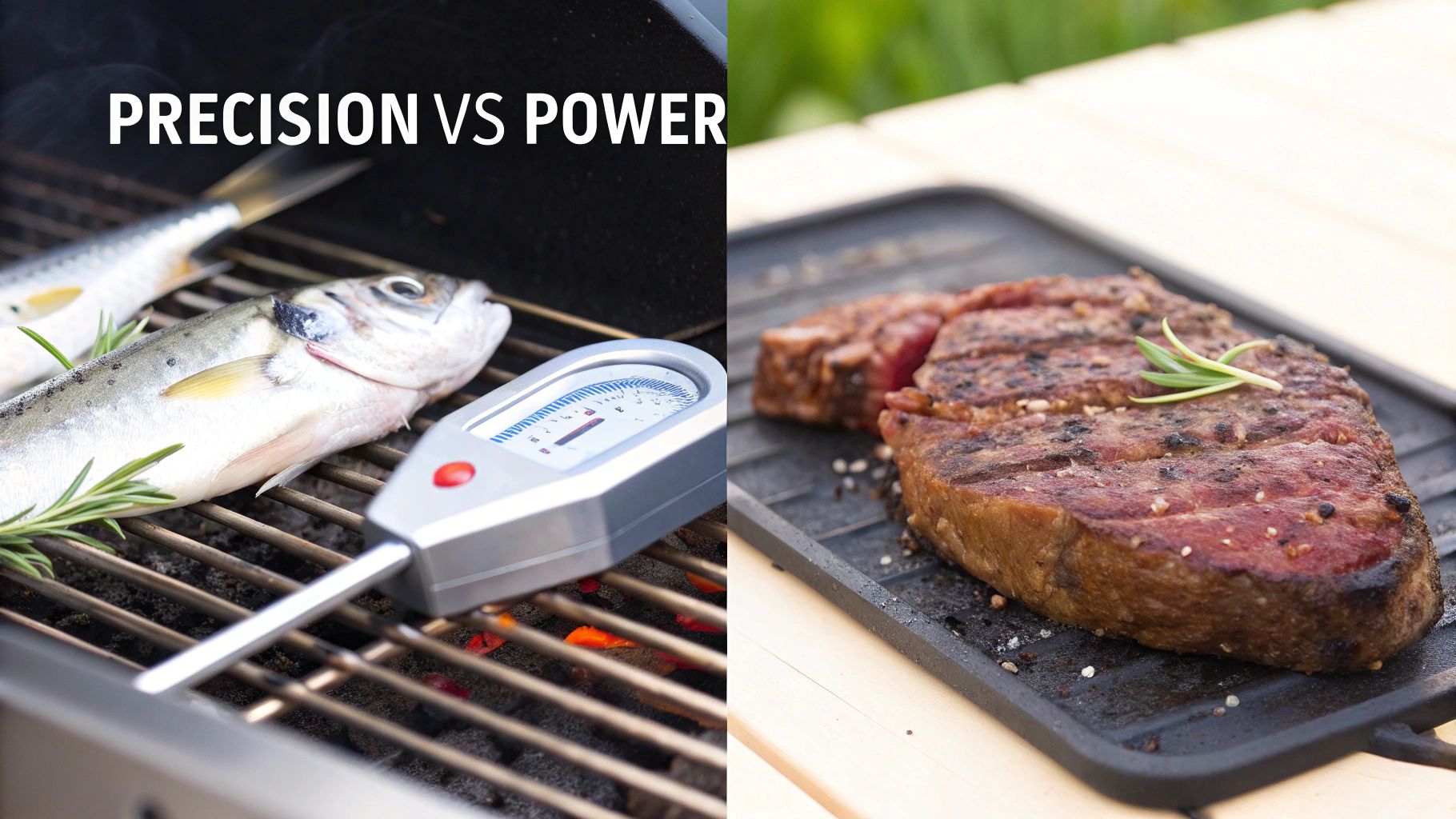
When you’re investing in a premium grill for your outdoor kitchen, you aren't just buying hardware; you're choosing a cooking philosophy. The classic showdown between stainless steel and cast iron is a tale of two very different approaches to heat: the nimble precision of a modern sports car versus the raw, unyielding power of a classic muscle car. How each material heats up, holds its temperature, and responds to your adjustments directly shapes the food that lands on the plate.
A stainless steel grill is all about responsiveness. It gets hot—and fast. You can go from a cold start to searing temperatures in just a few minutes, which is perfect for those spontaneous weeknight cookouts or for busy hosts juggling multiple dishes with different heat needs. Just as importantly, it cools down quickly, giving you incredible control over the entire cooking process.
Stainless Steel: The Precision Instrument
Picture this: you're searing a thick-cut ribeye at a blistering 600°F to get that perfect crust. With a stainless steel grill, you can immediately dial back the temperature to gently cook a delicate piece of fish or grill some asparagus without turning it to charcoal. That kind of agility is a game-changer for anyone who loves cooking complex meals outdoors.
This nimbleness comes from the material's moderate heat retention. It doesn’t cling to thermal energy as stubbornly as cast iron, and that’s a feature, not a bug. This allows for:
- Rapid Temperature Changes: Go from high to low heat in moments, preventing that sinking feeling when you realize something is about to overcook.
- Masterful Zone Cooking: Easily maintain different heat zones across the grill surface to cook different foods at the same time.
- Better Fuel Efficiency: You spend less time and gas waiting for the grill to get up to temperature.
Heads up, though: the quality of the steel is everything. A high-end grill made from 304-grade stainless steel will give you much better heat distribution and durability than a cheaper 430-grade unit, which is often plagued by frustrating hot spots.
If you're a griller who thrives on control, versatility, and executing a diverse menu with finesse, stainless steel is your huckleberry. It’s the right tool for a chef who wants to dictate every single aspect of the cook.
Cast Iron: The Unwavering Powerhouse
On the other side of the coin, a cast iron grill operates on a philosophy of pure thermal dominance. Sure, it takes longer to heat up, soaking in energy like a sponge. But once it hits the target temperature, it holds that heat with an iron will, creating a cooking surface of consistent, unstoppable power.
This incredible heat retention is what makes cast iron a legend in the searing world. It doesn't flinch when a cold steak hits the grates. Instead, it instantly dumps a massive amount of energy into the meat, producing that deep, mahogany crust and iconic grill marks that grilling purists live for. The heat radiates evenly, smoothing out fluctuations and ensuring a perfect cook from edge to edge.
This cooking style is tailor-made for:
- Steakhouse-Quality Searing: It creates a superior Maillard reaction for an unbeatable crust and flavor on steaks, burgers, and chops.
- High-Heat Roasting: The ambient heat locked inside the grill’s heavy body creates a convection-oven effect, perfect for whole chickens or roasts.
- Consistent, Repeatable Results: Once it’s hot, it stays hot. This gives you a predictable and reliable cooking surface, especially when cooking in batches.
Choosing cast iron means embracing its maintenance ritual. The seasoning process—building up a polymerized layer of oil—not only stops rust in its tracks but also creates a naturally non-stick surface that gets better every time you use it. It’s a genuine relationship between the cook and their tool.
Situational Cooking Scenarios
To really nail down the stainless steel vs. cast iron grill debate, let's walk through a couple of real-world scenarios.
Scenario 1: The Backyard Gourmet Party You're hosting a big get-together with a diverse menu: shrimp skewers, burgers for the kids, and delicate vegetable planks. Here, a stainless steel grill is your best friend. You can preheat in a flash, sear the burgers, then immediately drop the heat for the shrimp and veggies without skipping a beat.
Scenario 2: The Steak Night Ritual For the enthusiast whose main mission is the perfect steak, cast iron is the undisputed champion. The whole process—preheating the heavy grates, hearing that satisfying sizzle, and seeing those perfect diamond sear marks—is part of the magic. The powerful, even heat guarantees a flawless result, time after time.
The fact that stainless steel is popping up in more high-end outdoor kitchens points to a bigger trend: people want convenience and durability. The global stainless steel grill market was valued at USD 10,250.75 million in 2024 and is on track to grow, proving its appeal to modern homeowners who want low-maintenance, high-performance gear that looks fantastic and resists the elements.
For a deeper dive into market trends, check out this detailed industry report. If you're looking for more direct comparisons and product suggestions, take a look at our guide to the best outdoor kitchen grills. Ultimately, your choice boils down to your personal style: are you about agile control, or raw, consistent power?
Durability and Long-Term Maintenance
When you’re investing in a premium grill for a luxury outdoor kitchen, what happens after the first sear is just as important as the initial performance. The real value of a grill reveals itself over time—how it weathers the seasons, how much effort it demands to stay in top shape, and ultimately, how long it lasts. This is where stainless steel and cast iron take completely different paths.
Choosing between them is less about which is "better" and more about which ownership style fits you. One is the definition of set-it-and-forget-it convenience, designed for a busy lifestyle. The other is a hands-on, rewarding ritual for the grilling purist. Getting this choice right is the key to making sure your grill becomes the heart of your outdoor space, not a weekend chore.
The Low-Effort Longevity of Stainless Steel
Stainless steel was born for the outdoors. Its core strength is an incredible resistance to rust and corrosion, a superpower it gets from the chromium in the alloy. This element forms a self-repairing, invisible layer that shields the metal from the elements, making it the undisputed champ for coastal homes with salty air or areas with relentless humidity.
A high-quality, 304-grade stainless steel grill is built to handle decades of sun, rain, and temperature swings with very little protest. Because the surface isn't porous, grease and food bits can't seep in, which makes cleanup almost laughably easy. For most owners, the maintenance schedule is as simple as it gets:
- Routine Wipe-Downs: A quick wipe with a soft cloth and a good cleaner after you cook is usually all you need to keep the exterior looking sharp.
- Occasional Polishing: To bring back that showroom shine, a special polish applied every now and then does the trick.
- Grate Cleaning: The grates clean up easily with a standard grill brush, and you never have to worry about the meticulous drying process that cast iron demands.
This hands-off approach is a huge plus for homeowners who want to spend more time entertaining and less time on upkeep. It's about reliability and convenience, pure and simple.
Cast Iron: The Rewarding Ritual of Upkeep
A cast iron grill promises a different kind of durability—one that you earn through active care. While it’s tough enough to be passed down through generations, its Achilles' heel is rust. The iron is prone to oxidizing if you let moisture hang around, which means maintenance isn't just a suggestion; it’s a non-negotiable ritual.
For grilling purists, however, this ritual is part of the allure. It’s about building a relationship with your equipment. The heart of cast iron care is all about seasoning.
Seasoning is the process of baking oil into the cast iron, creating a slick, polymerized layer. This natural, non-stick surface is rust-resistant and actually gets better the more you cook on it.
Keeping a cast iron grill in fighting shape is a constant cycle:
- Post-Cook Cleaning: You'll need to scrape the grates clean while they're still warm, but forget about harsh soaps—they'll strip away all that hard-earned seasoning.
- Meticulous Drying: Every last drop of moisture has to be eliminated. Many owners will heat the grill for a few minutes after cleaning just to be sure.
- Regular Oiling: Applying a thin layer of a high-smoke-point oil protects the surface and builds up that beautiful, black patina.
This deliberate process is the trade-off for its legendary cooking power. For the enthusiast, it’s not a chore; it's a satisfying routine, like a chef honing a favorite knife. To keep your grill looking its best, we recommend a high-quality stainless steel grill cleaner and polish.
A Clear Picture from Market Data
When it comes to durability, the numbers tell a clear story. Stainless steel takes the lead for its effortless longevity, making it the top choice for premium outdoor kitchens. It’s favored by 30-65-year-old homeowners who grill year-round and don't want to babysit their equipment.
Cast iron is a heat-retention champion—holding onto 30% more heat for incredibly even cooking—but its need for constant oiling and drying to prevent rust is a dealbreaker for many. In survey after survey, buyers prioritize low-maintenance options.
Market reports consistently show that grill durability is a primary driver for consumers. The gas grill segment alone was valued at USD 2.11 billion in 2019 and continues to climb, with stainless steel models leading the charge. With the global BBQ market projected to hit US$7.96 billion by 2032, the trend toward long-lasting, low-fuss materials is undeniable.
For your UrbanManCaves outdoor kitchen, stainless steel means fewer replacement parts and more time enjoying your space. Imagine hosting 20 guests without giving your grill grates a second thought—that’s the stainless advantage. You can discover more insights about the global grills market to see how these trends are shaping buyer decisions.
Aesthetics and Outdoor Kitchen Design
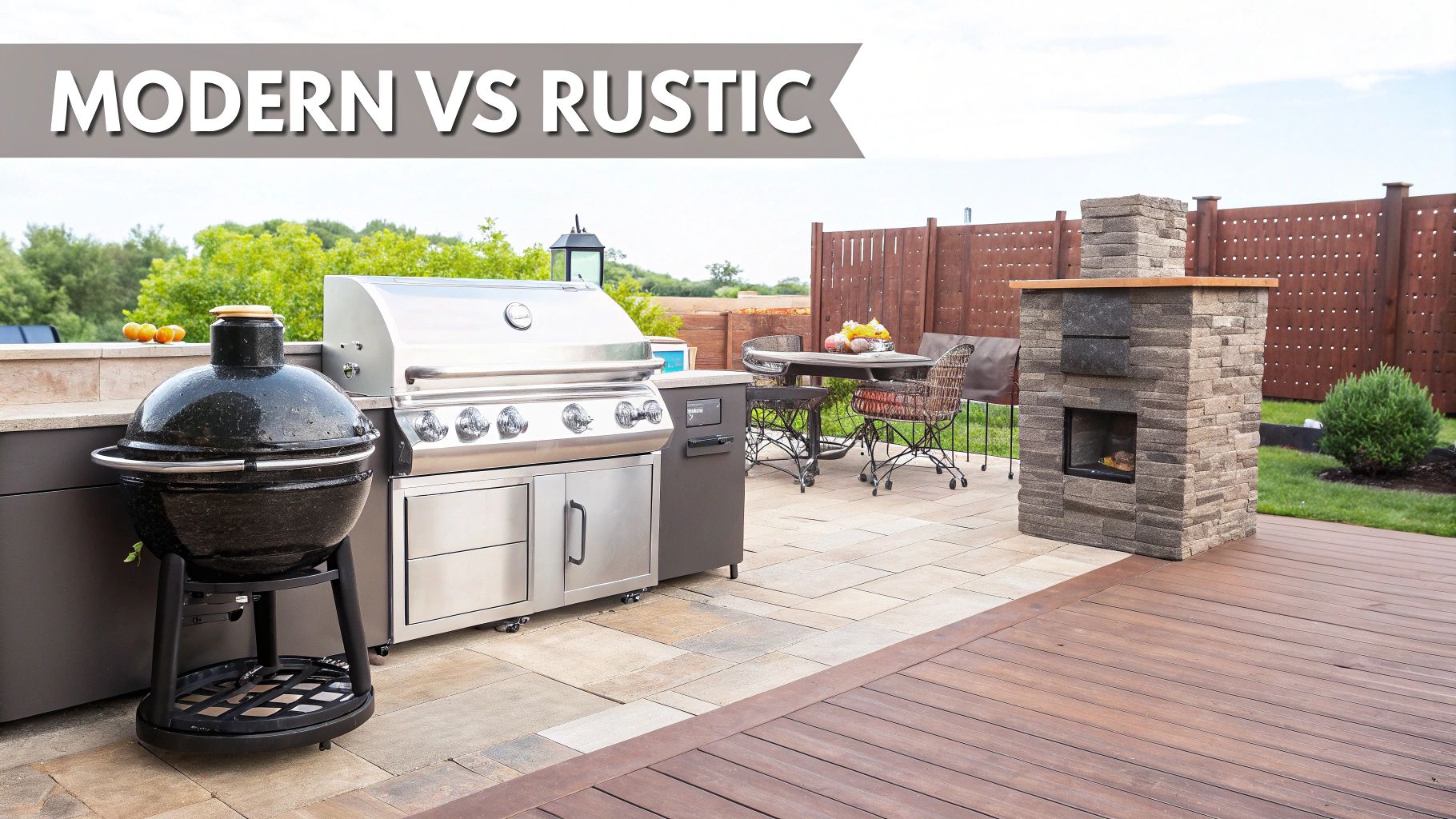
Let's be honest—your grill is more than just a cooking appliance. It's the centerpiece of your outdoor living space, the visual anchor that sets the tone for your entire patio or deck. When we're talking about stainless steel versus cast iron, the look and feel are just as critical as how they cook.
Choosing a grill material is really about choosing a design philosophy. One is all about modern precision, while the other speaks to a rugged, timeless tradition. Making sure that choice lines up with your home's overall style is what separates a good outdoor kitchen from a truly spectacular one.
The Sleek Professionalism of Stainless Steel
Stainless steel just screams "professional." It's the go-to for a modern outdoor kitchen, delivering a clean, high-end look that feels both classic and completely current. The bright, reflective surface adds a touch of light and sophistication, pairing beautifully with other premium materials.
Picture a gleaming stainless steel grill built right into a polished granite or quartz countertop. Those sharp lines and metallic sheen create a stunning contrast against dark cabinetry or natural stone. This is the signature look of a chef-grade outdoor kitchen built to impress.
The real magic happens when you create a unified design by matching it with other stainless appliances:
- Integrated Beverage Centers: A stainless steel cooler or kegerator ties the whole space together with a cohesive, high-end vibe.
- Outdoor Cabinetry: Matching stainless steel doors and drawers give you that streamlined, professional kitchen appearance.
- Modern Accents: The material is a natural fit with minimalist lighting and contemporary patio furniture.
A stainless steel grill is a statement of precision, cleanliness, and modernity. It’s the visual centerpiece for an outdoor kitchen designed to be a seamless extension of a stylish, contemporary home.
The Rustic Charm of Cast Iron
If stainless steel is sleek and modern, cast iron is its substantial, historic counterpart. It brings a grounded, rustic character to an outdoor space, defined by its dark, matte finish and undeniable heft. A cast iron grill doesn't just cook food; it feels like it holds stories of tradition, durability, and fire-forged flavor.
This classic aesthetic is perfect if you’re aiming for a more organic or even an industrial design. The deep black patina it develops over time lends it a unique, lived-in character that shiny new materials simply can't fake. It pairs beautifully with natural, textured elements, and you can find tons of outdoor kitchen ideas that play up this timeless appeal.
Think about these kinds of design pairings for a cast iron grill:
- Natural Stonework: The dark, rugged texture of cast iron feels right at home next to fieldstone or slate patios and fireplaces.
- Reclaimed Wood: It creates a powerful industrial-chic look when set against reclaimed wood beams or decking.
- Classic Brick: A cast iron grill is the perfect companion to a traditional brick patio or outdoor kitchen island.
At the end of the day, a cast iron grill is for an outdoor space that values substance and heritage. It's the ideal choice for creating a warm, inviting, and ruggedly authentic atmosphere for friends and family.
Analyzing Cost and Long-Term Value
When you're deciding between a stainless steel and a cast iron grill, the sticker price is only the beginning of the story. To really get a handle on the investment, you have to look at the total cost over the entire life of the grill. It's the classic dilemma: pay more now for a low-maintenance future, or save upfront and accept some ongoing costs.
This isn't just about what you pay at the register. It's about the real value you'll get from your grill over years of cookouts and family dinners. A smart investment in your outdoor kitchen means weighing both the initial hit to your wallet and the long-term commitment.
The Upfront Investment
Let’s be direct: a high-quality stainless steel grill is almost always going to cost more upfront. That premium price tag is a reflection of superior materials, especially 304-grade stainless steel, which is built to resist rust and last a lifetime. You're paying for precision engineering, a sleek, modern look, and the promise of durability right out of the box.
On the other hand, cast iron grills tend to be much friendlier on the initial purchase. The material is simply less expensive to manufacture, making them a tempting option if you're working with a tighter budget or just starting to build your outdoor setup. But remember, that initial savings is just one piece of the puzzle.
Calculating the Total Cost of Ownership
This is where the financial comparison between stainless steel and cast iron gets really interesting. A stainless steel grill's higher initial price often leads to a lower total cost of ownership over the long haul.
Why? It really comes down to its incredibly low maintenance needs. You won't be shelling out money for things like:
- Replacement Grates: Top-tier stainless steel is tough as nails and fights off rust and warping, so you’re not likely to be buying new parts down the road.
- Specialty Cleaning Supplies: A simple cleaner and a cloth are usually all you need. No constant buying of seasoning oils or special rust removers.
- Weather Covers and Protection: While always a good idea, a stainless steel grill is much more forgiving if you forget to cover it and it gets caught in the rain.
When you invest in a premium stainless steel grill, you're really buying peace of mind. The cost is front-loaded, which frees you from the recurring expenses and time-consuming upkeep that other materials demand.
Cast iron, while cheaper at first, comes with a list of ongoing costs that can add up over time. To keep it from turning into a rusty relic in your backyard, you have to factor in the price of seasoning oils, heavy-duty scrapers, and maybe even new grates if the rust gets out of control. If you skip the seasoning ritual, the cost to fix or replace parts can eat up those initial savings surprisingly fast. To get a better sense of what goes into a fully equipped outdoor kitchen, check out our guide on outdoor kitchen essentials.
Market Trends and Perceived Value
The higher price of stainless steel also reflects its status as the king of the premium grill market. Consumer data clearly shows a preference for the durability and clean aesthetic of stainless steel, especially in high-end outdoor kitchens across North America and Europe. This demand props up its value. For instance, the global BBQ grill market hit USD 6.5 billion in 2023 and is expected to soar to USD 9.8 billion by 2032, with stainless steel models driving a huge chunk of that growth.
While cast iron has its dedicated fans, especially in niche charcoal segments, stainless steel dominates the larger, more innovative gas grill market, cementing its spot as the premium choice. This strong market performance shows that homeowners see the long-term value and are willing to pay more upfront for a professional-grade experience without the constant hassle. The cost analysis really boils down to a clear choice: invest more now for years of reliable, low-effort grilling, or save money today and commit to the hands-on care that cast iron absolutely requires.
Final Verdict: Which Grill Is Right for You?
So, how do you decide? The truth is, there's no single "winner" in the matchup between stainless steel and cast iron. It really boils down to what you want out of your grilling experience. The best choice is the one that feels like a natural fit for your cooking style, how much time you want to spend on maintenance, and the overall vision for your outdoor kitchen.
This decision ultimately hinges on what you value most. Are you looking for a sleek, low-effort centerpiece for backyard parties, or do you live for the hands-on ritual of achieving that perfect, high-heat sear? Your answer to that question will lead you right to the perfect grill.
The Frequent Entertainer
If your weekends are all about hosting friends and family with as little fuss as possible, a high-quality stainless steel grill is your best bet. It heats up fast, cleans up easily, and stands up to just about anything the weather throws at it. That means you're spending less time wrestling with your equipment and more time actually enjoying the party.
For you, a grill isn't just a cooking tool; it's a reliable workhorse that delivers consistent results every time and looks fantastic doing it. The low-maintenance, high-performance character of stainless steel is a perfect match for a busy social life where the goal is making memories, not scrubbing grates.
The Culinary Purist
On the other hand, if you're the kind of person who geeks out on the craft of grilling and chases that legendary steakhouse crust, a cast iron grill has your name all over it. You don't just cook—you appreciate the whole process, including seasoning your grates to perfection. For you, the incredible heat retention isn't just a feature; it's the secret weapon for an unforgettable meal.
Here, performance is king. You're willing to put in a little extra effort because you know it pays off in flavor. A cast iron grill isn't a chore; it becomes a trusted companion for life, a testament to your dedication to the art of fire and food.
The stainless steel vs. cast iron debate is really about your priorities. Go with stainless steel for its effortless convenience and modern look—it’s made for the frequent host. Choose cast iron if you're a purist who lives for the perfect sear and embraces the hands-on tradition of grilling.
This decision tree can help you see how cost plays into the equation.
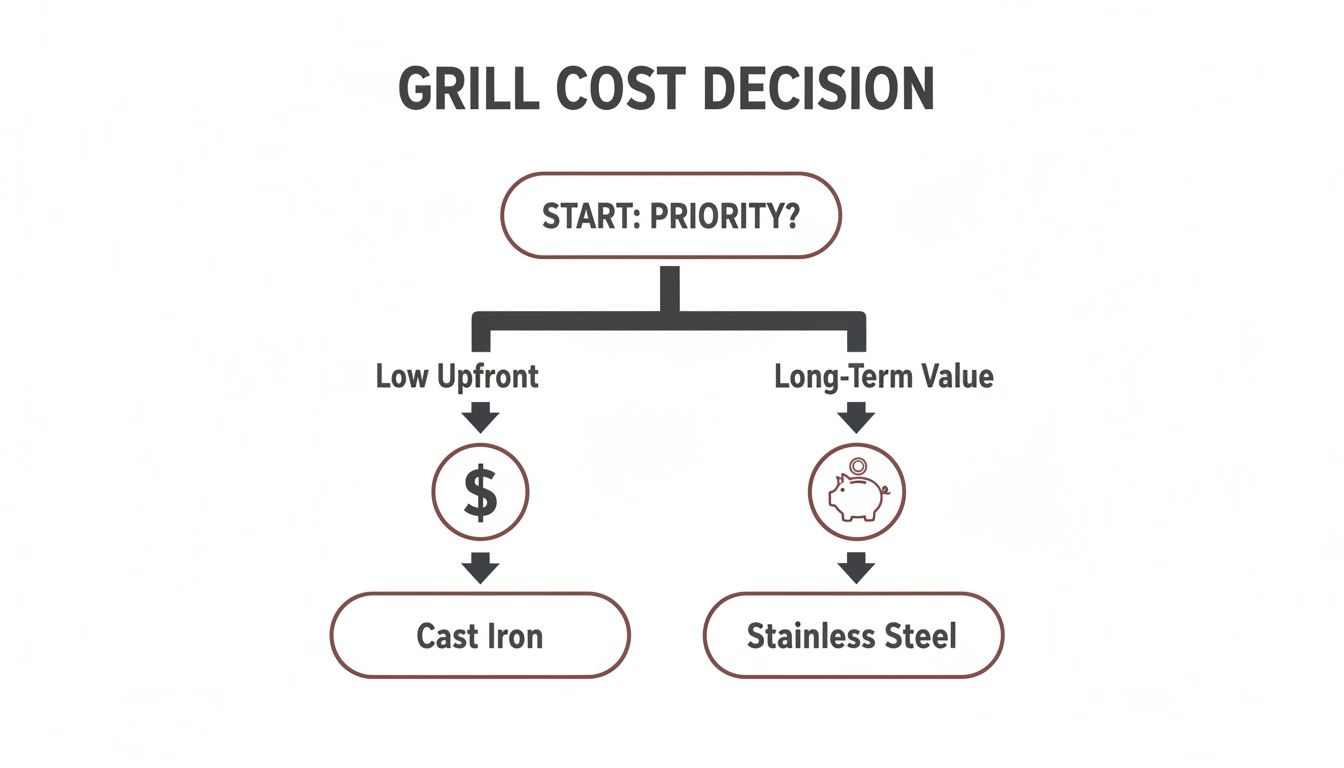
As the chart shows, the financial trade-off is straightforward. Cast iron often wins on a lower initial price tag, while stainless steel typically proves to be the smarter investment for long-term value and durability.
Frequently Asked Questions
Even after weighing all the pros and cons, a few specific questions always seem to pop up. Let's tackle some of the most common ones to help you lock in your final decision with complete confidence.
Can You Use Cast Iron Grates on a Stainless Steel Grill?
You absolutely can, and it's a fantastic move. In fact, it's a popular "best of both worlds" setup for serious grillers. You get the incredible searing power and heat retention of cast iron where it matters most—the cooking surface—while enjoying the weather resistance and sleek look of a stainless steel grill body.
Think of it as the ultimate compromise. You'll get those steakhouse-quality sear marks without having to deal with the full maintenance of an all-cast-iron grill. Just don't forget, those cast iron grates will still need the usual seasoning routine to keep them non-stick and rust-free.
Does the Grade of Stainless Steel Really Matter?
It matters immensely. The grade of steel is probably the single most important factor in determining how long your grill will last and how well it performs year after year. For high-end grills, you’ll mainly see two types: 304 and 430 grade.
- 304-Grade Stainless Steel: This is the gold standard. It has a higher content of chromium and nickel, giving it superior protection against rust and corrosion. If you live near the coast or in a particularly humid climate, this isn't just a nice-to-have; it's a must.
- 430-Grade Stainless Steel: This is a more budget-friendly, magnetic grade of stainless. While it looks good initially, it’s far more likely to develop rust spots over time, especially if you’re not meticulous with its care.
When you're investing in a premium outdoor kitchen, always look for 304-grade stainless steel. Anything less is a compromise on durability.
The grill's material won't directly infuse flavor into your food, but it fundamentally changes the cooking process, which absolutely shapes the final taste. Cast iron's steady, intense heat produces a phenomenal crust via the Maillard reaction, developing deep, savory flavors. On the other hand, stainless steel's quick response gives you pinpoint control, which is perfect for preventing char and preserving the delicate flavors of things like fish and vegetables.
How Do You Restore a Rusted Cast Iron Grill Grate?
Bringing a rusted cast iron grate back to life is totally doable. First, get a stiff wire brush or some steel wool and scrub off all the loose rust you can see. If you're dealing with some stubborn patches, soaking the grate in a 50/50 mix of white vinegar and water for an hour or so usually does the trick.
Once the rust is gone, give the grate a good wash with soap and water. The next step is critical: dry it immediately and thoroughly. A great way to do this is to pop it back on a warm grill for a few minutes to evaporate any remaining moisture. To finish, wipe a very thin layer of high-smoke-point oil (like canola or grapeseed) over the entire surface and heat it up to re-season it and restore that protective coating.
Ready to build the ultimate outdoor entertainment space? At UrbanManCaves.com, we’ve handpicked a collection of premium grills, outdoor kitchens, and all the gear you need to create the backyard you've always wanted. Explore our collections and start your project today at https://www.urbanmancaves.com.


