

An outdoor kitchen island is a standalone unit that brings together everything you need for cooking and entertaining outside—your grill, countertops, and storage—all in one place. It’s so much more than just a spot to cook; it’s the multifunctional centerpiece that turns a simple patio into a true outdoor living room.
Your Backyard's New Social Hub
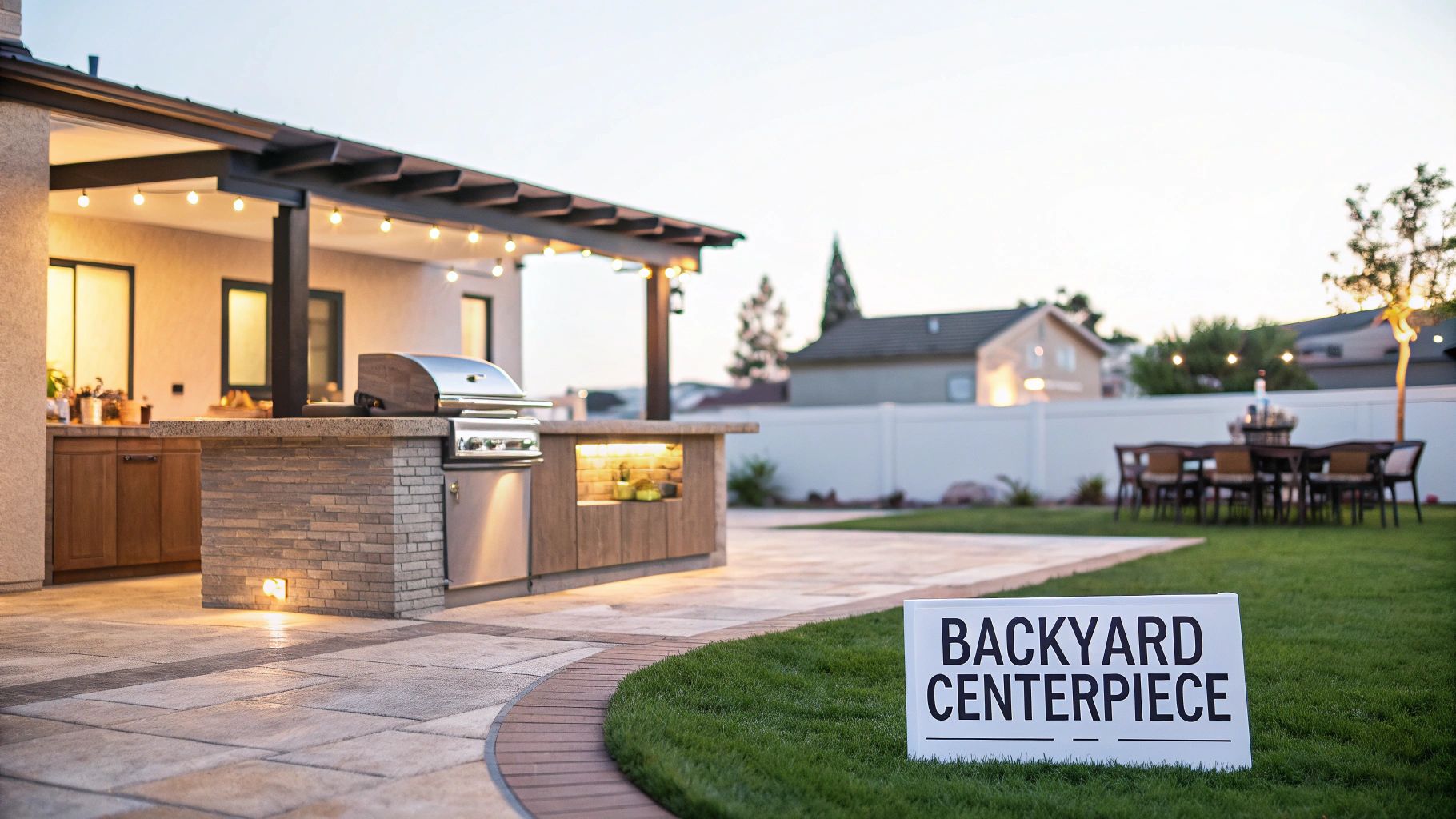
The backyard isn't what it used to be. We've moved past the days of a lonely grill sitting on a concrete slab. Today's trend is all about creating sophisticated "outdoor rooms"—fully functional spaces designed for living and hosting on a much bigger scale. The outdoor kitchen island is the anchor of this entire concept, organizing the space and dictating the flow of your entire alfresco setup.
Think of it as the command center for your backyard. It's where you'll mix cocktails, prep food, and serve appetizers without ever having to turn your back on your guests. By consolidating all your cooking essentials in one spot, you eliminate the constant back-and-forth trips to the indoor kitchen, creating a seamless and far more engaging environment for everyone.
More Than Just a Cooking Station
A thoughtfully designed island is a true workhorse, blending serious utility with social connectivity. This isn't just about finding a home for your grill; it's about creating a destination. A great outdoor kitchen island pulls together:
- Culinary Power: It provides the foundation for high-performance appliances like professional-grade grills, pizza ovens, and powerful side burners.
- Social Interaction: With integrated counter space and bar-style seating, it becomes a place where guests can pull up a stool, chat, and sip a drink while you cook.
- Functional Efficiency: It incorporates the essentials that make outdoor cooking a breeze, like sinks for quick clean-ups, refrigerators for cold drinks, and plenty of dedicated storage.
By bringing all these elements together, the island becomes a natural gathering point. It’s a magnet that draws people in, fostering that relaxed, communal vibe that makes outdoor entertaining so special.
An Investment in Your Lifestyle
Creating a luxury outdoor kitchen is a significant project, but it’s an investment that pays you back in quality of life and adds real value to your home. It’s a move toward prioritizing beautiful, durable outdoor spaces that are built to last for decades. If you're looking for some initial inspiration on different layouts and styles, checking out various outdoor kitchen ideas is a great place to start.
This guide will walk you through everything you need to know to plan and specify the perfect island for your space. We'll get into the details—from choosing resilient materials like heavy-gauge stainless steel to integrating professional-grade appliances. By the time we're done, you'll have all the knowledge you need to create a stunning, functional hub that will be the heart of your backyard for years to come.
Planning Your Layout and Footprint
Bringing a dream outdoor kitchen to life all starts with a smart plan. It's a lot like designing a kitchen indoors—the best ones feel natural to work in, making cooking and hosting a breeze. A great layout isn't just about looking good; it's about making the whole experience feel intuitive and effortless.
First things first: get a real sense of your space. Grab a tape measure and map out the dimensions of your patio, deck, or wherever you plan to build. Make sure to note where doors, windows, and other permanent fixtures are. This simple sketch is the foundation for everything that comes next.
The Outdoor Work Triangle
There's a classic design principle that works just as well outside as it does inside: the work triangle. The whole idea is to create a seamless flow between the three spots you'll use most: the grill, the sink, and the fridge. Getting this right means you can move between cooking, prepping, and grabbing a cold drink without tripping over yourself or your guests.
For an outdoor kitchen, your triangle connects:
- The Grill (Hot Zone): This is the heart of your kitchen, where the main event happens.
- The Sink (Wet Zone): Absolutely crucial for prep, washing hands, and quick cleanups.
- The Refrigerator (Cold Zone): Keeps drinks chilled, marinades fresh, and ingredients close by.
Keeping these three points within a few steps of each other is the key to a functional, enjoyable cooking space. Even with a simple straight-line island, placing the sink and fridge on either side of the grill sets you up for a smooth workflow.
Choosing Your Island Shape
The shape of your island will define how your outdoor space works, how people move through it, and how you interact with guests. Think about how you’ll really use it. Is this your personal grilling station for quiet family dinners, or is it the central hub for big backyard parties?
The best layout is one that not only fits your patio but also fits your lifestyle. Your island can be a focused workstation for a serious grill master or a social magnet that draws everyone together.
Here’s a quick rundown of the most common shapes to help you decide.
Comparing Popular Outdoor Kitchen Island Layouts
This quick comparison of common outdoor kitchen island layouts will help you choose the best fit for your backyard.
| Layout Style | Ideal Patio Size | Typical Seating | Best For |
|---|---|---|---|
| Linear | Small to Medium | 2-3 People | Narrow spaces and efficient, straightforward cooking. |
| L-Shape | Medium to Large | 3-5 People | Creating distinct cooking and social zones. |
| U-Shape | Large | 4-6+ People | The ultimate chef's setup with maximum functionality. |
Each layout offers a different experience. The Linear is a space-saver, the L-Shape is brilliant for socializing, and the U-Shape is a true chef's dream.
The demand for these kinds of integrated backyard spaces is booming. Outdoor islands and storage are now the second-biggest part of the market, right behind the grills themselves. Homeowners are clearly investing in creating complete outdoor retreats, and North America is leading the charge, making up 46.73% of the global market. These projects aren't just for enjoyment either; some installations see returns on investment that can hit 200%. You can explore more of these outdoor kitchen statistics and market trends to see just how popular this has become.
One final, critical detail: leave enough room to move. You need at least 36-48 inches of clear pathway around the island. This isn't just for comfort; it ensures people can walk by safely and that you have enough space to fully open appliance doors. Nailing these details is just as important as picking the right grill. To get a better idea of what to put in your island, check out our guide on outdoor kitchen essentials.
Selecting Materials Built to Last Outdoors
An outdoor kitchen island isn't just a piece of furniture; it's a permanent fixture in your backyard. It has to stand up to everything nature throws at it—scorching sun, pouring rain, wild temperature swings, and constant humidity. Its survival isn't a matter of luck; it’s a direct result of choosing the right materials from day one.
Think of it like building a boat. You wouldn't use untreated pine and expect it to survive a season at sea, right? Your island is no different. A smart investment in genuinely weatherproof materials upfront will pay you back with decades of enjoyment and almost no headaches. It ensures your island remains the stunning centerpiece you envisioned.
The Unbeatable Strength of Stainless Steel Cabinetry
When you get down to the bones of a luxury outdoor kitchen, there's really only one choice for the frame and cabinetry: heavy-gauge 304 stainless steel. This isn't the flimsy stuff you find on some indoor appliances. We're talking about a robust, architectural-grade alloy packed with chromium and nickel, which gives it incredible resistance to rust and corrosion.
Why is this so non-negotiable? The cabinetry is the skeleton of your entire island. It holds up your expensive grill, your refrigerator, and all your gear. If you cheap out with inferior metals, they will rust, warp, and eventually fail, taking the whole structure down with them. Heavy-gauge 304 stainless steel ensures your investment is built on a foundation that won’t quit, even if you live on the coast with salt in the air.
This concept map shows how layout planning connects the essential elements of space, workflow, and shape.
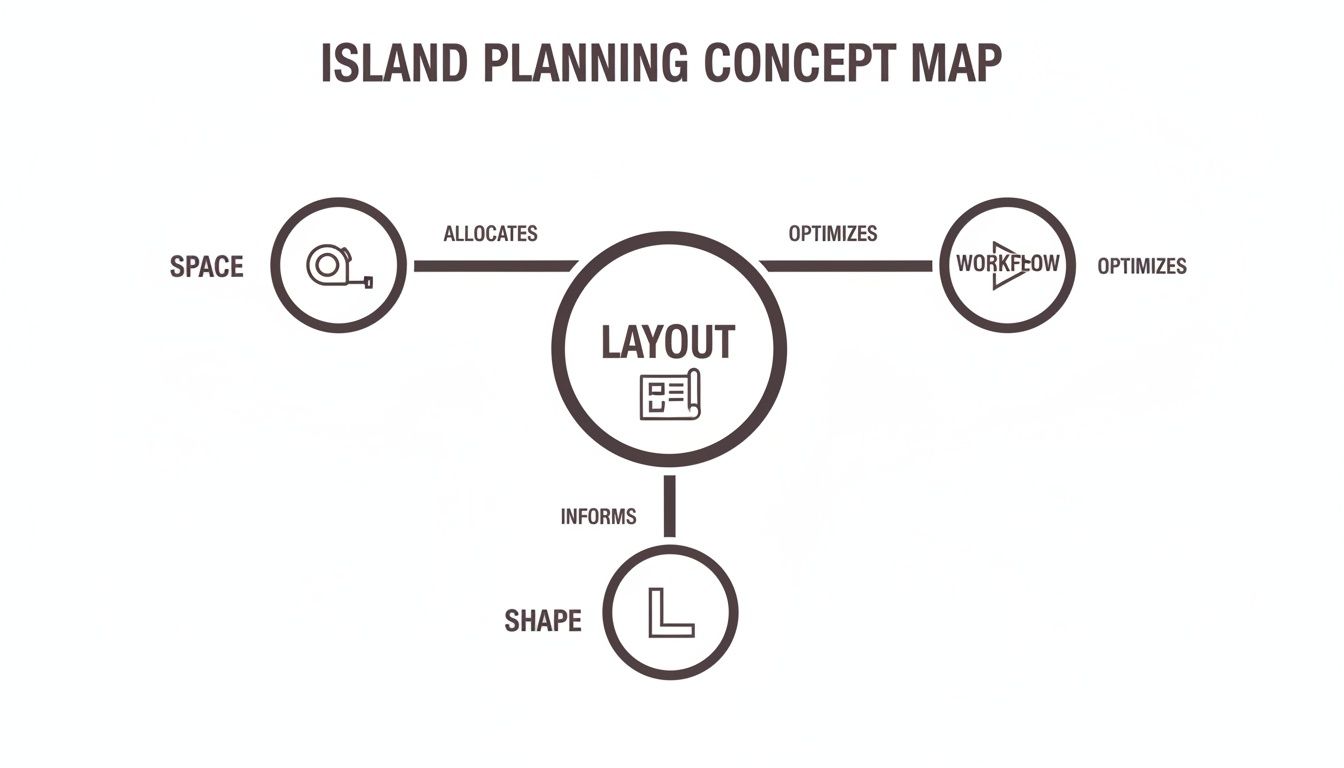
As you can see, a great island design starts with a smart layout strategy that makes these three core considerations work together.
High-Performance Countertop Surfaces
The countertop is where the action happens. It’s also a huge part of the island’s look. It needs to be tough enough to handle a sizzling hot platter straight off the grill, shrug off stains from spilled red wine, and not fade after years under the sun.
Here are the top contenders that can actually handle the job:
- Granite: It's a classic for a reason. Granite is incredibly durable and heat-resistant, so you can set hot pans down without a second thought. Just know that it needs to be sealed—usually once a year—to keep it from absorbing stains.
- Dekton: This is the pinnacle of outdoor countertop tech. An "ultra-compact surface," Dekton is non-porous and practically indestructible. It's built to resist scratches, stains, heat, and UV fading, and it never needs sealing. Ever.
- Concrete: If you're after a modern, industrial vibe, concrete delivers. It's very durable, but it must be perfectly sealed when installed and resealed regularly. If not, it will stain and can even develop cracks from moisture.
A countertop that can't handle the realities of outdoor cooking and entertaining will quickly become a source of frustration. Choosing a material like Dekton or properly sealed granite ensures your surface remains pristine year after year.
Finishes That Offer Beauty and Protection
The finish you choose is both the island's signature look and its first line of defense. For steel cabinetry, powder coating is the undisputed champion.
This isn't just a fancy name for paint. Powder coating is a dry finishing process where a colored powder is electrically bonded to the metal and then baked on. This creates a finish that is much, much tougher than paint. It's incredibly resistant to chipping, scratching, and fading and comes in a huge range of colors to match your home.
For a touch of natural warmth, nothing beats the elegance and sheer performance of Grade-A teak. It's loaded with natural oils that make it inherently resistant to water, rot, and bugs. Over time, it weathers into a beautiful silver-gray patina that only adds to its character. You can learn more about its unique benefits and discover why Grade-A teak is worth the investment for any high-end outdoor project.
By carefully selecting every component—from the stainless steel frame to the countertop and the finish—you’re not just designing an outdoor kitchen. You're building a legacy piece that is truly meant to last a lifetime.
Equipping Your Island with Pro-Grade Appliances
This is where the magic happens. An outdoor kitchen island is just a beautiful structure until you start adding the hardware—that’s when it becomes a true culinary powerhouse. Choosing the right appliances is what turns a simple prep station into a high-performance cooking system ready for any occasion you throw at it.
The goal isn't just to fill slots with shiny metal, but to build a cohesive setup where every component works together seamlessly.
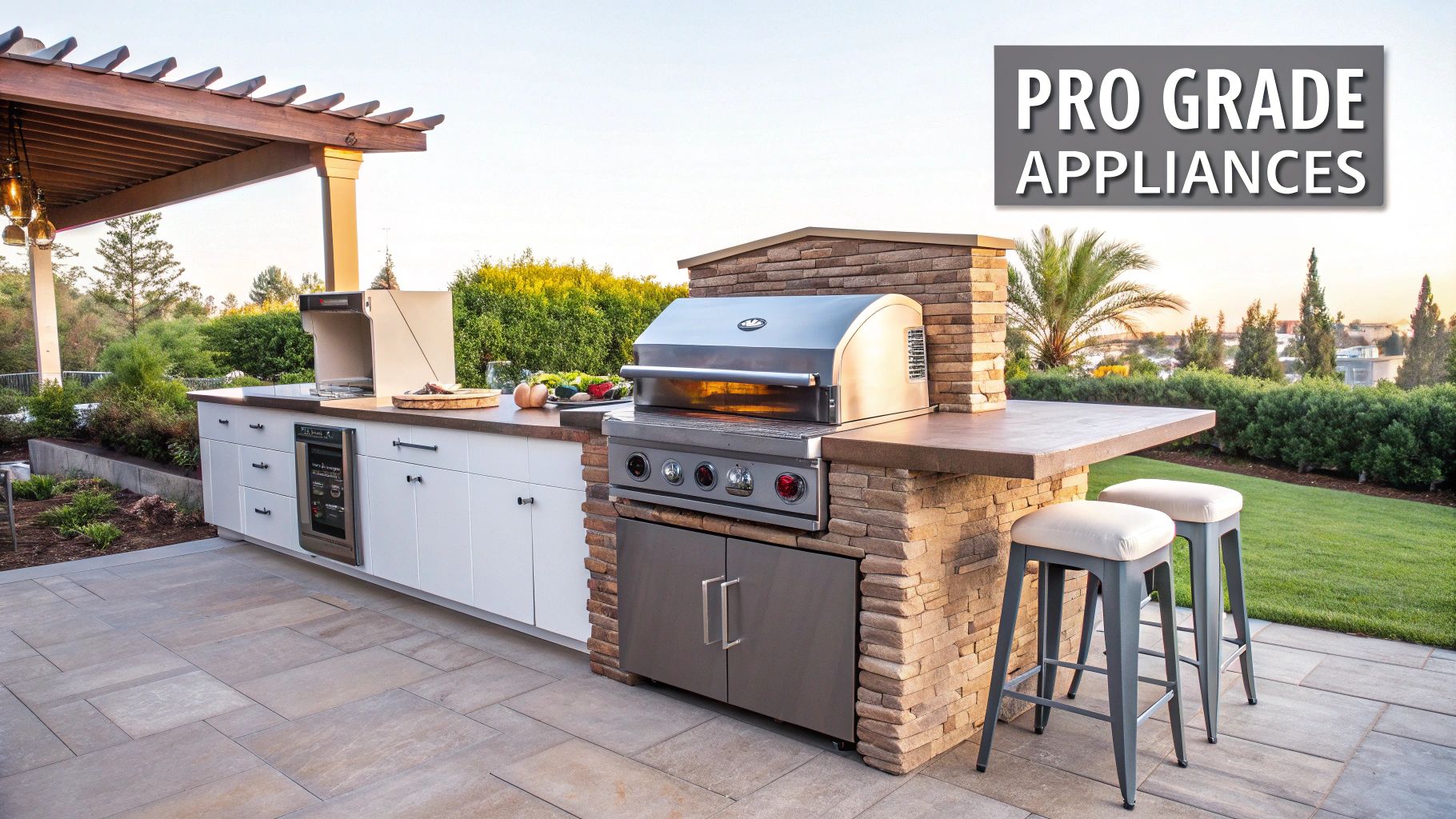
This isn't just a niche trend anymore; it's a fundamental shift in how we use our backyards. The global outdoor kitchen market is exploding and projected to become a USD 45.45 billion industry by 2032. Homeowners are the driving force, making up over 62.3% of the market as they invest in luxury setups with professional grills and integrated appliances. If you're curious about the scale of this boom, you can review the full outdoor kitchen market report and see the data for yourself.
The Grill as Your Culinary Anchor
Let's be honest, the centerpiece of nearly every outdoor kitchen is the built-in grill. This is your workhorse, the main event, and the appliance you'll fire up more than any other. Opting for a high-performance, built-in model is a non-negotiable for a luxury island; it integrates flawlessly into your countertop for that clean, professional look you're after.
When you're picking out a grill, here's what to focus on:
- Fuel Type: Natural gas is the ultimate convenience if you have a line run to your patio—no more tank swaps. Propane, on the other hand, offers more flexibility in placement. Some top-tier grills even feature hybrid systems for that authentic charcoal flavor.
- Cooking Power (BTUs): Don't just look at the number, but understand what it means. Higher BTUs generally give you faster preheating and the intense searing capability needed for that perfect steakhouse crust.
- Advanced Features: This is where you can really level up. Integrated rotisseries for roasting whole chickens, dedicated sear stations for insane heat, and smoker boxes for adding wood-fired flavor are all features worth considering.
Think of the grill as the foundation of your cooking setup. Once it's in place, you can start adding complementary appliances that take you far beyond basic burgers and hot dogs.
Expanding Your Cooking Arsenal
A truly great outdoor kitchen should offer more than one way to cook. By adding a few specialized appliances, you can prepare virtually any meal you can dream of without ever setting foot back inside.
The most functional islands are built like a professional kitchen line. Each appliance serves a specific purpose, allowing you to move from one task to the next—searing, baking, or simmering—all in one consolidated space.
Consider adding a few of these popular cooking units to your island:
- High-Heat Pizza Oven: Nothing beats a dedicated pizza oven. It can reach temperatures far higher than a standard grill, producing those perfectly crispy, leopard-spotted pizzas in just a few minutes. It's an instant centerpiece for any party.
- Flattop Griddle (Teppanyaki): This is your weekend morning hero. It's perfect for everything from pancakes and bacon to hibachi-style stir-fries and smash burgers for a crowd. The consistent, even heat across a large surface is incredibly versatile.
- Dedicated Smoker: If you're serious about barbecue, a built-in smoker is a must. It allows for that low-and-slow cooking that infuses meats with deep, smoky flavor over hours.
- Power Burners: These high-output side burners are absolute beasts. They're powerful enough to handle huge pots for a seafood boil or deep-frying—tasks that are often too messy or overwhelming for an indoor stove.
Essential Support Appliances
Beyond the cooking hardware, the right support appliances are what make an outdoor kitchen truly functional. These are the unsung heroes that keep ingredients fresh, drinks cold, and cleanup simple, letting you stay right in the middle of the action with your guests.
Your support team should include:
- Outdoor-Rated Refrigerator: A standard mini-fridge won't survive the elements. You need an outdoor-rated unit specifically designed to maintain a consistent, food-safe temperature, even on the hottest summer days.
- Ice Maker: An under-counter ice maker is a luxury you won't know how you lived without. It ensures you never run out of ice for cocktails, eliminating those last-minute runs to the store.
- Sink and Faucet: A built-in sink is a total game-changer for both prep and cleanup. Wash vegetables, rinse utensils, and wash your hands without ever leaving the island.
- Kegerator: For the ultimate host, a built-in kegerator serving perfectly chilled draft beer on tap adds a fun, professional touch that will make your patio the go-to spot for every gathering.
By thoughtfully selecting and integrating this full suite of appliances, your island becomes so much more than a place to grill. For a deeper dive into choosing the right components, check out our complete guide to outdoor kitchen appliances. You'll be building a complete, self-sufficient entertainment hub ready for any culinary adventure.
Getting Your Utilities and Installation Right
A gorgeous outdoor kitchen island is more than just its sleek finishes and powerful grill. The real workhorse is the infrastructure hidden beneath the surface. Nailing the utilities—gas, electricity, and water—is what turns a pretty patio feature into a true culinary hub.
You absolutely have to plan for these connections from day one. It’s like building a house: you can't put up the frame before the foundation is poured and set. Thinking through your utility runs early on ensures your island works safely, passes local inspections, and gives you that effortless experience you’re paying for.
Planning Your Fuel Source
The grill is the star of the show, which means its fuel source is critical. You’ve got two main routes to go, and your choice will shape both the convenience and the complexity of the installation.
- Natural Gas Line: This is the ultimate "set it and forget it" choice. Having a plumber run a natural gas line directly from your house means you have an endless supply of fuel on tap. You'll never again have that sinking feeling when a propane tank sputters out mid-sear with guests waiting. It’s a bigger job upfront, requiring a licensed professional, but the payoff in convenience is huge.
- Propane Tank: A classic propane tank gives you more freedom with placement. You aren’t tethered to a fixed gas line, so you can position the island almost anywhere. The trade-off? You have to keep an eye on fuel levels and haul that heavy tank around. It also eats up precious cabinet space that could be used for storage. For most high-end projects, the direct line is well worth the initial investment.
Essential Electrical and Safety Measures
These days, outdoor kitchens demand power for a lot more than just the grill’s igniter. Think about it: you’ll need electricity for the refrigerator, the rotisserie motor, under-counter lighting, and maybe even a few outlets for a blender or a phone charger. This is absolutely not a DIY task. Bringing in a licensed electrician is a must to keep things safe and up to code.
The single most important piece of the electrical puzzle is the GFCI (Ground Fault Circuit Interrupter) outlet. These are specifically designed to prevent shocks in damp or wet locations, making them non-negotiable for any outdoor setup.
A GFCI outlet is a lifesaver, literally. It constantly senses the flow of electricity. If it detects even a tiny imbalance—like power trying to route through water or a person—it cuts the circuit in a millisecond. It’s required by code for a reason.
Your electrician will run dedicated, weatherproof wiring from your home’s electrical panel out to the island. They’ll install GFCI-protected outlets exactly where you need them, making sure the entire system is built to withstand the elements and keep everyone safe.
Integrating Water and Drainage
A sink is what truly elevates an outdoor kitchen from a simple grill station to a full-service prep and cleanup space. Being able to wash produce, rinse tools, or just wash your hands without running inside is a game-changer. But, of course, adding water means adding plumbing, and you have to think about what happens when the temperature drops.
Your plumbing plan needs to tackle two main things:
- Water Supply: A plumber can tap into your home's existing plumbing to bring hot and cold water out to your new faucet. It's crucial that these lines are properly insulated to guard against the summer heat and winter cold.
- Drainage and Winterization: The wastewater has to go somewhere, whether it's tied into your home’s main sewer line or routed to a simple dry well (depending on local regulations). The most critical part of this is planning for winter. Your plumber must install a shutoff valve and drain point so you can completely blow out the lines before the first freeze. This simple step prevents your pipes from bursting and causing a very expensive, very messy problem.
Protecting Your Investment with Proper Care
A luxury outdoor kitchen isn't just an appliance; it's a long-term investment in your home and lifestyle. While these islands are built tough to handle the elements, a little proactive care is what truly preserves that "just installed" look and flawless performance year after year. Think of it like maintaining a classic car—a simple, consistent routine prevents small issues from ever becoming big headaches.
The right care starts with knowing your materials. For those beautiful 304 stainless steel cabinets and appliances, the trick is to always clean with the grain. Grab a soft microfiber cloth and a good stainless steel cleaner. This one small habit prevents micro-scratches and erases fingerprints, keeping the metal looking brilliant.
Developing a Seasonal Maintenance Checklist
Countertops have their own needs. Granite, for example, is incredibly durable but it's also porous. That means an accidental wine or marinade spill can sink in and stain. Resealing it once a year is the answer. It’s a quick job that creates an invisible shield, keeping liquids on the surface where they can be wiped away easily.
If your design includes gorgeous wood accents, they need a bit of attention too. To get the full picture, you can learn more about the care and maintenance of outdoor teak furniture in our dedicated guide.
A consistent maintenance schedule is the best insurance policy for your investment. Just a few hours each season will extend the life of your outdoor kitchen island significantly, safeguarding its beauty and functionality.
Beyond the weekly wipe-downs, a few seasonal tasks make all the difference. Before winter arrives, winterizing your water lines is non-negotiable, especially in colder climates. This means shutting off the water and blowing out the pipes to prevent a frozen, burst pipe from causing a disaster.
Finally, don't underestimate the power of a good cover. A high-quality, fitted cover is your island's best friend, shielding it from everything Mother Nature throws its way—fading UV rays, driving rain, and the heavy weight of snow and ice. These simple habits are what keep your outdoor kitchen looking and performing its best, always ready for the next get-together.
Got Questions? Let's Talk Details.
As you get closer to breaking ground, the big-picture dreams start to give way to practical, nitty-gritty questions. This is a good thing! It means you're thinking through the details that lead to a flawless project. We've been through this process hundreds of times with homeowners, and the same crucial questions always seem to pop up.
Think of this as your final gut-check. We'll tackle the most common uncertainties we hear, from budgeting and permits to picking materials that will actually last. Let's get these last few questions answered so you can move forward with total confidence.
What's the Real-World Cost for a High-End Outdoor Kitchen Island?
This is the big one, and the honest answer is: it depends. But we can give you some solid ballpark figures. For a premium, pre-configured island with a great appliance package, you're typically looking at a range of $15,000 to $30,000+.
Now, if you're going for a fully custom build with show-stopping features—like a sprawling Dekton countertop and a suite of top-of-the-line appliances—it's not uncommon for the investment to climb north of $50,000.
What drives that number? A few key components hold most of the weight:
- The Foundation: The island's frame and cabinetry are its bones. A heavy-gauge 304 stainless steel structure is the gold standard for durability, and its cost reflects that.
- The Countertop: This is your island's work surface and a major aesthetic piece. Premium materials like Dekton will be a larger investment upfront compared to a classic granite slab.
- The Appliances: Your grill, refrigerator, pizza oven, and other built-in units are a significant chunk of the budget. The brands you choose and the sheer number of appliances will move the needle quite a bit.
A smart way to plan your budget is to think of it in three parts: the island structure itself, the full appliance package, and the professional installation of your utilities.
Do I Really Need a Permit for an Outdoor Kitchen?
More often than not, yes. The moment you start running new utility lines for gas, electricity, or water, you've entered permit territory. Your local building department has strict codes for a reason—they're all about safety.
They'll have rules for everything, from how far the island must be from your house to the specific ventilation required for a grill, especially if it's under any kind of roof or covered structure.
Trying to sidestep the permit process is a gamble you don't want to take. It can backfire with hefty fines, an order to tear down your beautiful new kitchen, and, most importantly, serious safety risks. The best path is always to work with a licensed contractor who knows the local codes inside and out.
What's the Best Countertop Material That Can Handle the Elements?
The perfect outdoor countertop is a marriage of beautiful aesthetics and brute strength. It needs to look incredible while shrugging off sun, rain, and anything else you throw at it.
Granite has long been a popular choice. It’s fantastic with heat (you can put a hot pan right on it) and has that timeless, natural stone appeal. The only catch is that it's porous, so you'll need to seal it every so often to keep stains from soaking in.
For those looking for the absolute best performance, Dekton is in a class of its own. As an ultra-compact surface, it's engineered to be completely non-porous. That means it’s virtually immune to scratches, heat, stains, and UV fading. It delivers a pristine, modern look with almost zero maintenance required.
A quick note on quartz: while it's a go-to for indoor kitchens, it's generally a poor choice for outdoor spaces. The resins used to bind the quartz particles can turn yellow and break down when exposed to direct sunlight over time.
Ready to build the outdoor sanctuary you've been dreaming of? Explore the curated collections of professional-grade outdoor kitchen islands and appliances at URBANMANCAVES. Start designing your perfect outdoor kitchen today.


