

Let’s be honest, the grill is the undisputed star of any outdoor kitchen. It’s more than just a place to cook; it's the anchor for your entire backyard setup, the magnetic center where everyone gathers. Picking the right built-in grill is the single biggest investment you'll make, and it's what separates a basic patio from a true outdoor culinary command center.
Why the Right Grill Is the Heart of Your Outdoor Kitchen
An outdoor kitchen is all about creating a special kind of retreat, and the grill is its beating heart. This is the most critical decision you'll face, dictating not just what you can cook, but the entire vibe and workflow of your space. Ditching the wobbly cart model for a permanent, built-in grill is the move that truly transforms your backyard into a seamless extension of your home.
This one change elevates a simple cookout into a full-blown culinary experience. Picture it: your grill, perfectly set into a stunning countertop, flanked by storage and every tool you need right at your fingertips. This isn't just about making things easier; it’s about crafting a space that’s designed for incredible food and even better company. The right grill makes that entire vision click into place.
Core Decisions for Your Grill Investment
Choosing the best grill for your outdoor kitchen isn't something to rush. You need to weigh a few key factors that all play off each other. Nail this decision, and you'll have an investment that pays you back with incredible performance and rock-solid durability for years to come. Let's walk through the critical points to find the perfect fit for you.
- Fuel Source: Are you after the push-button convenience of natural gas, the go-anywhere flexibility of propane, or the smoky, authentic flavor that only charcoal can deliver?
- Construction Quality: How can you spot the good stuff? We're talking about materials like 304-grade stainless steel that can actually stand up to whatever Mother Nature throws at it.
- Cooking Performance: What do all the specs—like BTUs and infrared burners—actually mean when the steak hits the grates? We’ll translate the jargon into real-world results.
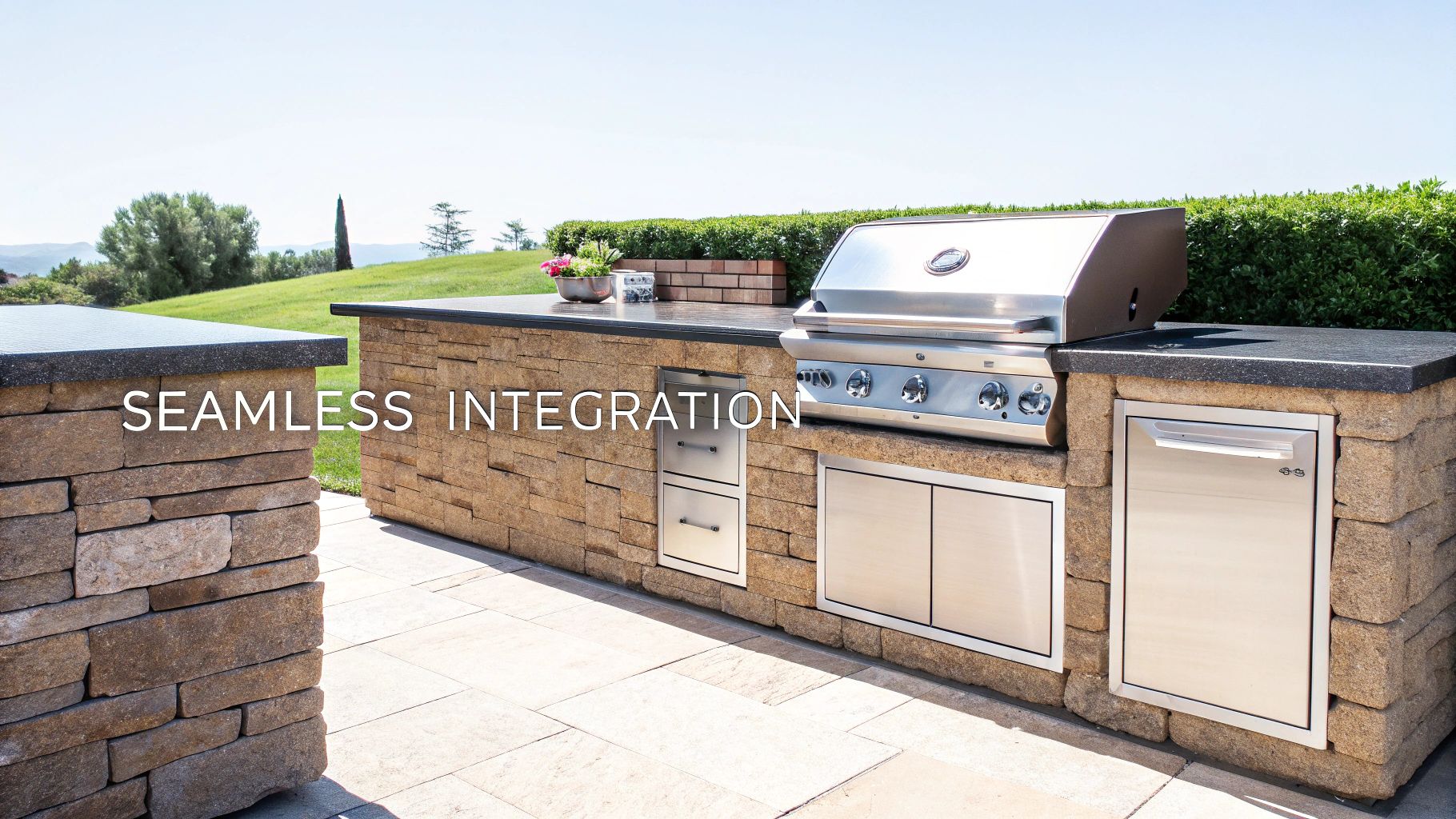
- Seamless Integration: How will the grill physically fit into your kitchen design to get that clean, professional, and completely cohesive look?
An outdoor kitchen truly comes to life around the grill. It's not just where the food is cooked; it's where stories are shared, techniques are perfected, and memories are made. Think of it as the foundational piece that dictates the function and feel of your entire outdoor living area.
To help you get started, here’s a quick breakdown of how a dedicated built-in model stacks up against a standard patio grill.
| Decision Point | Standard Patio Grill | Built-In Outdoor Kitchen Grill |
|---|---|---|
| Primary Goal | Casual, occasional grilling | Creating a central entertainment hub |
| Construction | Lighter materials, often bolted | Heavy-gauge stainless steel, welded seams |
| Performance | Basic burner systems | Advanced heat distribution, searing zones |
| Integration | Freestanding cart | Seamlessly built into countertops |
| Longevity | Typically 3-5 years | Designed to last 10+ years |
Choosing Your Fuel Source for Peak Performance
The grill is the heart of your outdoor kitchen, and the fuel you pick is what gives it its soul. This decision is about more than just gas versus charcoal. It's about matching the grill's personality to your cooking style, how much effort you want to put in, and the kind of flavor you're chasing. For a permanent, built-in kitchen, this choice is a long-term commitment that affects everything from installation to your weekend cookouts.
The first big decision point is simple: gas or solid fuel? Each one offers a totally different experience. One path leads to the set-it-and-forget-it ease of a natural gas line, while the other takes you to the primal, smoky world that only charcoal can create. Getting into the details of each is how you’ll find the right fit.
This isn’t just a personal choice; it’s part of a massive trend. The global barbeque grill market was valued at USD 7.2 billion in 2024, and it's growing fast as more people invest in serious outdoor living. That growth is all about giving people options—from traditionalists who swear by charcoal to those who just want to get dinner on the table fast with gas.
This decision tree lays out the fundamental choices you'll be making, starting with the most important one: your fuel.
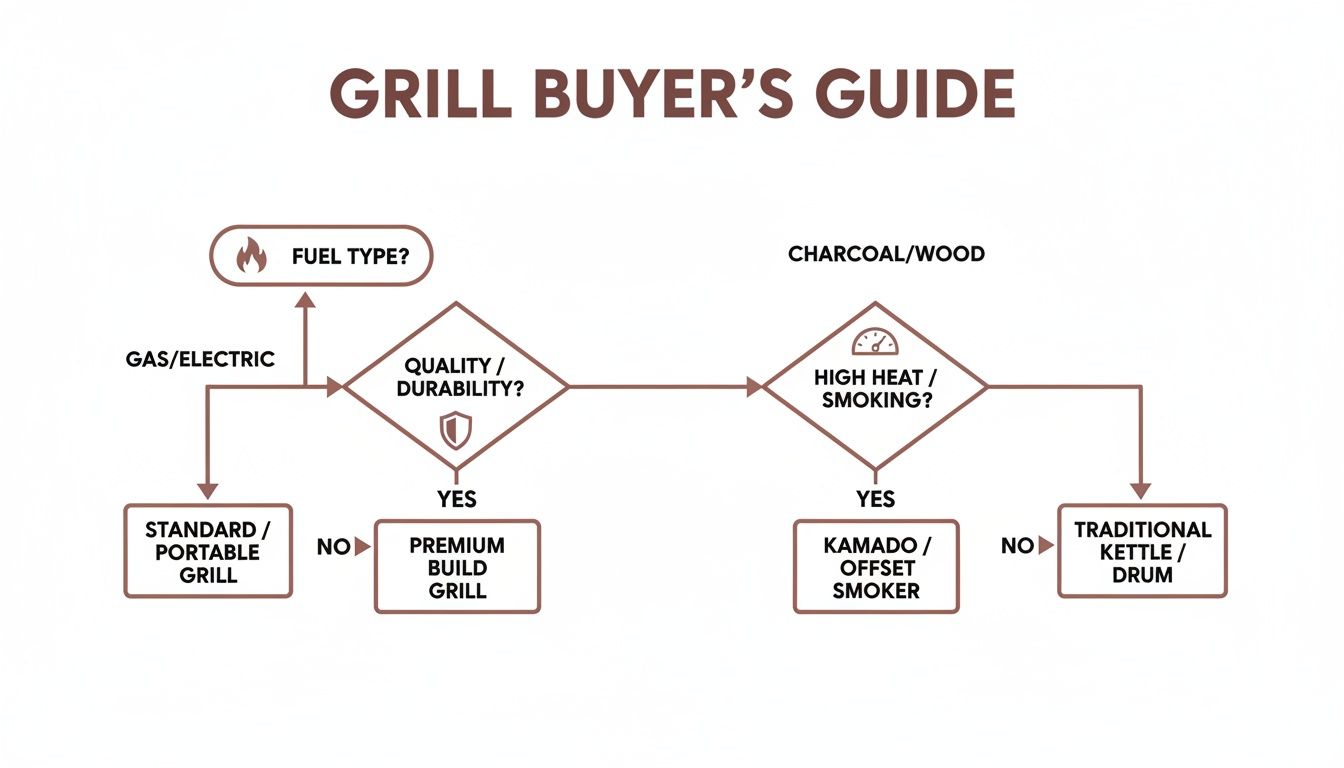
As you can see, the fuel you select sets the stage for everything else, from performance to the quality of your cooking experience.
To help you navigate this critical decision, let's break down how each fuel type stacks up in the context of a built-in outdoor kitchen.
Comparing Fuel Types for Built-In Outdoor Grills
| Fuel Type | Ideal Grilling Style | Performance and Flavor Profile | Convenience and Upkeep | Installation Considerations |
|---|---|---|---|---|
| Natural Gas | Effortless, frequent grilling. Perfect for weeknight meals and large-scale entertaining. | Clean, consistent heat. Flavor is direct from the food, not the fuel. | Ultimate convenience—never runs out. Minimal cleanup. | Requires a professionally installed gas line directly to the grill's location. |
| Propane | All-around use with flexible placement. Great for those who want gas control without a fixed line. | Identical to natural gas—clean and precise. | Push-button start. Requires swapping or refilling tanks, which can run out mid-cook. | No permanent gas line needed, offering more design flexibility for the kitchen island. |
| Charcoal | The purist's choice. Ideal for low-and-slow smoking and high-heat searing. | Unmatched smoky, authentic barbecue flavor. The fuel is an ingredient. | Hands-on process. Requires time to light and stabilize temps. Ash cleanup is necessary. | Requires excellent ventilation and heat-proof surrounding materials due to high radiant heat. |
| Hybrid | The versatile griller who wants it all—speed on weekdays, flavor on weekends. | Combines the clean heat of gas with the option for authentic smoke and char. | Offers the best of both worlds but often has more components to clean and maintain. | Installation is similar to a gas grill, but may require more space and ventilation planning. |
Ultimately, the best fuel source is the one that aligns with how you actually plan to use your outdoor kitchen, whether that's for quick family dinners or elaborate weekend smoking sessions.
The Convenience Kings: Natural Gas and Propane
For a lot of people, gas is the undisputed champion of ease and control. A natural gas grill is a game-changer, hooking directly into your home’s gas supply. It’s always ready to go. No more last-minute trips for a new tank or the dreaded moment it sputters out halfway through cooking ribs.
Propane gives you that same push-button start and precision temperature control but without being tethered to a gas line. It runs on refillable tanks, giving you more freedom in where you place your grill. The only trade-off is that you have to keep an eye on your fuel level.
The real beauty of a gas grill is that it gets all the prep work out of your way. You can just focus on the food. That’s a huge win for busy weeknight dinners or when you’re hosting a big party and need reliable, consistent results.
Both natural gas and propane are masters of holding a steady temperature, which is perfect for longer cooks like a rotisserie chicken or a slow-roasted pork shoulder. If your priorities are speed, simplicity, and total control, you can't go wrong with gas.
The Flavor Purist: Charcoal Grills
For those who see grilling as a craft, charcoal is the only way to go. It’s a more hands-on, rewarding experience. Modern kamado-style ceramic grills have taken charcoal cooking to a whole new level with their incredible insulation. Their thick walls lock in heat and moisture, allowing them to hold rock-steady temperatures for hours, whether you're smoking low-and-slow or searing at blazing-hot temperatures.
The flavor you get from charcoal is deep, complex, and smoky in a way that gas grills just can't replicate. Learning to control the heat with vents and airflow is part of the fun—it’s a skill that pays off with truly amazing food.
- Flavor Profile: It's the real deal—that authentic, smoky barbecue taste that gets right into the meat.
- Heat Versatility: These grills can hit insane searing temperatures of over 750°F for a perfect crust and then dial it way down for hours of smoking.
- The Experience: It’s a more involved, almost ritualistic way of cooking that many people love.
The Best of Both Worlds: Hybrid Systems
What if you want the convenience of gas and the flavor of charcoal? You’re in luck. Hybrid grill systems are designed for the griller who refuses to compromise. These units typically have a primary gas burner system for everyday ease, but they also include a dedicated tray for charcoal or wood chunks.
This means you can fire up the gas for quick burgers on a Tuesday night, then load up the charcoal for a proper brisket smoke on Saturday. It gives you the precision of gas when you need it and the authentic flavor of solid fuel when you want it, all in one grill. If you're building out your ultimate cooking space, exploring these essential outdoor kitchen components can help you see how a versatile grill fits into the bigger picture. A hybrid grill truly is the peak of culinary flexibility.
Decoding Grill Materials and Build Quality
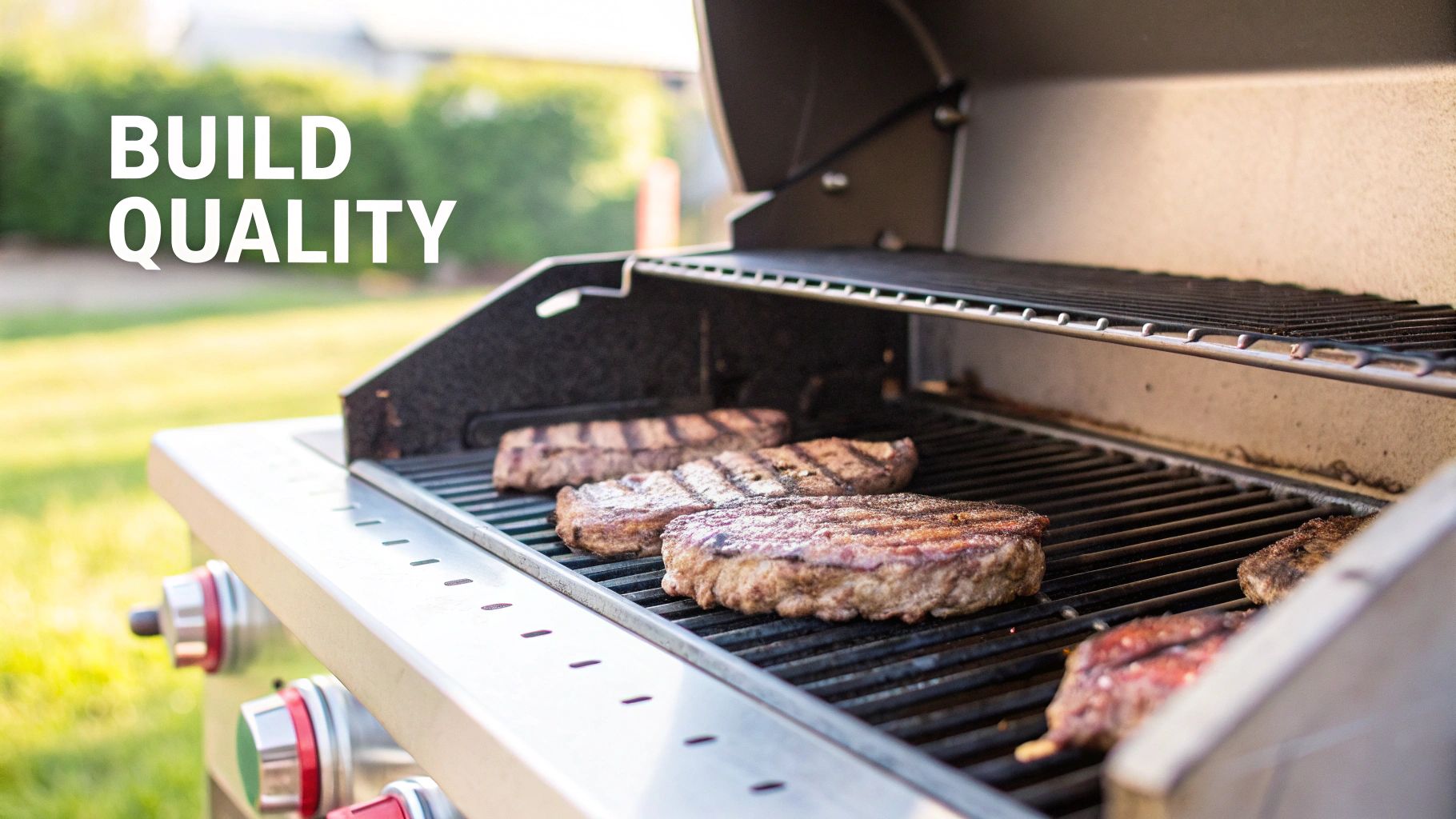
When you’re investing in an outdoor kitchen grill, you’re buying something you expect to last a decade or more. That makes build quality the single most important thing to look at—it’s what separates a short-term toy from a long-term centerpiece. Forget the flashy features and sky-high BTU ratings for a minute; the metal and the craftsmanship are what will keep your grill performing year after year, no matter what the weather throws at it.
The massive recent trend in outdoor living has only made this more critical. With over 70% of Americans spending more time in their backyards, people expect grills that can do it all, from searing fish to slow-roasting ribs. And while you'll always see freestanding models, built-in grills are what's driving the premium market, especially in suburbs and Sunbelt states where a full outdoor kitchen is becoming the norm.
The Stainless Steel Benchmark
The first thing to check on any outdoor grill is the stainless steel. It’s a dead giveaway for quality. And no, not all stainless steel is the same—the differences have a huge impact on how long your grill will last and how good it will look doing it.
- 304-Grade Stainless Steel: This is the gold standard, period. It’s what you find on high-end outdoor appliances because its high chromium and nickel content makes it incredibly resistant to rust and corrosion. If you live anywhere near the coast or in a humid climate, this isn't a luxury; it's a necessity. A grill made from 304-grade steel is built to last.
- 430-Grade Stainless Steel: You'll see this on more budget-friendly options. It’s magnetic and has less nickel, which means it’s far more likely to rust and stain over time. It might look shiny on the showroom floor, but it just doesn’t have the backbone for a permanent outdoor kitchen.
Just as important is the thickness, or gauge, of the steel. Thicker steel (look for a lower gauge number) holds heat better, which means more even cooking and less wasted fuel. It also gives the entire grill a solid, substantial feel that screams durability.
A premium grill shouldn’t feel like a flimsy backyard accessory; it should feel like a commercial appliance. Look for welded seams, beefy hardware, and a heavy, double-walled hood. Those are the signs of a grill built to be the heart of your outdoor kitchen for years to come.
Beyond the Body: Hoods, Seams, and Grates
The details in construction are what truly separate a top-tier grill. A double-walled hood is non-negotiable. It acts as a layer of insulation, trapping heat for consistent cooking temperatures even on a windy day. This not only makes the grill more efficient but also keeps the exterior from getting dangerously hot.
Take a close look at how the grill is put together. You want to see smooth, welded seams, not a bunch of screws and bolts holding the frame together. Welds create a much stronger, more rigid structure that won't wobble or loosen over time. Plus, they get rid of the nooks and crannies where grease and moisture love to hide and cause corrosion.
The All-Important Cooking Surface
Finally, let's talk grates. The material you're cooking on directly impacts your sear marks and your cleanup routine. You've got two main choices, each with its own personality.
| Grate Material | Searing Performance | Heat Retention | Maintenance |
|---|---|---|---|
| Cast Iron | Unbeatable. Creates those deep, dark, crusty sear marks. | Holds onto heat like nothing else. | Must be seasoned regularly to keep it from rusting. |
| Stainless Steel | Excellent, especially with thick rods (8mm+). | Heats up fast and spreads heat evenly. | Tough as nails and a breeze to clean. |
For a built-in grill, most people lean toward heavy-duty stainless steel rods because they're so low-maintenance and durable. But if you're a purist chasing that perfect steakhouse crust, there's just no substitute for the raw searing power of a well-seasoned cast iron grate. Focusing on these quality materials is a key part of any build, and you can find more outdoor kitchen ideas that prioritize longevity in our other guides to help with your planning.
Understanding True Cooking Power and Control
When you're shopping for a high-end grill, it's tempting to get laser-focused on one number: BTUs (British Thermal Units). On paper, a massive BTU rating sounds like a clear winner, but it's only one piece of a much bigger puzzle. Real cooking power isn't about the raw heat a grill can produce; it’s about how smartly and efficiently that heat gets to your food.
Think of it this way: a muscle car with a monster engine is useless if it has bad tires and sloppy suspension. It can’t put the power down. A grill is no different. A sky-high BTU rating means nothing if poor design wastes that energy, leading to uneven cooking and a disappointing sear. This is where thoughtful engineering really separates the best grills from the rest.
Beyond BTUs: It's All About Heat Flux
A much better way to judge a grill's searing muscle is its heat flux. This metric tells you how many BTUs are concentrated per square inch of the cooking surface. A brilliantly designed grill with a lower overall BTU number can absolutely outperform a less efficient, higher-BTU model by focusing intense heat exactly where it counts.
This is the real secret behind that perfect steakhouse crust. One grill gets you there in minutes, while another leaves the meat looking gray and sad. The difference isn't the total BTUs—it's the targeted intensity.
A grill with high heat flux is a master of the Maillard reaction—the chemical process that creates that deep, savory crust on seared meats. It delivers intense, direct energy to the food's surface, creating flavor and texture that lower-flux grills simply cannot replicate.
Understanding this concept is key to matching a grill to your cooking style. If you're chasing that professional-grade sear, you have to look past the flashy BTU number and see the technology putting that power to work.
Burner Types and Their Cooking Roles
The burners are the heart of your grill, and the type you have directly impacts its performance. Different burners are built for different jobs, and the most versatile outdoor kitchen grills usually feature a mix of them. Let's break down the main players.
| Burner Type | Best Use Case | Cooking Characteristic |
|---|---|---|
| Tube Burners | All-purpose grilling, indirect heat | The workhorse of many gas grills. Provides even, consistent heat for general cooking. |
| Cast Stainless Steel | High-heat cooking, durability | Incredibly tough and holds heat extremely well, delivering powerful, even temperatures. |
| Infrared Searing Zone | Steakhouse-quality searing | Uses intense infrared radiation to superheat the grates, creating a perfect crust in seconds. |
Knowing the difference is critical. A set of cast stainless burners is ideal for something delicate like fish or a whole rotisserie chicken, where you need consistent, enveloping heat. On the other hand, an infrared zone is a specialist. For more ideas on how to combine these tools, our guide on choosing the right outdoor kitchen appliances has some great insights.
The Power of an Infrared Searing Zone
An infrared burner isn't your everyday burner; it's a specialized tool built for one purpose: creating an incredibly hot surface for a world-class sear. Instead of using open flames to heat the air, it directs gas through a ceramic plate with thousands of tiny ports, generating powerful infrared radiation that directly heats the food.
This technology can get a cooking grate screaming hot—we're talking over 1,000°F—in just a couple of minutes. The result? A perfect, edge-to-edge crust on a steak or chop, locking in juices without overcooking the inside. This is how you bring the high-end steakhouse experience to your own backyard.
- Precision Searing: Instantly creates a deep, flavorful crust while keeping the inside juicy.
- Rapid Heat-Up: Gets to searing temperature in a fraction of the time of a conventional burner.
- Fewer Flare-Ups: The intense heat vaporizes drippings on contact, preventing them from igniting.
While you wouldn't want an entire grill made of infrared burners (it would be too intense for most foods), having a dedicated searing zone gives you incredible flexibility. You can gently cook a thick-cut ribeye over indirect heat on your main burners, then finish it on the infrared zone for that final, perfect crust. That’s the kind of control that defines a truly premium outdoor kitchen.
Integrating Your Grill for a Flawless Design
Picking out one of the best outdoor kitchen grills is a huge step, but the real magic happens when you integrate it into your island. This is what separates a simple backyard setup from a truly seamless, professional-looking outdoor kitchen. Nailing this part of the process is key to avoiding common headaches that can ruin the look and, more importantly, the safety of your space.
The grill is the heart and soul of the whole operation, both functionally and visually. There's a reason grills dominate the outdoor kitchen market—they're expected to make up 39.6% of the $7.8 billion global outdoor kitchen appliance sector in 2025. And with that market set to more than double by 2035, it’s clear that a well-integrated grill is a major investment in your home's value. For a deeper dive into these numbers, you can check out the full report from Future Market Insights on the outdoor kitchen appliances market.
Sizing and Placement Strategy
First things first: you have to match the grill head size to your available counter space. I’ve seen it time and time again—someone buys a massive grill that swallows the entire island, leaving zero room to prep. On the flip side, a tiny grill can look awkward and out of scale.
A solid rule of thumb is to leave at least 12-18 inches of clear countertop on both sides of the grill. This gives you a "landing zone" for platters, tools, and spices, which makes the whole cooking experience far more enjoyable. Think about your workflow before a single cut is made.
The Non-Negotiable Insulated Jacket
Let's talk about safety, because this is the one area you can't afford to cut corners. If your island is built with any combustible materials, like a wood frame, an insulated jacket is absolutely mandatory. No exceptions.
This stainless steel liner slides into the cutout and creates an air gap, which acts as a crucial heat shield between your scorching hot grill and the flammable structure. Skipping this isn't just a fire hazard; it can also void your grill’s warranty. Even if you're using steel studs, always double-check the manufacturer's specs. Some still require a jacket for proper heat management.
Think of an insulated jacket as the unseen hero of your outdoor kitchen. It’s a one-time investment that provides permanent peace of mind, protecting your home, your family, and your entire outdoor living investment from the risk of fire.
Ensuring Proper Ventilation and Airflow
A built-in grill needs to breathe. Without proper airflow, a gas grill can't combust fuel efficiently, and worse, it can lead to a dangerous buildup of gas inside the island.
To prevent this, your island must have vents. Most grill manufacturers recommend a minimum of two vents, installed on opposite sides of the island to create good cross-ventilation. It’s a simple addition that ensures your grill runs safely and performs at its peak for years.
Creating a Cohesive Look with Matching Components
If you want that truly high-end, custom-built finish, stick with one brand for your grill and all the other built-in components. When you mix and match access doors, drawers, and side burners, you risk a disjointed, pieced-together look.
Here's why a single brand is the way to go:
- Consistent Finishes: You get a perfect match in the grain, shine, and color of the stainless steel across every piece.
- Perfect Alignment: Handles, corners, and design profiles are all made to line up flawlessly, creating a clean, unified aesthetic.
- Simplified Installation: Components from the same family are engineered to fit together, which makes the entire build process much smoother for your contractor.
This approach elevates the project from a simple assembly to a polished, professional-grade installation. For a more detailed walkthrough of the construction process, take a look at our complete guide on how to build an outdoor kitchen island.
Our Top Grill Picks for Every Kind of Cook
Alright, let's move from the specs on paper to what really matters: finding a grill that fits how you actually cook. Instead of just listing models, we've broken down our top recommendations based on the kind of backyard chef you are.
Think of this as matching the grill's personality to yours. We're connecting the dots between features like heavy-duty 304 stainless steel or screaming-hot infrared burners and the real-world results you're after. This isn't about buying a shiny box; it's about investing in the right tool for your specific culinary vision.
The Ultimate Entertainer
You're the host who loves a crowd. Your backyard is the go-to spot, and you need a grill that can keep up with a full-scale party without missing a beat. For you, a large, powerhouse gas grill isn't just a cooker—it's your command center. Efficiency, capacity, and versatility are your top priorities.
The perfect grill for the entertainer needs to have:
- A huge primary cooking surface, often over 700 square inches, so you can grill dozens of burgers and steaks while veggies sizzle on the side.
- Multiple, independently controlled burners, usually made from cast stainless steel, letting you create different heat zones for searing, roasting, and warming all at once.
- A built-in rotisserie system with its own dedicated infrared backburner is a must for turning out those perfectly crisp, juicy chickens and roasts.
- Good interior lighting and LED-illuminated controls are non-negotiable for grilling long after sunset.
This kind of setup is all about performance under pressure. It's the closest you can get to a professional kitchen setup right on your patio, ensuring every guest gets a fantastic meal, right off the grill.
The Entertainer’s grill is an exercise in control and capacity. It’s for the person who envisions sunset dinner parties where roasting a whole chicken on the rotisserie while searing appetizers on a side burner is not just possible, but easy.
The Flavor Aficionado
For you, grilling is a craft. You're chasing that deep, smoky, authentic flavor that you can only get from real charcoal and wood. It's a hands-on, sensory experience. The clear winner here is a high-performance kamado-style grill, a master of heat retention and cooking flexibility.
These ceramic beasts are incredible at holding steady temperatures for low-and-slow smoking, but they can also crank up to over 750°F for a steakhouse-quality sear. They're incredibly efficient, too; one load of quality lump charcoal can easily last all day for a brisket or pork shoulder. Their airtight design locks in moisture, producing some of the juiciest barbecue you'll ever taste.
If you're truly dedicated to the art of live-fire cooking, taking a look at the best outdoor kitchen brands will point you toward the builders who pour their passion into this exact style of high-performance grill.
The Versatile Performer
Why should you have to choose? The Versatile Performer demands the push-button convenience of gas for a quick weeknight dinner but isn't willing to give up the unmistakable flavor of charcoal on the weekends. The solution is a well-designed hybrid grill.
These grills are the Swiss Army knives of the backyard. They integrate a full gas grilling system right alongside a dedicated tray for charcoal or wood chunks. The best part? You can use the gas burners to light the charcoal in minutes, giving you that smoky flavor without the long wait. It’s the ultimate no-compromise option for the griller who truly wants to do it all.
Answering Your Final Questions About Outdoor Kitchen Grills
Putting a high-end grill at the heart of your outdoor kitchen is a big move. It’s totally normal to have some lingering questions before you pull the trigger. Getting a handle on what it really takes to own one—from cleaning to safe installation—is how you make a choice you’ll love for years, not just a season.
We've rounded up the questions we hear most often to give you clear, no-nonsense answers.
How Do I Properly Maintain a Stainless Steel Grill?
Keeping your grill in top shape is easier than it looks and mostly comes down to a simple routine. Great performance and a killer look for a decade or more are your reward.
The most important step is a quick post-cook "burn-off." Just crank the burners on high for about 10-15 minutes. This torches any leftover food bits, making it easy to scrape the grates clean with a good wire brush.
For the exterior, stick with a cleaner made specifically for stainless steel and a soft microfiber cloth. Here’s the pro tip: always wipe with the grain of the steel. This prevents tiny scratches and brings back that brand-new shine. A few times a year, plan on a deeper clean of the inside and a quick check of your gas connections to keep things safe and running smoothly.
A premium built-in grill is an investment in both performance and longevity. Constructed from materials like 304-grade stainless steel, it's designed to last over a decade, offering superior cooking control and adding permanent value to your home.
Is an Expensive Built-In Grill Really Worth It?
Without a doubt. The upfront cost is higher, but the long-term value you get from a premium built-in grill is in a different league compared to cheaper cart models. These grills are built like tanks, using superior materials like heavy-gauge 304-grade stainless steel, so you can count on 10+ years of service.
Less expensive grills often need to be replaced every few years. They just don't have the precise heat control or the raw searing power you get from a high-end unit. When you invest in a quality outdoor kitchen grill, you're paying for serious durability, incredible cooking results, and a permanent upgrade to your home.
Do I Always Need an Insulated Jacket for a Built-In Grill?
If your grill is going into an island made of anything flammable—think a wood or composite frame—then yes, an insulated jacket is absolutely essential. It's a critical safety component that acts as a fireproof barrier between the grill's intense heat and the structure itself.
Now, if your island is built from top to bottom with non-combustible materials like steel studs, concrete board, and stone, you might be able to skip it. But here's the bottom line: you always have to check the grill manufacturer's installation manual. Their specs are the final word on what’s needed for a safe, code-compliant setup.
Ready to find the perfect grill to anchor your outdoor oasis? Explore our curated collection of high-performance grills and accessories at UrbanManCaves.com and start building the backyard of your dreams today. https://www.urbanmancaves.com


