

When you're ready to invest in a serious gas grill, the decision really boils down to three things: build quality, performance, and features. It’s about matching the machine to your cooking style and your outdoor living space. For a high-end setup, this means looking past the flashy gimmicks and inflated BTU numbers to focus on what truly matters: heavy-gauge stainless steel and high-performance burners.
Your Blueprint For The Perfect Gas Grill
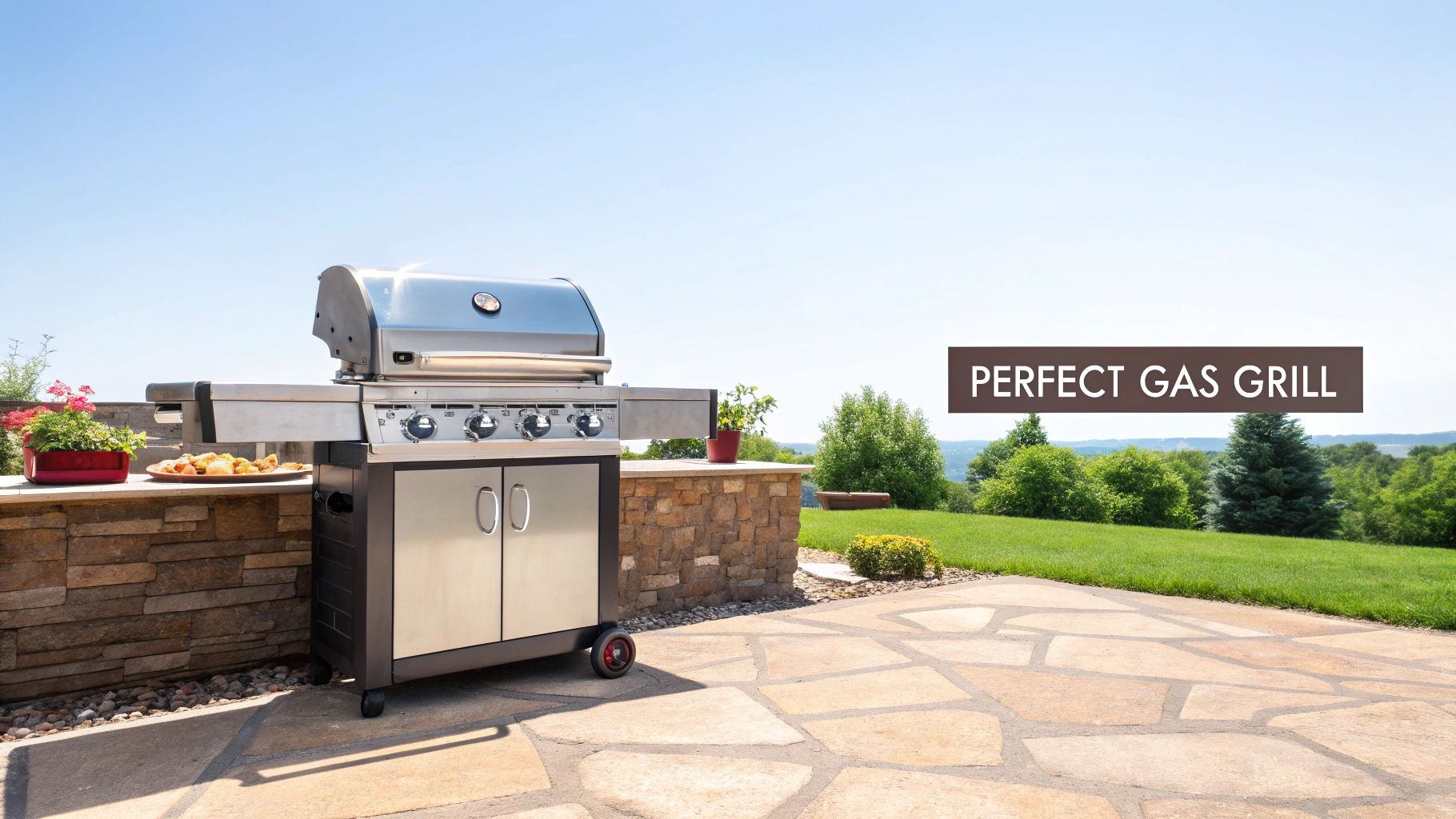
Let's be honest, picking out the gas grill is the most important decision you'll make for your outdoor kitchen. This isn't just another appliance; it’s an investment in an experience, the future centerpiece of your backyard. For homeowners who appreciate the finer things, a premium grill is where friends gather and culinary creativity comes to life.
This guide is designed to take you beyond the basic spec sheet. We'll get into the details that separate an average grill from an exceptional one—from the very foundation of its construction to the high-performance features that professional chefs swear by.
Defining Your Grilling Ambitions
Think of this as a personal consultation. The right grill should not only meet your practical needs but also elevate your entire outdoor lifestyle. Before we get lost in the technical jargon, let’s get clear on how you'll actually use it.
- Family Dinners vs. Large-Scale Entertaining: Are you usually cooking for your family of four, or are you the go-to host for parties of twenty? Your answer here will dictate the size and power you really need.
- Simple Grilling vs. Gourmet Cooking: Do you mostly stick to burgers and dogs, or do you dream of perfectly crisped rotisserie chickens, slow-smoked ribs, and restaurant-quality seared steaks? Advanced features are only worth the price if you’ll genuinely use them.
- Freestanding vs. Integrated Design: Is this grill going to be a standalone feature on your patio, or will it be built into a full-scale outdoor kitchen? If you're planning a complete overhaul, we have some fantastic outdoor kitchen ideas to get your creative juices flowing.
Taking a moment to answer these questions is the single best way to avoid overspending on features you'll never touch. On the flip side, it also prevents you from buying a grill that will cap your culinary potential. A clear vision is key to making sure your investment perfectly aligns with your backyard dreams.
How Will You Actually Use Your Grill?
Before you even think about burner types or stainless steel grades, let's get real. The best grill in the world is useless if it doesn't fit your life. This is the most crucial step, and skipping it is the biggest mistake I see people make.
So, let's paint a picture. Is your backyard the go-to spot for neighborhood block parties where you're slinging burgers for 20 people? Or are you more about quiet weeknight dinners, grilling a few pieces of chicken and some asparagus for the family?
The answer tells you exactly what size grill to look for.
A family of four can be perfectly happy with 450 to 550 square inches of primary cooking space. But if you’re the designated grill master for every holiday, you’ll want to step up to 600 square inches or more. That extra real estate means you can have steaks searing on one side and corn roasting on the other without anything getting crowded.
Freestanding Centerpiece Or A Full Outdoor Kitchen?
Now, where is this grill going to live? This is a major fork in the road, and it shapes your entire project.
- Freestanding Grills: The classic choice. They give you total flexibility. You can wheel it to a different spot on the patio, tuck it away for the winter, and it comes with you if you ever move. Everything you need is in one self-contained unit.
- Built-In Grills: This is about creating a permanent, fully integrated outdoor kitchen. The grill becomes the heart of a custom island, giving you that seamless, high-end look that truly extends your living space outdoors.
There's no question which way the wind is blowing. Built-in grills are the fastest-growing part of the market, with projections showing a CAGR of 7.1% between 2025 and 2034. Homeowners aren't just buying a grill anymore; they're designing a complete outdoor experience.
Planning Your Outdoor Cooking Zone
Choosing a built-in grill means you're not just buying an appliance—you're designing a workspace. A well-planned outdoor kitchen respects the classic "work triangle" concept, ensuring an easy flow between your grill, a sink, and your prep counters.
Think it through. You've got a tray of raw, marinated steaks. Where do you put it? Where do your tongs, spatula, and thermometer go? And where does the perfectly cooked food rest before it goes to the table? Without proper planning, you'll be doing a frustrating dance between the grill and the house every time you cook.
A critical mistake I see time and again is not leaving enough counter space. You absolutely need landing zones. Aim for at least 24 inches of clear prep space on one side of the grill and 12 inches on the other. Trust me, you'll thank yourself later.
Location is everything. Keep the grill away from anything that can catch fire and out of the main foot traffic paths. You also have to consider the prevailing wind, which can wreak havoc on your temperatures and blow smoke right into your seating area. And if your grill is going under any kind of covered patio, a dedicated vent hood isn't just a good idea—it's a must-have for safety.
Nailing down these details from the start is what separates a dream setup from a dysfunctional one. For a deeper dive into laying everything out, our guide on outdoor kitchen essentials is the perfect next step. Spending the time now to really visualize how you'll cook and live in your space ensures the grill you choose is the foundation for years of amazing meals, not a source of frustration.
Decoding Grill Materials and Build Quality
When you’re investing in a premium gas grill, you’re not just buying another cooking appliance. You're bringing home a centerpiece for your outdoor living space, one that should last for decades. The real difference between a grill that looks good for a season and one that performs like new for twenty years comes down to two simple things: the materials and the craftsmanship.
This is where the true value is found. While flashy features are nice to have, the core integrity of the grill—the steel, the welds, the burners—is what really dictates its longevity and cooking power. Getting a handle on these elements is the key to choosing a gas grill that will stand the test of time.
To get your head in the right space, this blueprint breaks down the starting points: how you cook, the type of grill that suits that style, and where you plan to put it.
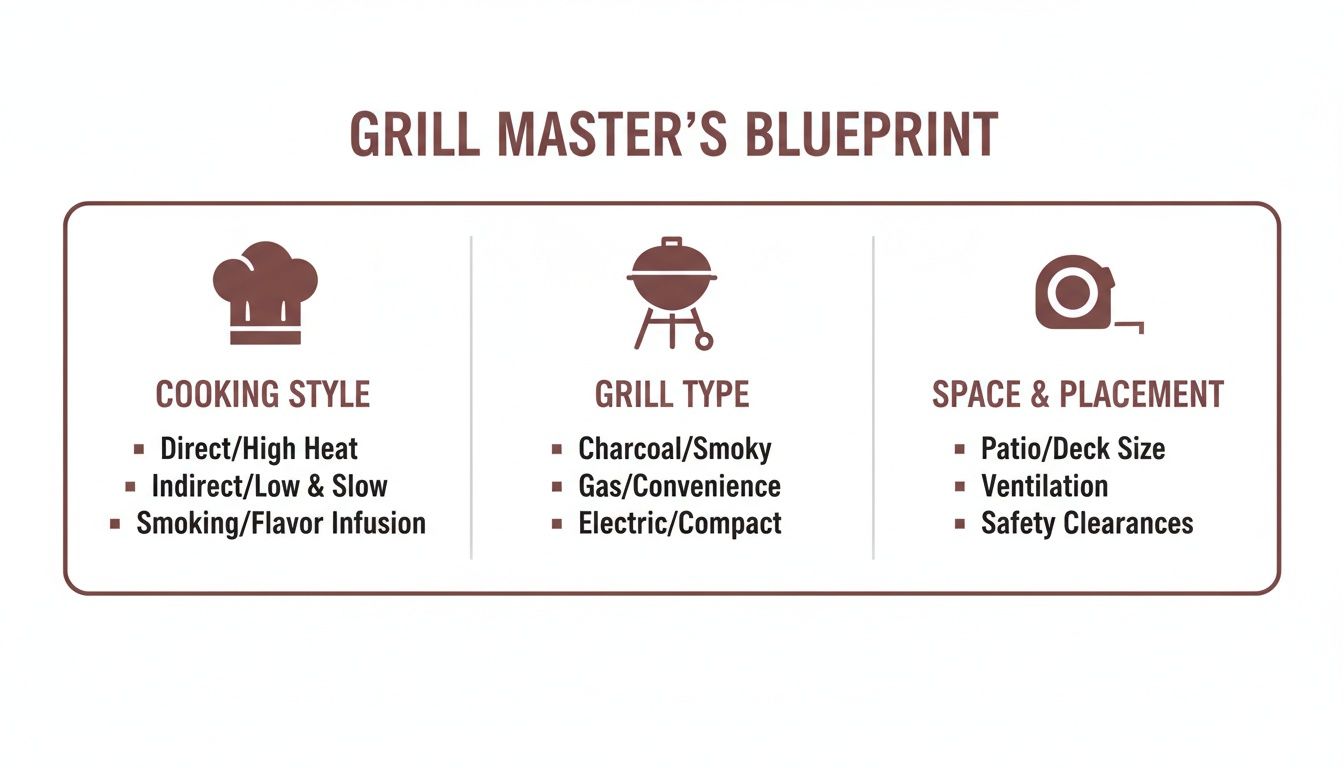
Thinking through these three pillars—your style, the grill type, and its placement—helps you narrow your focus to models that actually fit your life. It's the best way to avoid overspending on something that doesn't really match how you'll use it.
The Gold Standard of Stainless Steel
Let’s get one thing straight: not all stainless steel is created equal. The grade of steel used for the grill’s body, lid, and cart is probably the single most important factor in how well it will stand up to the elements.
For any premium grill worth its salt, 304-grade stainless steel is the absolute baseline. This isn't just a number; it means the steel has high levels of chromium and nickel, which gives it superior protection against rust and corrosion. If you live anywhere near the coast with salty air or in a humid climate, 304-grade steel is non-negotiable. Anything less will start showing its age far too quickly.
You’ll see less expensive grills advertising their stainless steel construction, but they're often using 430-grade stainless steel. It looks nice and shiny in the showroom, but it has very little nickel content, making it much more likely to rust. Here’s a quick trick you can do yourself: a magnet will stick firmly to 430-grade steel but won’t stick to 304-grade. For an investment that lasts, always insist on 304.
This focus on durability isn't just a niche concern. The global gas grill market was valued at $676.119 million in 2021 and grew to $793.4 million by 2025. It's projected to hit nearly $1.18 billion by 2033, which shows a clear shift toward consumers wanting quality and longevity in their outdoor kitchens.
Pay Attention to the Seams and the Feel
Beyond the metal itself, look at how the grill is actually put together. The best grills feature fully welded seams, especially on the hood and body. Welding creates a rigid, seamless structure that holds heat better and won’t start rattling or loosening after a few seasons of heavy use.
Many cheaper grills, on the other hand, are just held together with an assortment of nuts and bolts. All that expansion and contraction from firing up the grill will eventually cause those fasteners to loosen, leaving you with a wobbly, inefficient machine.
When you're in the showroom, give the grill a little shake. Does the lid feel solid and substantial, or is it light and flimsy? A heavy, double-lined hood is an excellent sign. It means better insulation, which translates to more consistent cooking temperatures, less fuel wasted, and an outer surface that won't get dangerously hot.
Examining the Heart of the Grill: The Burners
The burners are the engine of your grill, so their design and what they’re made of are critical. You need burners made from heavy-duty materials that can handle intense heat and won’t corrode from dripping grease and acidic marinades.
- Cast Stainless Steel Burners: These are pretty much the top of the line. They are incredibly durable—often backed by a lifetime warranty—and they deliver fantastic, even heat across the entire cooking surface.
- Welded 304-Grade Burners: This is another excellent, high-end option. These burners are built to resist rust and burnout, ensuring you won't be replacing them in a few years.
If you’re serious about longevity, steer clear of stamped stainless steel or cast iron burners. These materials are much more prone to rust and will almost certainly need to be replaced every few years, turning your grill into a money pit. You can browse a curated collection of grills that get this right in our guide to the best stainless steel grills.
The Importance of Heavy-Duty Cooking Grates
Finally, don’t overlook the cooking grates. This is where the magic happens—the surface that creates those perfect sear marks. The thickness and material of the grates directly affect how well they hold and transfer heat. Heavy, thick grates soak up heat and deliver it straight to your food for a professional-quality sear.
What you want to see are grates made from heavy-gauge 304 stainless steel rods. They won’t rust, they’re easy to clean, and they should last a lifetime. Some elite models even offer cast stainless steel grates, which are virtually indestructible and have phenomenal heat retention. Compare that to the thin, porcelain-coated grates on cheaper grills, which will inevitably chip, rust, and need replacing.
To make sense of it all, here's a quick comparison of the materials you'll encounter for the most critical parts of a grill.
Grill Material And Component Comparison
| Component | Premium Choice (e.g., 304 Stainless Steel) | Standard Choice (e.g., 430 Stainless/Porcelain-Coated) | Key Benefit |
|---|---|---|---|
| Grill Body | 304-Grade Stainless Steel: High chromium/nickel content; non-magnetic. | 430-Grade Stainless Steel: Lower nickel content; magnetic. | Maximum corrosion and rust resistance, especially in coastal/humid areas. |
| Burners | Cast Stainless Steel or Welded 304-Grade: Heavy, thick, and durable. | Stamped Stainless or Cast Iron: Lighter, prone to rust and burnout over time. | Unbeatable longevity and even heat distribution for consistent cooking. |
| Cooking Grates | Heavy-Gauge 304 Stainless Steel Rods: Thick, rust-proof, and excellent at retaining heat. | Porcelain-Coated Cast Iron/Steel: Prone to chipping, which leads to rust and flaking. | Superior heat transfer for professional sear marks and lifetime durability. |
As you can see, opting for premium materials is less about luxury and more about long-term performance and value. A grill built with these components won't just cook better—it will save you the cost and headache of frequent repairs and replacements down the road.
Evaluating Cooking Performance And Technology
Once you've kicked the tires and confirmed the grill is built like a tank, it's time to look under the hood. The real magic of a high-performance grill isn't just its shiny exterior; it's how it manages and delivers heat. This is where you separate the true culinary workhorses from the marketing hype.
The conversation often kicks off with BTUs (British Thermal Units). It's easy to get impressed by a huge number on a spec sheet, but frankly, it's one of the most misleading metrics out there. A massive BTU rating on a poorly insulated, thin-walled grill is just wasted energy—all that power just bleeds out into the air instead of cooking your food.
Think of it this way: a well-built grill with a lower, more efficient BTU output will always outperform a high-BTU powerhouse that can't retain heat. It’s all about how the grill captures, holds, and distributes that precious heat.
The Science Of Even Heat Distribution
Ever had a grill with frustrating hot spots that scorch one burger while another barely cooks? That’s a failure of heat distribution. The secret to edge-to-edge cooking consistency lies in the system between the burners and the grates.
This is where premium grills really shine. These systems are designed to radiate heat evenly and vaporize drippings for that incredible smoky flavor. You’ll typically find two top-tier designs:
- Ceramic Briquettes: These porous ceramic plates are arranged in trays right above the burners. They soak up intense heat and then radiate it upwards with incredible consistency, much like a perfect charcoal fire. The result is fewer flare-ups and beautifully even cooking.
- Heavy-Gauge Flame Tamers: You might know them as "flavorizer bars." These are angled sheets of thick stainless steel that serve a dual purpose: they protect the burners from grease and instantly vaporize any drippings that hit them, infusing your food with flavor. The heavier and thicker they are, the better they'll retain and spread heat.
A superior heat distribution system is non-negotiable. It’s what gives you the confidence to use every square inch of your grill, knowing the steak in the corner will be just as perfect as the one in the center.
Mastering The Sear With Infrared Technology
If you live for a steak with a deep, dark, crusty exterior, then an infrared sear zone is a must-have. This isn't your standard convection cooking (heating the air). Instead, it uses intense, direct radiant heat to do the job.
An infrared burner is a ceramic plate with thousands of tiny ports. Gas ignites across the surface, heating the ceramic until it glows red and pumps out searing heat that can exceed 1,500°F.
This extreme temperature creates the Maillard reaction almost instantly, locking in juices and giving you that coveted steakhouse-quality crust. While you can get a decent sear on a standard grate, nothing comes close to the speed and power of a dedicated infrared zone.
Perfecting Rotisserie With Rear Burners
For the rotisserie enthusiast, another game-changing feature is a dedicated infrared rear burner. This is a vertically mounted burner at the back of the firebox, positioned perfectly for rotisserie cooking.
Its placement is genius. It directs radiant heat at the back of the spinning food, ensuring a beautiful, even browning while allowing drippings to fall harmlessly into the drip pan below. No more flare-ups charring your beautiful roast. This setup gives you that incredibly juicy interior and perfectly crispy skin on everything from chicken to prime rib, making spectacular results almost effortless.
It's features like these that explain why gas grills are so dominant. The entire barbecue grill market is valued at $6.05 billion in 2025, and gas grills command a massive 47.88% market share, making them the undisputed top choice. Consumers vote with their wallets for reliability and consistent performance. You can dig deeper into these trends in this detailed barbecue grill market report.
Understanding these core performance elements helps you look past the price tag to see how a grill will actually cook. From even heat distribution to the specialized power of infrared burners, this knowledge ensures you choose a machine that truly matches your culinary ambitions. For more ideas, check out our curated guide to the best outdoor kitchen grills that deliver this level of performance.
Choosing Features That Enhance Your Experience
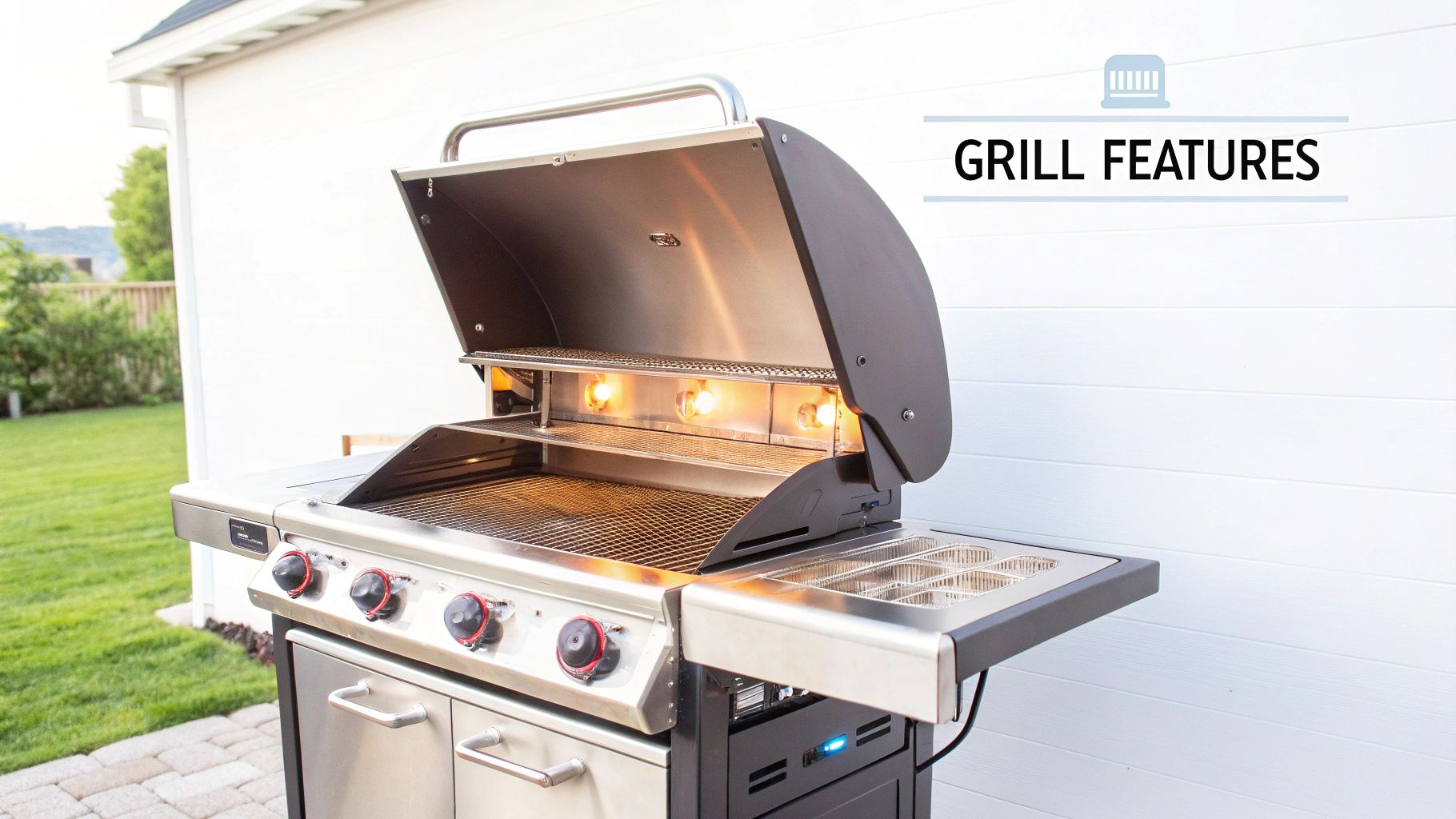
Once you've nailed down the core construction and raw cooking power, the real fun begins. This is where you move past the "must-haves" and start looking at the "want-to-haves"—the features that truly elevate your grilling game. These aren't just bells and whistles; they’re functional tools that can turn a simple barbecue into a full-blown culinary event.
The key is to be honest about how you'll actually use the grill. Do you constantly find yourself running back inside for a saucepan? Do you crave that authentic wood-smoke flavor but love the convenience of gas? Thinking through your real-world habits will help you pick features that add genuine value, not just another button on the control panel.
Essential Add-Ons For The Complete Grilling Station
Certain features have become nearly standard on high-end grills for a simple reason: they solve real problems and open up a whole new world of cooking possibilities. For any serious enthusiast, these are well worth the investment.
I always tell my clients to focus on these high-impact options first:
- High-Powered Side Burners: This is probably the single most useful feature you can add. A solid side burner, pushing 12,000 BTUs or more, lets you simmer a BBQ sauce, sauté vegetables, or boil a pot of corn right where you are. No more juggling pans between the kitchen and the patio. It keeps the whole operation outdoors.
- Integrated Rotisserie Kits: Nothing impresses guests quite like a perfectly golden, self-basting rotisserie chicken. A built-in kit with a heavy-duty motor and its own dedicated rear infrared burner is a game-changer. That slow, even rotation locks in moisture for incredibly juicy results you just can't get any other way.
- Smoker Boxes: For those who love the complexity of charcoal but live for the convenience of gas, a smoker box is the perfect middle ground. These little stainless steel trays fit right over a burner, letting you smolder wood chips to infuse everything from ribs to salmon with that amazing smoky taste.
Just these three features can dramatically expand your menu, effectively turning your grill into a complete outdoor cooking station.
One of the most overlooked yet critical features, especially if you entertain after dark, is good interior lighting. Having bright halogen or LED lights inside the hood is a non-negotiable for me. It lights up the whole cooking surface so you can actually see what you're doing without trying to grill with a flashlight in one hand. It’s a small detail that makes a massive difference.
Seamless Integration Into Your Outdoor Kitchen
If you're planning a full outdoor kitchen, your grill is the star of the show, but it needs a supporting cast. The best built-in models are designed to integrate perfectly with a whole ecosystem of matching storage and utility components, creating a cohesive and ultra-functional workspace.
This is where you can truly dial in the workflow. Think about adding a pull-out trash bin to keep the area tidy or integrated paper towel holders and spice racks to keep essentials at your fingertips.
Key Storage And Utility Components
| Feature | Functionality | Best For |
|---|---|---|
| Pull-Out Drawers | Provides weatherproof storage for tongs, spatulas, thermometers, and other tools. | Keeping your essential grilling gear organized and shielded from the elements. |
| Access Doors | Offers easy access to the gas line and storage space beneath the grill island. | Hiding plumbing and giving you bulk storage for larger items like a grill cover. |
| Warming Drawers | Keeps finished food at the perfect serving temperature while you grill other items. | Hosts who are often juggling multiple courses or cooking for larger crowds. |
By thoughtfully choosing these components, you’re not just putting a grill on a patio—you’re creating an outdoor culinary command center. To see how all these pieces fit together, check out our guide on the essential outdoor kitchen appliances that bring the whole vision to life. This kind of strategic planning ensures your investment is not only a powerful cooking tool but also a beautiful, functional extension of your home.
Bringing It All Home: Your Final Checklist
You've done the hard work, sorting through BTUs, stainless steel grades, and infrared burners. Now, it’s time to make your final choice with confidence. Think of this last step as your pre-purchase inspection—a final walkthrough to ensure the grill you’re about to invest in truly matches the vision you have for your outdoor kitchen.
Before you make the commitment, do a quick hands-on check. The specs on paper are one thing, but the feel of the grill is another. Confirm that the main body and all the critical internal parts are built from 304-grade stainless steel. Go ahead and lift the hood. Does it feel solid and well-balanced? Look at the seams. You want to see smooth, fully welded joints, which signal superior craftsmanship compared to a grill held together with a bunch of nuts and bolts.
Don't Skip the Fine Print: Warranty and Long-Term Support
The warranty is often the biggest tell. When a brand stands behind its product with a lifetime or multi-decade warranty on major components like the burners, cooking grates, and housing, they’re telling you they built it to last.
But don't just glance at the word "lifetime" and assume you're covered. Dig a little deeper. A great grill is an investment, and you need to know what that partnership looks like down the road.
Here are the critical questions to ask your dealer or concierge before you buy:
- The Warranty, Unpacked: "Can you walk me through the specifics of the 'lifetime' warranty? What exactly is covered, and does that include labor, or just parts?"
- Future-Proofing Your Grill: "If I need a new ignition or a replacement burner in five or even ten years, are those parts readily available?"
- The White-Glove Treatment: "What's included in your delivery and installation service? Do you handle complete assembly, connection to my gas line, and a final test run?"
- Your Go-To Contact: "After the delivery team leaves, who do I call if I have a question or need service? Is there a dedicated person I can rely on?"
A premium grill isn't just a piece of equipment; it's a long-term relationship. A knowledgeable dealer will have clear, immediate answers, making you feel confident that you're not just buying a grill, but also securing a partner for years of incredible outdoor cooking.
Common Questions When Choosing a High-End Gas Grill
Even after you've done your research, a few questions tend to pop up right before you pull the trigger. I hear these all the time. Getting these last few details sorted out is the key to buying with complete confidence.
What's the Big Deal with 304 vs. 430 Stainless Steel?
This is probably one of the most important questions, and it all comes down to one thing: rust.
Think of 304 stainless steel as your long-term, all-weather armor. It has more chromium and nickel in its DNA, which makes it incredibly resistant to corrosion. If you live anywhere with high humidity or near the coast where salt is in the air, 304 isn't just a nice-to-have, it's essential.
On the other hand, 430 stainless is a more budget-friendly, magnetic steel. While it looks shiny at first, it's far more prone to rust and pitting over the years. For an investment that's meant to be the heart of your outdoor kitchen for a decade or more, 304 grade is the only way to go for lasting beauty and performance.
Do More BTUs Automatically Mean a Better Grill?
Absolutely not. This is a classic marketing trap. A massive BTU number on a poorly built grill just means you’re burning through propane for no good reason. True grilling performance is about efficiency, not just raw power.
What really matters is how well that heat is captured, retained, and distributed. A grill with a heavy, double-lined hood, thick cooking grates, and a smart heat distribution system will cook circles around a flimsy, high-BTU model that bleeds heat from every seam. Always look at the build quality and design first—that's where the real cooking magic happens.
If you love a perfect steakhouse crust on your steaks and burgers, an infrared sear zone is non-negotiable. It works differently than a standard burner, using intense, direct radiant heat to flash-sear the surface of the meat. This locks in all the juices and creates that incredible flavor crust in a way a conventional burner just can't replicate. It's the secret weapon for restaurant-quality results in your own backyard.
Ready to build the ultimate outdoor entertainment space? At Urban Man Caves, we offer a curated selection of premium grills, outdoor kitchen components, and everything you need to create your personal retreat. Explore our collections and find the perfect centerpiece for your backyard at https://www.urbanmancaves.com.


