

For homeowners who take their outdoor cooking seriously, the best outdoor griddles aren't just about cooking burgers. They’re about precision heat control, heavy-duty materials like rolled steel, and the convenience of fuel options like natural gas. High-end brands like Blaze and Le Griddle have perfected this, creating units that perform flawlessly and look right at home in a luxury outdoor kitchen. In the end, it’s about finding that sweet spot between cooking capacity and how you love to entertain.
Why an Outdoor Griddle Is Your Next Backyard Upgrade
Picture your backyard as the go-to spot for an incredible weekend brunch or the place to get that perfect crust on a smash burger. An outdoor griddle isn't just another piece of cooking equipment; it's a game-changer that completely redefines how you cook and entertain outside. These flat-top cookers have exploded in popularity, and for very good reason.
Unlike a standard grill with grates, a griddle gives you one solid, continuous cooking surface. This simple difference opens up a whole new world of food that grills just can't touch. Think delicate pancakes and eggs, fried rice, or a full-on hibachi dinner. The griddle’s consistent, edge-to-edge heat makes sure everything cooks perfectly every single time.
The Rise of the Backyard Culinary Centerpiece
The move toward creating truly livable outdoor spaces has put a big emphasis on appliances that are both functional and social. A griddle is naturally a social appliance. Guests can gather around, watch the chef in action, and be part of the experience, turning the cooking itself into entertainment. This shift has kicked off some serious market growth.
The global outdoor griddles market recently hit USD 686 million and is expected to climb to over USD 927 million by 2033. Gas models are leading the way, making up more than 50% of the market share. Their powerful, consistent heat is exactly what you need for getting a great sear on a steak or quickly cooking a batch of veggies. The numbers don't lie—people are choosing performance and convenience.
An outdoor griddle is more than just an appliance. It becomes the heart of your outdoor kitchen—a versatile, social hub that brings people together over incredible food.
Laying the Groundwork for Your Perfect Griddle
Choosing the right outdoor griddle is really an investment in your lifestyle. It’s about building a space that’s all about your passion for great food and hosting friends and family. To find the model that’s right for you, we need to walk through a few key factors, which this guide will break down in detail.
- Fuel Type: Are you looking for the convenience of a portable propane tank, or do you want the always-on readiness of a built-in natural gas line?
- Cooking Surface: Do you want the quick-heating responsiveness of rolled steel, or the classic heat retention and seasoning of cast iron?
- Size and Configuration: Should your griddle be a freestanding unit you can move around the patio, or a built-in model that becomes a permanent part of your outdoor kitchen?
Answering these questions will point you in the right direction. We’ve designed this guide to be your roadmap, helping you make sense of the options so you can choose a griddle that truly elevates your backyard. Once you understand these core elements, you can invest with confidence. For some inspiration, explore our expert outdoor kitchen ideas to see how a griddle can anchor your design.
Choosing Your Griddle Fuel Source
Think of your griddle's fuel as the engine under the hood. The choice you make between propane and natural gas is a big one, and it'll shape your entire cooking experience—from where you can place your griddle to how much you'll spend over time. Each fuel source has its own set of pros and cons, and the right one for you really comes down to your backyard setup and how you plan to cook.
Let's break them down.
Propane: The Portable Powerhouse
Propane is all about freedom and flexibility. If you want a griddle you can move around your patio, take to a tailgate, or simply set up without any permanent connections, this is your fuel. It's the go-to for freestanding models that aren't bolted into a fixed outdoor kitchen island.
Getting started is as easy as hooking up a standard 20-pound propane tank, just like you would with a typical backyard grill. When the tank gets low, you just swap it for a full one at a local hardware or grocery store. It's a simple, no-fuss approach perfect for anyone who values mobility.
What really makes propane shine is its self-contained design. No need to call a professional for installation.
- Unmatched Portability: Roll your griddle wherever the party is—from the deck to the driveway.
- Simple Setup: Connecting a propane tank takes minutes and is a straightforward DIY job.
- Immediate Use: You can literally buy a griddle and be searing steaks on it the same afternoon.
This plug-and-play convenience makes propane a fantastic way to get into high-performance griddling without the commitment or cost of running a permanent gas line.
Natural Gas: The Seamless Integration
If propane is like a high-quality portable speaker you can take anywhere, natural gas is the built-in, whole-home audio system. It’s the top-tier choice for permanent, custom outdoor kitchens where you want an endless, uninterrupted fuel supply. A natural gas griddle hooks directly into your home’s existing gas line, which means you can officially say goodbye to tank swaps forever.
Tapping into your home's natural gas line means you'll never run out of fuel in the middle of a party again. This creates a seamless, worry-free cooking experience that is the hallmark of a true luxury outdoor kitchen.
The initial investment is higher because you'll need a licensed professional to run the gas line safely. But once it's done, the long-term running costs are often lower, as natural gas typically costs less per unit of energy than propane. If you're a frequent outdoor cook, those savings can really add up over the years. This is a key point to think about when planning your whole setup; you can see how fuel choices affect other appliances by checking out the best outdoor kitchen grills.
To help you sort through this decision, here's a quick side-by-side comparison.
Propane Vs Natural Gas A Head-to-Head Comparison
| Feature | Propane Griddles | Natural Gas Griddles |
|---|---|---|
| Portability | Excellent. Can be moved anywhere. | Poor. Fixed to one location. |
| Installation | DIY, quick and easy. | Requires a licensed professional. |
| Upfront Cost | Lower. No installation fees. | Higher due to professional installation. |
| Long-Term Cost | Fuel is more expensive per unit. | Fuel is typically cheaper. |
| Convenience | Must monitor and replace tanks. | Endless fuel supply from home line. |
| Best For | Freestanding setups, flexibility. | Permanent, built-in outdoor kitchens. |
Ultimately, there’s no single "best" answer—just the best one for your space and cooking style.
The flowchart below can help you visualize this decision-making process. It all starts with fuel.
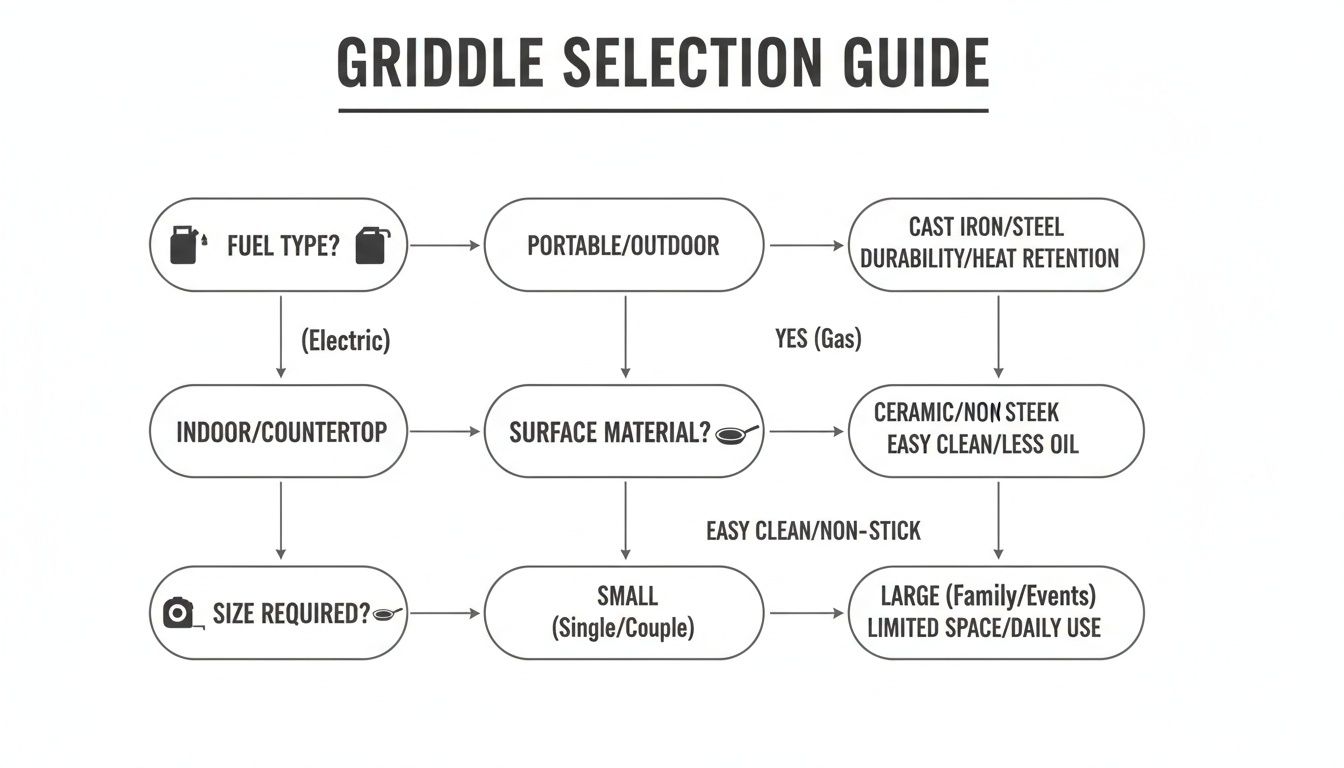
As you can see, choosing your fuel source is the first domino to fall. It directly influences where your griddle can go and what kind of setup you'll have. Whether you envision a flexible cooking station or a permanent culinary centerpiece, getting the fuel right is the first step toward building your perfect outdoor kitchen.
Understanding Griddle Cooking Surfaces
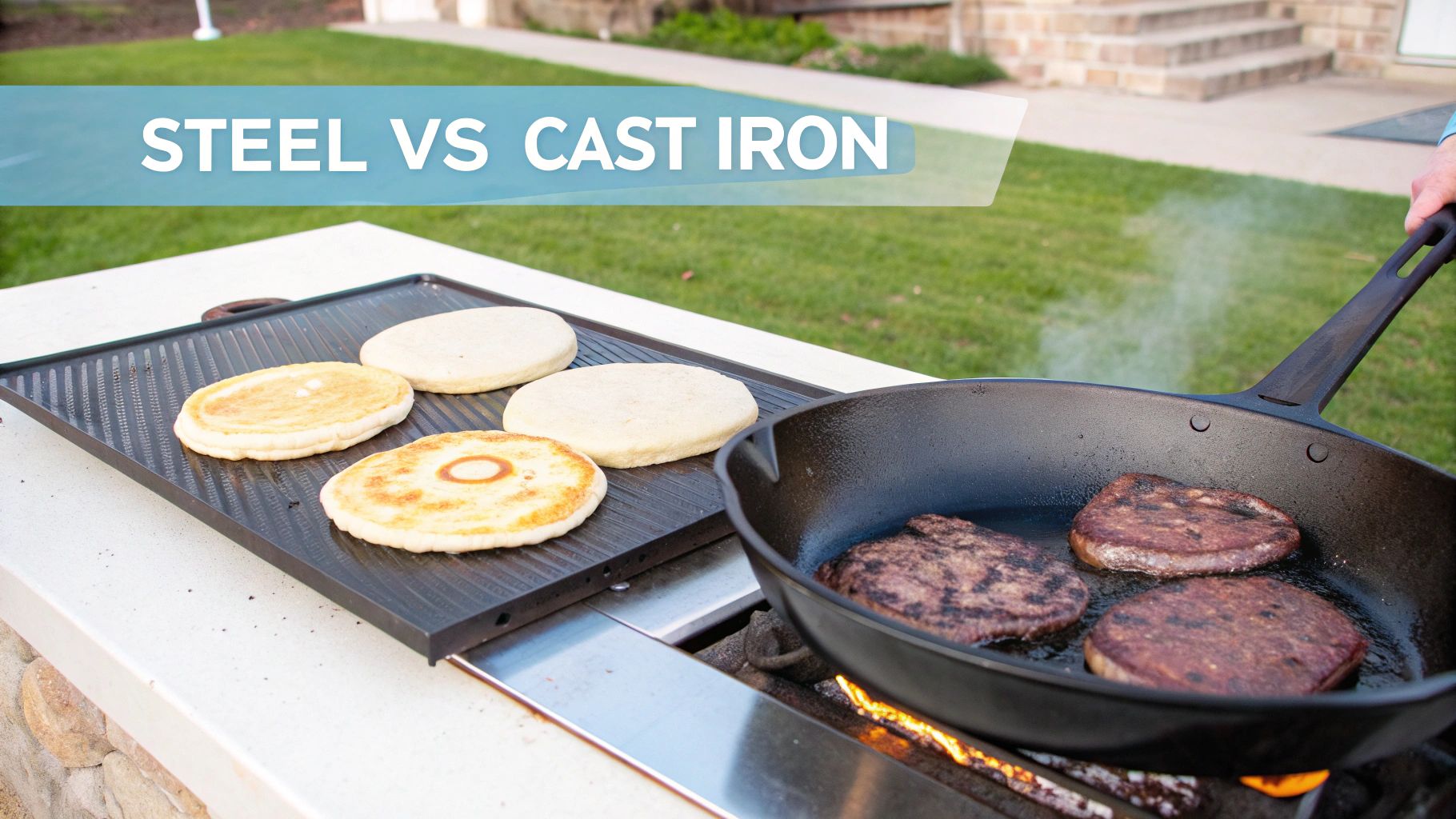
The cooking surface is where all the magic happens. It’s the business end of your griddle, and its material is going to shape everything from heat control and cooking performance to how you clean up after a meal. To really get the most out of your outdoor kitchen, you need to understand the fundamental differences between the two main players: rolled steel and cast iron.
Think of it this way: each material has its own personality. One is like a nimble chef's pan that reacts instantly to your every move, while the other is a seasoned workhorse, built to deliver unwavering, brute-force heat for that perfect sear.
Rolled Steel: The Responsive Performer
You’ll find rolled steel on many of the most popular griddles out there, and for good reason. Imagine a professional sauté pan. It’s incredibly responsive—it heats up fast and adjusts to temperature changes almost immediately. When you turn the heat down, the surface cools down just as quickly, giving you pinpoint control.
This nimbleness is perfect for delicate foods or anything that requires quick shifts in temperature.
- Pancakes and Eggs: You can dial in that perfect golden-brown temperature without accidentally scorching them.
- Smash Burgers: The fast heat transfer is exactly what you need to create that signature crispy crust in a matter of seconds.
- Hibachi-Style Cooking: Rapidly stir-frying veggies and meats is a breeze when the surface reacts the moment you adjust the flame.
Because it's so agile, rolled steel helps you avoid that frustrating "too hot, too fast" situation. The trade-off? It doesn't hold onto its heat quite as stubbornly as cast iron.
Cast Iron: The Seasoned Workhorse
Cast iron is the old-school, time-tested champion of high-heat cooking. If rolled steel is the sauté pan, cast iron is the heavy skillet that's been passed down for generations. Its defining trait is its incredible heat retention. Sure, it takes longer to get hot, but once it’s there, it holds that temperature with rock-solid stability.
This thermal mass is what makes cast iron the undisputed king of the sear. It won’t flinch when you drop a cold steak on it, delivering an unmatched crust from edge to edge. Over time, as you cook with it, layers of oil polymerize and create a natural, non-stick patina. This seasoning process isn't a chore; it's a ritual that protects the metal and actually improves its performance every single time you use it. For those wanting to add this classic performance to their existing setup, an accessory like the Imperial Flat Topper can deliver that cast iron experience on almost any grill.
The seasoning on a cast iron griddle is more than just a coating; it's a living history of every meal cooked on it. Each layer adds to its non-stick properties and deepens the flavor profile it can deliver.
Seasoning Your Griddle Surface
No matter which material you choose, seasoning your new griddle is the single most important thing you'll do. Most griddles ship with a protective coating to prevent rust, and you need to get that off. The seasoning process is all about applying thin layers of a high-smoke-point oil and heating the griddle until that oil literally bonds to the metal, creating a slick, protective, and non-stick surface.
For a perfect initial seasoning, just follow these simple steps:
- Wash the Surface: Give the brand-new griddle top a good scrub with warm, soapy water to strip off any factory gunk. Dry it completely.
- Heat It Up: Crank your griddle to high and let it heat for 10-15 minutes. You’ll probably see the surface start to change color a bit as it gets hot.
- Apply a Thin Layer of Oil: Turn the burners off and let it cool just enough to be safe. Using tongs and a paper towel, wipe a very thin, even layer of an oil with a high smoke point (canola, grapeseed, or flaxseed oil work great) across the entire cooktop.
- Burn It Off: Fire the heat back up to high. The griddle will start to smoke as the oil polymerizes—this is exactly what you want. Let it smoke until it stops.
- Repeat the Process: You’ll want to repeat this oil-and-burn-off cycle 3-5 times. With each layer, you’ll see the surface get darker, shinier, and more non-stick.
This whole process might take an hour, but it’s a crucial investment that will pay you back with amazing performance and a long-lasting griddle. From then on, cleaning is simple: just scrape the surface clean while it’s still warm, wipe it down, and apply one last, thin coat of oil to protect it until you cook again.
Finding the Right Griddle Size And Configuration
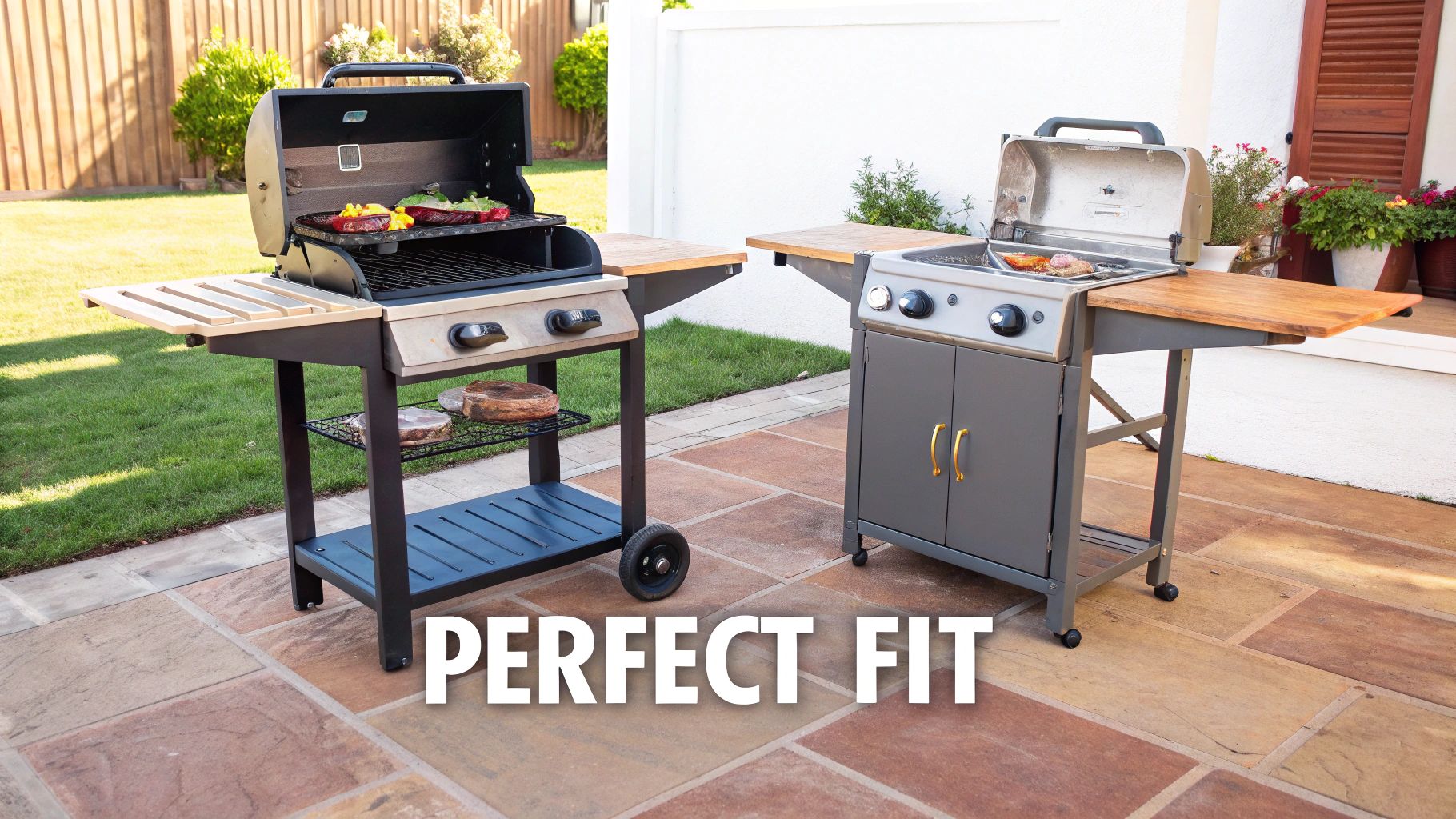
Choosing the right griddle isn't just about measuring your patio. It’s about matching the machine to your life. The perfect outdoor griddle needs to handle a quiet Sunday breakfast just as easily as it handles a full-blown neighborhood party, never feeling too big or too small for the job.
The decision really comes down to two things: the actual size of the cooking surface, which we usually talk about in terms of burners, and its configuration—are you looking for a flexible freestanding model or a sleek, permanent built-in? Nailing these two factors is the key to finding a griddle that feels like it was made just for you.
Translating Burners Into Capacity
When you see a griddle advertised as a two, four, or even six-burner model, what does that really mean for you? The easiest way to think about it is in terms of how many mouths you need to feed.
- Two-Burner Griddles: These are your compact powerhouses. They’re perfect for couples or small families, giving you enough room to flip a dozen burgers or cook up a full breakfast of eggs and bacon for four. A great place to start.
- Four-Burner Griddles: This is the sweet spot for most of us and the most common size out there. A four-burner gives you plenty of real estate to feed a group of 8-10 people, letting you sear steaks on one side while you sauté veggies on the other.
- Six-Burner Griddles: If you're the go-to host for every big get-together, a six-burner is your ultimate culinary stage. It's built to handle huge batches of food for large parties, making sure everything comes off the heat at the same time.
But it’s not just about cooking for a crowd. Having multiple burners unlocks the magic of zone cooking. You can create different temperature zones across the cooktop—a scorching hot zone for searing, a medium zone for cooking things through, and a low-heat area just to keep food warm. This level of control is what separates the good griddles from the great ones.
Freestanding Griddles: The Flexible Solution
Freestanding griddles are all-in-one units on a cart, which means maximum versatility. Think of them as your backyard's personal food truck—you can roll them wherever the action is. Most come with handy side shelves for prep work and lower storage for your propane tank and tools.
This self-contained design is a huge win for anyone who doesn't have a permanent outdoor kitchen setup. A perfect example of this style is the Blaze LTE Pro 40-Inch Gas Griddle Cart, which pairs a massive cooking surface with the convenience of mobility. Being able to rearrange your patio layout on a whim is a major advantage.
Built-in Griddles: The Integrated Masterpiece
A built-in griddle is the pinnacle of outdoor kitchen design. These units are installed directly into your countertop for a seamless, professional look that’s absolutely stunning. They are almost always hooked up to a natural gas line, giving you that endless fuel supply for completely worry-free cooking.
This setup transforms your griddle from a simple appliance into a core feature of your outdoor living space. It’s a permanent, high-end installation that says you are truly serious about your outdoor culinary game.
Outdoor griddles are completely changing how we entertain. Flat top models are leading a market boom that's projected to hit about $1.5 billion, growing at an impressive 8% CAGR through 2033. This surge reflects a bigger trend: the backyard renaissance, where versatility is king. Learn more about the rise of flat top griddles.
In the end, it’s all about finding that perfect balance between your cooking style, your typical guest list, and the space you have to work with. Get that right, and you’ll have a griddle you love for years to come.
Key Features of a High-Performance Outdoor Griddle
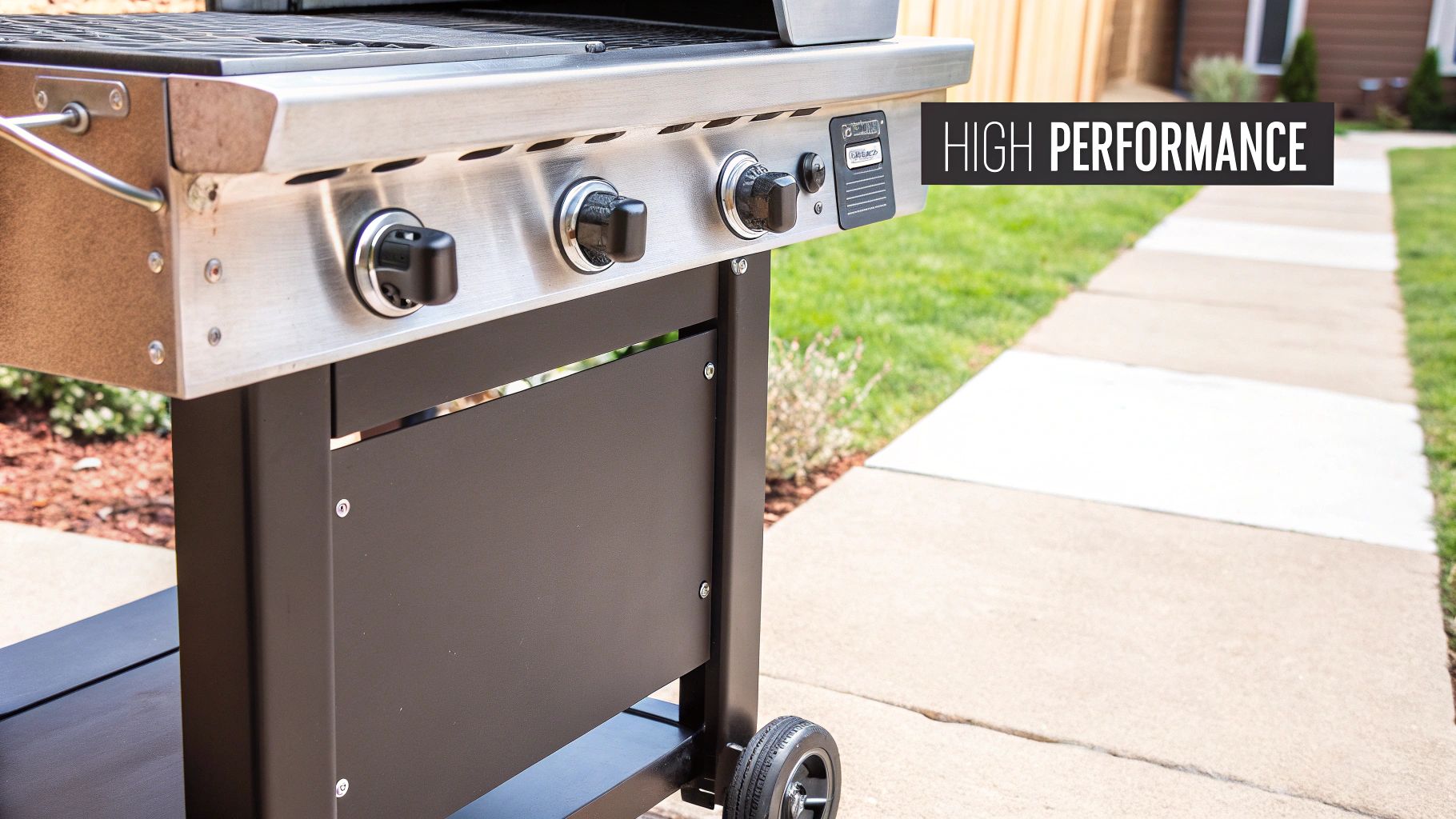 Once you've settled on the basics like fuel, material, and size, it's time to dig into the details that separate a decent griddle from an incredible one. These are the high-performance features that solve real-world cooking frustrations, make the whole experience more enjoyable, and ensure your investment can handle the outdoors for years to come.
Spotting these premium upgrades is the key to choosing a griddle that truly performs. From smarter cleanup to better heat control, these are the thoughtful additions that make all the difference.
Advanced Grease Management Systems
Let's be honest, cooking up a pound of bacon or a dozen burgers is one of the best parts of owning a griddle, but dealing with all that grease afterward? Not so much. That’s why a well-engineered grease management system isn't just a nice-to-have; it's non-negotiable. This critical feature safely funnels hot grease away from your food and into a collection tray.
You'll generally see two popular designs out there:
- Rear-Drain Systems: These are slick. A small, subtle trough or hole at the back of the cooktop lets grease disappear into a hidden catch pan below, leaving you with a clean, uninterrupted cooking surface.
- Front-Trough Systems: This design puts a wide trough right at the front edge. It’s incredibly intuitive—you just scrape grease and food bits forward and into a removable cup.
No matter the style, make sure the grease cup is large and easy to get to. A bigger cup means no risk of overflow during a big cookout, and easy access makes cleanup a breeze.
A superior grease management system is not just about cleanliness; it's about safety. Properly containing hot grease minimizes the risk of flare-ups, creating a safer environment for you and your guests.
Superior Construction and Durability
An outdoor griddle has a tough job. It’s constantly exposed to scorching sun, sudden downpours, and humidity. This is precisely why build quality is so important. Top-tier griddles are constructed from materials specifically chosen for their strength and weather resistance, so they won’t be a rusty mess after a couple of seasons.
The gold standard in the world of high-end outdoor appliances is 304 stainless steel. This specific grade is packed with chromium and nickel, giving it phenomenal protection against corrosion. When the frame, cart, shelves, and even the knobs are made from 304 stainless, you get the ultimate defense against the elements, keeping your griddle looking and working like new.
This focus on quality should extend to the smaller parts, too. Heavy-duty caster wheels make it easy to roll a freestanding unit around your patio, while a robust, reliable ignition system ensures your griddle fires up on the first click, every single time. As you plan your ultimate backyard setup, understanding these components is crucial; dive deeper in our guide to outdoor kitchen essentials.
Thoughtful Design and User Experience
Finally, the best outdoor griddles are loaded with features that prove the designers were actually thinking about the person doing the cooking. These smart additions make the whole process more convenient, versatile, and just plain better.
An integrated lid or hood is a fantastic example. It's not just a cover to protect the cooktop from rain and leaves. A lid lets you trap heat, which is a game-changer for melting cheese on smash burgers, steaming vegetables, or even creating a makeshift oven effect. It opens up a whole new world of cooking possibilities.
Keep an eye out for other user-focused details that match how you like to cook:
- Integrated Storage: Built-in shelves, cabinets, and tool hooks give you a dedicated spot for your spatulas, oils, and seasonings.
- Foldable Side Shelves: These give you precious prep space right where you need it, then fold down to save space when you're done.
- Wind Guards: Nothing's more frustrating than the wind killing your flame. Built-in guards shield the burners, ensuring your heat stays consistent and strong.
When you know how to spot these key features, you're no longer just looking at specs on a page—you're identifying a truly high-performance machine. This knowledge empowers you to invest confidently in a griddle that will become the reliable heart of your outdoor kitchen for years of delicious memories.
Answering Your Top Outdoor Griddle Questions
Even after you've nailed down the fuel type and cooktop material, a few practical questions always seem to pop up. That’s completely normal. To help you feel 100% confident in your choice, we’ve put together answers to the most common queries we get from customers gearing up to become griddle masters. Think of this as the final checklist before you start cooking on one of the best outdoor griddles on the market.
How Do I Properly Season and Clean My New Outdoor Griddle?
Seasoning is, without a doubt, the most crucial thing you'll do for your new griddle. It’s the process of baking oil into the metal, which creates a slick, natural non-stick surface and a powerful barrier against rust. Get this right, and you're setting the foundation for years of incredible cooking.
First things first, give that brand-new cooktop a good scrub with warm, soapy water to get rid of any factory residue, then dry it completely. Now for the fun part. Crank the griddle to high heat and let it get roaring hot for about 15 minutes. Grab a high-smoke-point oil—canola, grapeseed, or flaxseed are all fantastic choices—and apply a paper-thin layer across the entire surface using tongs and a wadded-up paper towel.
You'll see a lot of smoke as the oil burns off. Don't panic! That’s exactly what you want. It's the sign that the oil is polymerizing, or bonding, to the steel. This part takes about 20-30 minutes. You’re going to repeat this whole process—apply a thin coat of oil, let it burn off—another 3 to 5 times. You'll know you're done when the surface has a beautiful, dark, semi-gloss finish.
When it comes to daily cleanup, the secret is to work while the griddle is still warm.
- Scrape It Down: Use a good, flat-edged metal scraper to push every last bit of food and grease into the grease trap.
- Steam Clean (If Needed): Got some stubborn, stuck-on food? Just pour a little water on the warm surface. The steam it creates will lift that gunk right off.
- Wipe It Clean: A few swipes with a paper towel should be all you need to get the surface clean.
- Add a Protective Oil Coat: Before you shut it down, wipe one last, super-thin layer of cooking oil across the cooktop. This is your rust-prevention step, protecting it from moisture until next time.
The most important rule? After that initial wash, keep soap far away from your cooktop. Soap is designed to destroy oil, and it will strip away that beautiful non-stick patina you worked so hard to create.
Can an Outdoor Griddle Completely Replace My Traditional BBQ Grill?
That's the million-dollar question, isn't it? The answer really comes down to how you like to cook. For a lot of folks, a griddle absolutely can be their go-to, do-it-all outdoor cooker. Its solid flat-top surface is unbelievably versatile. You can cook things that are simply impossible on grill grates—think breakfast feasts with pancakes and eggs, hibachi-style fried rice, or a perfect Philly cheesesteak.
That said, a traditional grill with grates still reigns supreme for a couple of specific tasks. Nothing beats it for getting that direct, open-flame char on a steak or for using convection heat to slow-roast a whole chicken. And if you're a true believer in low-and-slow barbecue, a dedicated smoker or a classic charcoal grill is always going to deliver that authentic smoky flavor better.
While a griddle won't give you true, deep barbecue smoke flavor, you can get creative. Some advanced users place a small packet of wood chips on one corner of the hot griddle and cover their food with a dome. This technique can infuse a subtle smoky essence, blurring the lines between griddling and grilling.
Honestly, the ultimate backyard setup often includes both a griddle and a grill. But if you have to pick just one, an outdoor griddle offers a far wider range of cooking possibilities for everyday meals and is an absolute beast for feeding a crowd, making it an incredibly powerful and flexible choice.
What Are the Most Important Accessories for an Outdoor Griddle?
Having the right tools in your hands makes a world of difference. It turns griddling from a chore into a seamless, enjoyable experience. While you can get by with a few things from your kitchen drawer at first, investing in a handful of griddle-specific tools is a total game-changer.
Here are the essentials every griddle owner should have:
- A Set of Long Spatulas: You need at least two. One solid spatula for flipping burgers and pancakes, and a perforated one that lets grease drain away from things like bacon and sausage.
- A Bench Scraper: This is your multi-purpose MVP. It’s perfect for scraping the cooktop clean, chopping up food right on the griddle (a must for cheesesteaks), and dividing up portions.
- Squeeze Bottles: Have one for your cooking oil and one for water. That water bottle is your secret weapon for steaming veggies under a dome or power-cleaning a tough spot.
- A Melting Dome: This simple tool is brilliant. It traps heat and steam to perfectly melt cheese on burgers, steam vegetables in seconds, or gently cook the tops of your eggs.
- A Heavy-Duty Cover: This is non-negotiable. A quality, weather-resistant cover is the best insurance for your investment. It protects the cooktop from rain, dust, sun, and pollen, ensuring it’s clean and ready to go when you are.
Are Outdoor Griddles Safe to Use On a Wooden Deck or Covered Patio?
Safety always comes first, no exceptions. While outdoor griddles are built for patios, you absolutely have to be smart about where you place them, especially near combustible materials like wood. Your first stop should always be the manufacturer's manual to find the specific clearance requirements—that’s the minimum safe distance you need between the griddle and any walls, railings, or overhead structures.
If your griddle is going on a wooden or composite deck, a protective grill mat underneath is a must-have. These mats are designed to shield your deck from intense heat, stray sparks, and grease splatters that can cause ugly stains or, worse, a fire hazard.
For a covered patio or lanai, proper ventilation is the name of the game. You need plenty of airflow to let heat, smoke, and cooking fumes dissipate safely. And never, ever operate a gas griddle in a fully enclosed space like a garage. That's a recipe for a dangerous buildup of carbon monoxide.
At UrbanManCaves.com, we see your backyard as more than just a yard—it’s a place to unwind, entertain, and create lasting memories. Dive into our handpicked collection of the best outdoor griddles and kitchen components to build the culinary retreat you've always wanted. Visit us today to start your transformation.


