

Picture this: the perfect backyard setup, the one that makes your place the spot for every get-together. Right at the heart of it all sits a gleaming, high-performance grill. For those who are serious about their outdoor cooking, the best stainless steel grills are, without a doubt, the champions of the patio. They’re a real investment in durability, pinpoint cooking control, and a look that never goes out of style.
Why Stainless Steel is the Gold Standard for Outdoor Cooking
Walk into any professional kitchen, and you’ll be surrounded by stainless steel. There’s a very good reason chefs and designers swear by it—this stuff is built to perform under intense pressure while looking sharp. A premium stainless steel grill brings that exact professional-grade quality to your backyard, turning it into a legitimate outdoor culinary station.
Forget about those cast aluminum or porcelain-coated steel grills that inevitably chip, rust, and fall apart. A well-built stainless steel model is engineered to last. It can handle rain, salty air, and wild temperature swings without corroding or warping. This incredible resilience is why stainless steel is the foundation for the very best outdoor kitchen appliances. We're not just talking about good looks; we're talking about investing in a centerpiece that will reliably serve you for a decade or more.
A Market Forged in Quality
The hunger for tough, high-performance outdoor cooking gear isn't just a fleeting trend; it's a full-blown movement. The global market for stainless steel barbecue grills has exploded, with over 10 million units sold in a single year, marking a massive growth spurt between 2019 and 2024. This wave, pushed forward by millennials and Gen Z, has swelled the market to a $5 billion valuation, and it's on track to hit nearly $8 billion by 2033. For a deeper dive, check out this in-depth industry report.
This massive growth tells a clear story. People are done with flimsy, disposable grills that barely make it through a couple of seasons. The new standard is an investment-grade appliance that cooks consistently and truly elevates an outdoor living space.
More Than Just a Pretty Finish
Looks aside, stainless steel delivers superior cooking performance that you can taste.
- Exceptional Heat Retention: High-grade, thick-gauge stainless steel is fantastic at holding heat. This means you get steady temperatures across the entire cooking surface, eliminating hot spots and giving you that perfect, even sear.
- Effortless Maintenance: The surface is non-porous, so it naturally resists stains and food residue. It’s incredibly easy to clean, which means less time spent scrubbing and more time enjoying the party.
- Unmatched Aesthetic Appeal: A stainless steel grill has a sleek, modern look that fits perfectly into any upscale outdoor kitchen design. It adds serious value, both visually and functionally.
A top-tier stainless steel grill is the cornerstone of a serious outdoor kitchen. It’s not just an appliance; it's a commitment to quality, performance, and countless memorable meals shared with family and friends. It's the difference between simply cooking outside and creating a true culinary experience.
Decoding the DNA of a Great Grill
When you invest in a premium outdoor cooking station, you’re buying more than just a shiny box. The real value—what separates the best stainless steel grills from the pretenders—is hidden in the metal itself.
Not all stainless steel is created equal. Understanding the difference between grades and gauges is the key to choosing a grill that will last a lifetime, not just a few seasons. Think of it like buying a high-performance vehicle; you wouldn't just look at the paint job, you'd want to know what's under the hood.
The Great Divide: Steel Grades Explained
You’ll constantly see terms like 304 and 430 grade steel. They might look identical on the showroom floor, but their chemical makeup tells a completely different story about how they'll hold up to the elements.
-
304 Grade (The Pro's Choice): This is the gold standard for high-end outdoor equipment, and for good reason. Its secret is a higher nickel content, which gives it phenomenal resistance to rust and corrosion. If you live anywhere with humidity or near the coast where salt is in the air, 304 grade isn't just a feature—it's an absolute necessity.
-
430 Grade (The Budget Option): This grade has less nickel and is magnetic, which is a quick way to tell it apart. While it offers that classic stainless look, it's far more vulnerable to rust and staining, especially when hit with acidic marinades or harsh weather.
Choosing 304 grade steel is like opting for military-grade hardware for your backyard. It’s engineered to perform, year after year, ensuring your grill remains the reliable centerpiece of your outdoor kitchen.
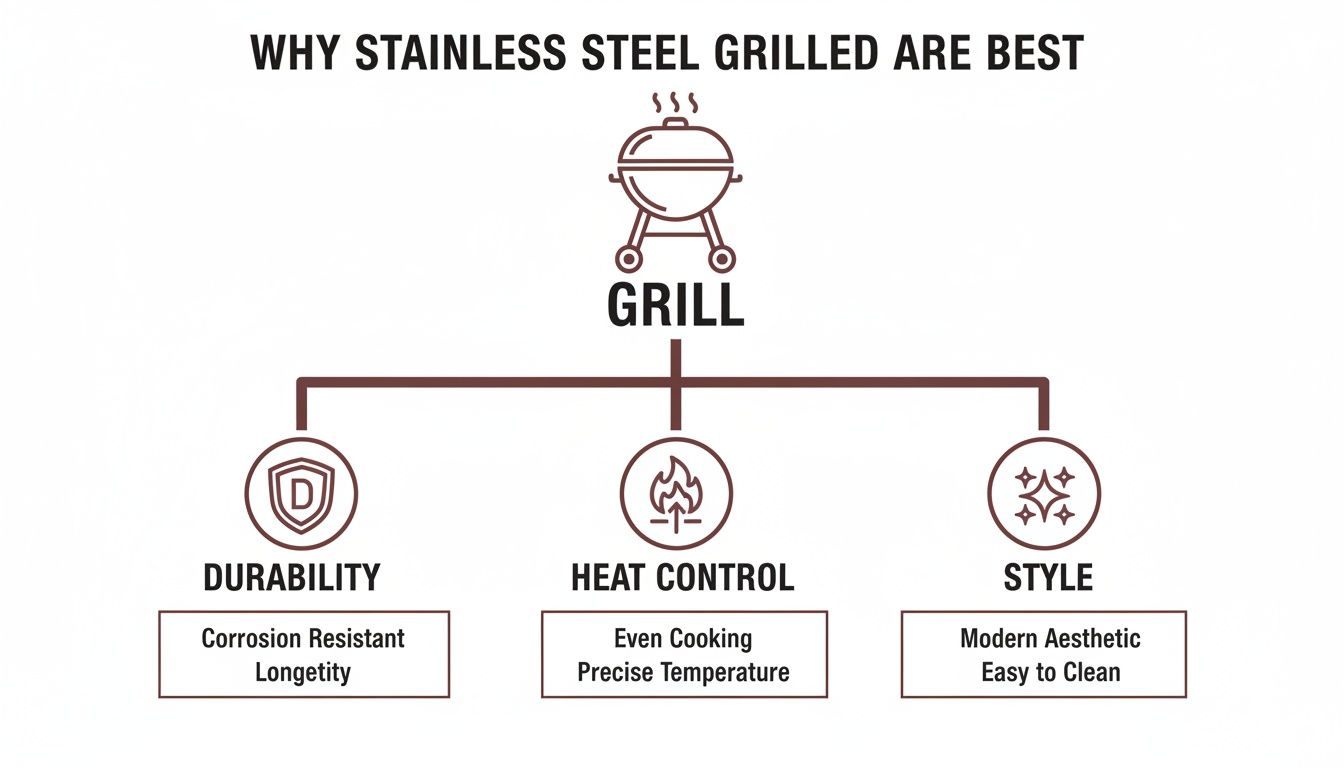
As you can see, it's the combination of durability, heat control, and style that makes stainless steel the undisputed champion of outdoor cooking.
A Grade for Every Environment
To make things even clearer, here's a quick breakdown of the most common steel grades you'll encounter. It’s crucial to match the material to your environment to protect your investment.
Stainless Steel Grade Showdown
| Feature | 304 Grade (The Pro's Choice) | 430 Grade (Budget-Friendly) | 316 Grade (Coastal King) |
|---|---|---|---|
| Corrosion Resistance | Excellent; fights rust from rain & humidity. | Good; but susceptible to rust over time. | Unmatched; built to resist saltwater corrosion. |
| Composition | Higher nickel and chromium content. | Lower nickel, higher iron (it's magnetic). | 304 with added Molybdenum for ultimate protection. |
| Best For | Most climates; the all-around workhorse. | Dry, inland climates with careful upkeep. | Coastal areas, poolside, or humid, salty air. |
| Cost | Higher upfront investment for longevity. | More affordable, but may need replacing sooner. | The premium option for the harshest conditions. |
Ultimately, choosing the right grade is the first step. For most people, 304 grade is the perfect balance of performance and value. But if you're outfitting a coastal retreat, stepping up to 316 grade is money well spent.
Gauging Thickness: The Unsung Hero of Heat Retention
Beyond the grade of the steel, its thickness—or gauge—is a game-changer for your cooking. Here’s a simple rule to remember: with metal gauge, the lower the number, the thicker the steel. A grill built from heavy-gauge steel (like 16- or 18-gauge) is a true performance machine.
Thicker metal is a beast at absorbing and holding heat. This means fewer hot spots, more even temperatures across the entire cooking surface, and quicker recovery when you open the lid. A flimsy, thin-walled grill bleeds heat and struggles to stay consistent, leaving you with unevenly cooked food.
Heavy-gauge steel also prevents warping and distortion under the intense heat of a perfect sear. It's all about durability. Studies show that a quality stainless grill’s corrosion resistance can slash replacement needs by up to 80% compared to carbon steel models. A 316 marine-grade grill, for example, can retain 95% of its structural integrity after a decade of coastal exposure, while lesser metals might only hold 60%. It’s a smart long-term investment in quality.
Understanding the Engine: Burners and Heat Systems
Think of a grill's body as its armor. If that's the case, then the burners and heat system are its engine. It’s easy to get mesmerized by a high BTU number on a spec sheet, but that's a classic rookie mistake. A massive BTU rating on a poorly designed grill is like having a souped-up engine in a car with bald tires—all that power just spins its wheels.
The real secret to incredible grilling isn't about raw, brute-force heat. It's about how efficiently that heat is generated, distributed, and retained. A truly well-engineered system gives you even, predictable temperatures across the entire cooking surface. No more frustrating hot spots that torch one burger while leaving another one raw. This is what separates a premium grill from an ordinary one and ensures everything cooks perfectly, no matter where you place it on the grate.
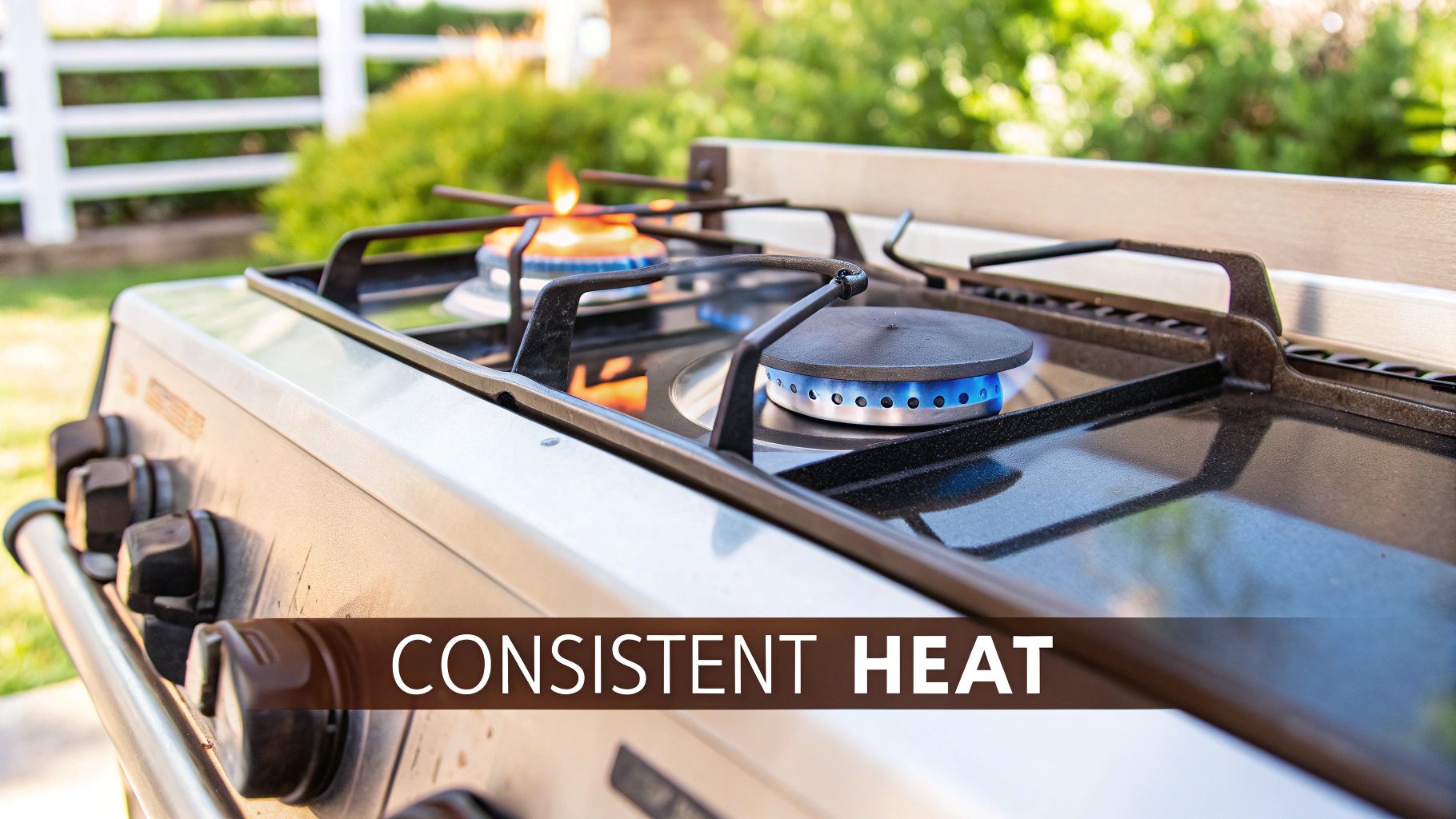
Burner Types: The Heart of the Heat
The burners are where the magic starts, and their material and design have a huge impact on your grill's performance and lifespan. In a high-end grill, you're looking for burners made from top-grade stainless steel, but not all are created equal.
-
Cast Stainless Steel Burners: These are the undisputed champions of the grill world. Poured from molten steel, they're incredibly thick and heavy, making them virtually immune to corrosion and warping. A quality set of cast burners will likely outlive the grill itself, delivering a perfect flame pattern year after year.
-
Welded or Tubular Stainless Steel Burners: This is another excellent, high-quality option. They’re built from heavy-gauge stainless steel tubes and, while not as massive as their cast counterparts, they are still exceptionally durable and offer fantastic performance. You’ll find them in many of the best grills on the market.
A grill's performance is a direct result of its engineering. An efficient grill with 9,000 BTUs per burner can easily outperform a poorly built one boasting 15,000 BTUs, simply because it uses its heat more effectively. Focus on build quality, not just the numbers on the spec sheet.
Infrared Burners: The Searing Powerhouse
If you want that authentic, steakhouse-quality crust on your meat, nothing comes close to an infrared burner. These specialized burners use a ceramic plate riddled with thousands of tiny holes. Gas flows through and ignites right on the surface, heating the ceramic to blistering temperatures—often screaming past 1,000°F in just a few minutes.
This intense, radiant heat instantly sears the outside of your steak, locking in all the juices and creating that beautiful, flavorful crust without overcooking the inside. Many of the best stainless steel grills either include a dedicated infrared searing zone or offer an optional infrared searing grill burner as an upgrade. Trust me, it’s a game-changer for any serious steak lover.
The Support System: Flame Tamers and Grates
Burners don’t operate in a vacuum. They’re part of a finely tuned system, and two other components play a crucial role in perfecting the cook: flame tamers and cooking grates.
Flame Tamers You'll find these V-shaped pieces of metal sitting right above the burners, and they do two critical jobs:
- Heat Distribution: They catch the direct heat from the burner flames and radiate it evenly across the cooking surface. This is key to eliminating those pesky hot spots.
- Flare-Up Prevention: They vaporize any drippings from your food, turning that grease into delicious, smoky flavor instead of letting it hit the open flame. This drastically reduces the flare-ups that can char your meal.
Cooking Grates This is where your food makes contact, and it matters. In a premium grill, look for thick, heavy-gauge stainless steel rod or cast grates. Their substantial mass allows them to absorb and hold a massive amount of heat, which is what you need to create those deep, professional-looking sear marks. Heavier grates mean better heat transfer and a more consistent cook, every single time.
Features That Separate Contenders from Champions
A powerful engine under the hood is one thing, but it’s the thoughtful details and premium features that really make a grill the heart of your outdoor living space. These are the elements that add convenience, open up new ways to cook, and show that a manufacturer is truly committed to the craft. They’re what separates the everyday contenders from the undisputed champions of the backyard.
When you invest in a top-tier stainless steel grill, you're not just buying a basic cooking appliance. You're getting an integrated system designed to perform flawlessly, every single time. It all starts with the parts you'll touch and rely on day in and day out.
Core Features You Should Never Compromise On
In the world of high-end grills, some things are simply non-negotiable. These foundational features are the bedrock of a premium cooking station, guaranteeing consistent performance, safety, and a long life.
-
Double-Walled Hood: Think of this as oven-grade insulation for your grill. A double-walled hood is a master at trapping heat, which means you get incredibly stable temperatures for everything from roasting a whole chicken to smoking ribs or even baking. As a bonus, it protects the outer stainless steel from heat discoloration, keeping your investment looking brand new.
-
Rock-Solid Ignition System: Nothing kills the mood faster than an ignition that won't light. It's a dealbreaker. Look for heavy-duty systems like hot surface or flame-thrower ignitions that fire up reliably and instantly. These are built tough to handle the elements, ensuring your grill is ready the moment you are.
The demand for this level of quality is driving a huge industry. The stainless steel market is projected to hit an incredible $353.48 billion by 2034, fueling everything from your dream outdoor kitchen to fire pits. In just one year, over 10 million stainless BBQ grills were shipped globally. North America and Europe are leading the charge, claiming a 35% share as backyard culture continues to explode. You can learn more about the growth of the stainless steel market here.
Accessories That Expand Your Culinary Horizons
Okay, this is where the real fun starts. The right accessories can transform your grill from a simple steak-searing machine into a versatile outdoor oven, smoker, and rotisserie all in one. These aren’t just add-ons; they're investments in your creativity.
A great grill should empower you to cook whatever you can imagine. Its accessories are the tools that unlock that potential, making it the most versatile appliance in your home—inside or out.
A heavy-duty rotisserie kit, for example, is an absolute game-changer. It’s the secret to unbelievably juicy, self-basting chickens, roasts, and prime ribs with that perfect crispy skin. The slow, constant rotation cooks everything evenly and develops a depth of flavor you just can't get with direct heat. It's one of the key outdoor kitchen essentials that will seriously elevate your cooking game.
Beyond the Basics: Essential Upgrades
To truly complete your professional-grade setup, a few more features can make all the difference, enhancing both flavor and function. These are the finishing touches you’ll appreciate every time you have friends over or just feel like trying a new recipe.
-
Smoker Box: Craving that authentic, wood-fired smoke flavor? A dedicated stainless steel smoker box lets you use wood chips or chunks to infuse rich, smoky notes into everything from brisket and ribs to salmon and vegetables.
-
Interior Lighting: Don’t let sundown dictate when the party ends. Halogen or LED lights inside the grill hood illuminate the entire cooking surface, so you can see exactly what you’re doing and grill with precision long after dark. It’s a small luxury you'll be grateful for every time.
-
Integrated Temperature Probes: Take the guesswork out of grilling. High-end models often include built-in temperature probes that plug right into the control panel. You can monitor the internal temp of your food without constantly lifting the lid and losing all that precious heat.
By focusing on these core features and versatile accessories, you can confidently pick a grill that not only delivers today but will also keep up with your culinary ambitions for years to come.
Choosing Your Grill Style: Built-In vs. Freestanding
Before you even think about BTUs or burner types, you need to make a fundamental decision: are you building a permanent outdoor kitchen or do you need a powerful, standalone grilling station? The choice between a built-in and a freestanding model will shape the entire flow and feel of your backyard.
Think of it this way: a built-in grill is the heart of a custom kitchen, seamlessly integrated and designed for a specific purpose. A freestanding grill, on the other hand, is a mobile command center—powerful, versatile, and ready to move wherever the action is.
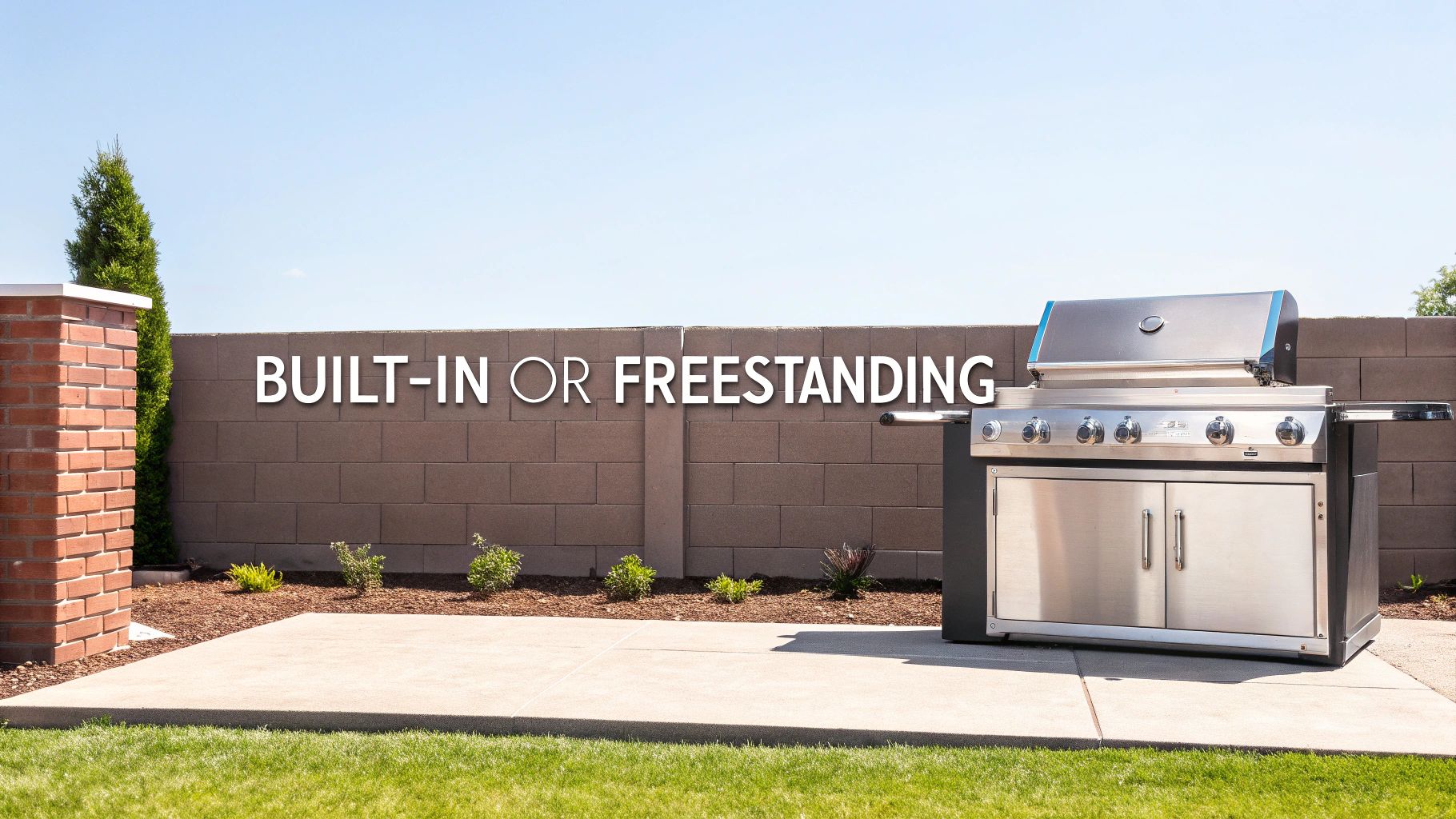
The Built-In Grill: The Ultimate Outdoor Kitchen Hub
Committing to a built-in grill means you're creating a true outdoor culinary zone. These units are designed to be the centerpiece, flanked by countertops, storage, and maybe even a mini-fridge or sink.
- Seamless Aesthetics: A built-in grill delivers that clean, architectural look that makes an outdoor space feel like a natural extension of your home. It’s a serious upgrade that boosts your property's appeal and value.
- Permanent Power: Once it's in, it's in for good. Most built-in setups are connected directly to a natural gas line, so you can forget about last-minute propane tank runs. You're always ready to fire it up.
- Total Customization: This is where you get to play architect. You design the entire layout, from the granite countertops to the placement of side burners. Everything is built around your specific cooking style.
If you're designing a full-blown outdoor kitchen, a custom-installed beast like the Brahma 5-Burner Built-In Gas Grill is an investment in both raw performance and stunning design.
Of course, the trade-off is the significant upfront cost for construction and installation. It's also a permanent decision, so you'll want to plan carefully. This style is the clear winner for the "Ultimate Entertainer"—the host who needs a massive, fully-equipped station to command large gatherings without breaking a sweat.
For anyone who pictures a permanent outdoor cooking sanctuary, the built-in grill isn't just an option; it's the only option. It elevates a simple patio into a true outdoor kitchen.
The Freestanding Grill: Power Meets Portability
Don’t think for a second that a freestanding grill is a step down. These high-end models pack the exact same professional-grade burners, heavy-gauge steel, and premium features as their built-in counterparts. The only difference is they’re mounted on a rugged, mobile cart.
This mobility is their superpower. You can shift your layout for different parties, move the grill to get out of the wind, or even take it with you when you move to a new house.
Because they don't require any custom construction, freestanding grills are a much faster and more budget-friendly way to bring professional-level grilling to your backyard. Many even come with folding side shelves to save space when you're done cooking.
This makes them a perfect fit for the "Urban Griller" with a smaller patio or anyone who wants to keep their layout options open. Ultimately, choosing the right style is all about matching the grill to your space, your budget, and how you see yourself living and entertaining outdoors.
Protecting Your Investment: Maintenance and Warranty Secrets
A top-tier grill isn't just another appliance; it's a long-term investment in your home, your lifestyle, and countless future get-togethers. Think of it like a high-performance car—a little routine care is all it takes to keep it looking and cooking its best. Understanding how to protect that brilliant finish and what the warranty really covers are the keys to making sure your grill performs flawlessly for decades.
The secret to proper maintenance isn’t a ton of work, just consistency. A quick wipe-down after you cook prevents grease and food bits from baking onto the surface, which is what causes those stubborn stains and ugly heat discoloration down the road.
Keeping Your Grill Showroom-Ready
Maintaining that gleaming stainless steel look is surprisingly simple. It really just comes down to using the right tools and techniques to avoid scratching the surface and damaging the protective chromium oxide layer—that's the magic that gives the steel its legendary rust resistance.
Here’s a simple routine that works every time:
- Always Wipe with the Grain: When you're cleaning the outside, look closely at the steel. You'll see fine lines. Always wipe your microfiber cloth in the same direction as those lines to avoid creating tiny scratches that will dull the finish over time.
- Use a Dedicated Cleaner: Stay away from harsh, abrasive chemicals or steel wool, which will ruin the surface. A good stainless steel cleaner and a soft cloth are all you need to get rid of smudges and bring back that original shine.
- Deep Clean Grates Regularly: Let the grill cool down a bit, then give the cooking grates a good scrape with a quality grill brush. For a serious deep clean, pull them out every so often and let them soak in hot, soapy water.
Think of your grill's warranty as its performance guarantee. When a brand offers a "lifetime" warranty on burners and cooking grates, they're sending a powerful signal: they built those parts to withstand years of intense heat and heavy use.
Decoding the Manufacturer's Warranty
A solid warranty is one of the clearest signs you're looking at a high-quality grill. Companies that invest in premium materials and rock-solid engineering are proud to stand behind their work. But not all warranties are created equal, so you absolutely have to read the fine print.
Pay close attention to what "lifetime coverage" actually means. It rarely covers the entire grill. More often, it applies only to specific, high-stress components that are designed to last.
Key Components to Check for Strong Warranty Coverage:
- Burners: This is the heart of your grill. You should be looking for a warranty of at least 10 years, but the best brands will offer lifetime coverage.
- Cooking Grates and Housing: These parts take the most punishment from heat and food. A lifetime warranty here shows a serious commitment to durability.
- Ignition System: This is a classic point of failure on cheaper grills. A warranty of 3-5 years on the ignition system is a very good sign of quality.
A comprehensive warranty isn’t just a piece of paper; it’s your peace of mind. It’s the final confirmation that you're investing in a product built for the long haul, ensuring your outdoor kitchen's centerpiece remains a source of pride—and incredible food—for many years to come.
Answering Your Final Questions
You've done the research, narrowed down your options, and are just about ready to pull the trigger. But a few nagging questions might still be lingering. Getting these last details ironed out is what separates a good purchase from a great one. Let's tackle the questions we hear most often from guys who are serious about their grilling.
Is a Higher BTU Rating Really the Most Important Thing?
In a word: no. While a high BTU number looks impressive on a spec sheet, it's a classic case of marketing hype over real-world performance. Think of it less as a measure of a grill’s power and more as a measure of how much fuel it burns.
A truly great grill is all about efficiency. The best designs use heavy-gauge steel, tight-fitting lids, and smart engineering to trap and distribute heat evenly. A well-built grill with lower BTUs will consistently outperform a flimsy, high-BTU model that bleeds heat from every seam. You'll get a better sear and more even cooking while using less gas. Focus on build quality, not just BTUs.
What's the Real-World Difference Between 304 and 430 Steel?
This is one of the most critical distinctions, and it boils down to one thing: how long your grill will last. The difference is in the alloy composition.
- 304 Grade Steel: This is the gold standard for outdoor equipment. It has a high nickel content, which gives it superior protection against rust and corrosion. If you live anywhere with humidity or salty coastal air, this is non-negotiable.
- 430 Grade Steel: This is a cheaper, magnetic stainless steel. It might look shiny on the showroom floor, but it’s far more susceptible to rust and pitting, especially once it’s been exposed to the elements for a season or two.
For an investment-grade grill, 304 grade steel is the only way to go. It's what separates a grill that lasts a few years from one that lasts a lifetime.
Choosing a grill built from 304 grade stainless steel isn't just about buying a cooking appliance. It's an investment in a piece of outdoor equipment engineered to withstand the elements and perform for years, not just a few seasons.
How Can I Keep My Grill from Discoloring?
First off, it's completely normal for stainless steel to develop a slight golden or bronze patina over time when exposed to intense heat. That's just the nature of the metal and a sign of a grill that's seen some action. What you want to avoid are ugly stains and splotches from grease and grime.
The solution is simple, routine maintenance. After you're done cooking, give the exterior a quick wipe-down with a microfiber cloth and a good stainless steel cleaner. Always wipe with the grain of the steel to avoid fine scratches.
And your number one defensive tool? A quality grill cover. Shielding your investment from rain, sun, and dirt is the single best thing you can do to keep that finish looking sharp.
Ready to build an outdoor cooking space that’s the envy of the neighborhood? Check out the complete collection of world-class grills and outdoor kitchen components at UrbanManCaves.com and find the perfect centerpiece for your domain. Start building your dream setup today!


