

Deciding on the best outdoor pizza oven is really about striking the right balance between that authentic, old-world flavor and the sheer convenience of modern technology. For those who want the best of both worlds—peak performance without the hassle—a high-end gas or hybrid oven from a top-tier brand like Gozney or Ooni is tough to beat, turning out incredible Neapolitan or New York-style pies every time.
Why an Outdoor Pizza Oven Is a Game-Changing Investment
An outdoor pizza oven isn't just another cooking appliance; it's the piece that transforms your backyard into a genuine social hub and a seamless extension of your home. It instantly becomes the focal point for any get-together, creating a fun, interactive food experience that a standard grill just can't replicate. This growing desire for more engaging outdoor entertaining is exactly why the market has exploded.
The global pizza oven market was valued at a staggering USD 2.50 billion in 2024 and is expected to climb to USD 4.20 billion by 2032. This isn't just a fleeting trend; it shows a real shift in how homeowners are thinking about their outdoor kitchens and investing in serious equipment to elevate them. For a deeper dive into the numbers, this detailed industry report breaks down the market drivers.
Key Benefits of a Dedicated Outdoor Oven
Adding a dedicated pizza oven to your outdoor kitchen brings some serious advantages that you just can't get otherwise.
- Unmatched Performance: We're talking about temperatures soaring past 900°F. At that heat, a pizza cooks in 60-90 seconds, creating the beautiful leopard-spotted char on the crust that’s simply impossible in a standard kitchen oven.
- Superior Flavor: The intense, enveloping heat is what creates that signature pizza oven taste and texture. Whether you go for the subtle smokiness from a wood-fired model or the clean, consistent heat from gas, the end result is uniquely delicious.
- Enhanced Entertainment: Making pizza outdoors is an event. It gets everyone involved. Your guests can top their own creations, turning a casual dinner into a memorable, hands-on party.
- Increased Versatility: It's a common mistake to think these ovens are one-trick ponies. Their high-heat power is fantastic for getting a perfect sear on steaks, roasting vegetables in a flash, or baking rustic, artisanal bread. They quickly become the workhorse of your outdoor setup. For more ideas, take a look at our guide on outdoor kitchen essentials.
Comparing Outdoor Pizza Oven Fuel Types
Choosing the fuel for your outdoor pizza oven is arguably the most critical decision you'll make. It sets the tone for your entire cooking experience—far beyond just how the oven gets hot. This is about ritual, flavor, convenience, and control. The classic debate between wood, gas, and hybrid systems really boils down to one question: Are you a culinary purist who relishes the process, or a frequent host who puts a premium on speed and simplicity?
Your answer will point you directly to the right fuel source for your outdoor kitchen. Each one delivers incredible pizza, but they cater to very different personalities and cooking ambitions. Let's get past the simple pros and cons and dig into the real-world experience of cooking with each.
The Purist's Choice: Wood-Fired Ovens
For many, a wood-fired oven is the only way to make real pizza. It's the time-honored method behind the classic Neapolitan pie, with its iconic leopard-spotted and blistered crust, known as the cornicione. The magic lies in a trifecta of heat: intense radiant heat from the dome, conductive heat from the stone floor, and convective heat from the circulating air.
The experience is a huge part of the appeal. Managing the fire—choosing the right hardwood like oak or cherry, feeding the flames, and positioning the embers—is a rewarding ritual. It’s a hands-on process that connects you to your cooking, turning pizza night into an event. The payoff is a subtle, smoky flavor kissed onto the crust that no other method can truly replicate.
But this authenticity comes with a learning curve. Hitting and holding that perfect temperature, often north of 900°F, takes practice. Heat-up times can be lengthy, sometimes over an hour, and cleanup means dealing with ash and soot. A wood-fired oven is perfect for the weekend pizza maker who considers the process part of the pleasure.
Key Insight: The draw of a wood-fired oven isn't just the pizza; it's the entire sensory experience. The crackle of the logs and the aroma of burning wood are as much a part of the recipe as the dough and sauce.
The Entertainer's Solution: Gas-Powered Ovens
Gas-powered pizza ovens are the gold standard for convenience and control. With just the turn of a knob, you get precise, steady temperatures in a fraction of the time it takes a wood oven—often in as little as 15-20 minutes. This speed and simplicity make gas the perfect choice for spontaneous weeknight dinners or for hosts who want to churn out pizza after pizza without any fuss.
There's no fire to tend and almost no cleanup. This "set it and forget it" approach lets you focus on your guests and on perfecting your pizza toppings, not on managing flames. High-end modern gas ovens from brands like Gozney and Ooni use advanced burner designs that mimic the heat patterns of a wood fire, ensuring an even bake and a great crust without any of the smoke.
You do give up that authentic wood-smoke flavor, but the trade-off is enormous practicality. This is why gas ovens have become so popular, especially in North America, which accounted for over 40% of the global pizza oven market revenue in 2024. For a closer look at market trends, you can explore the full research on the outdoor pizza oven industry.
This visual guide can help you figure out which path is right for you.
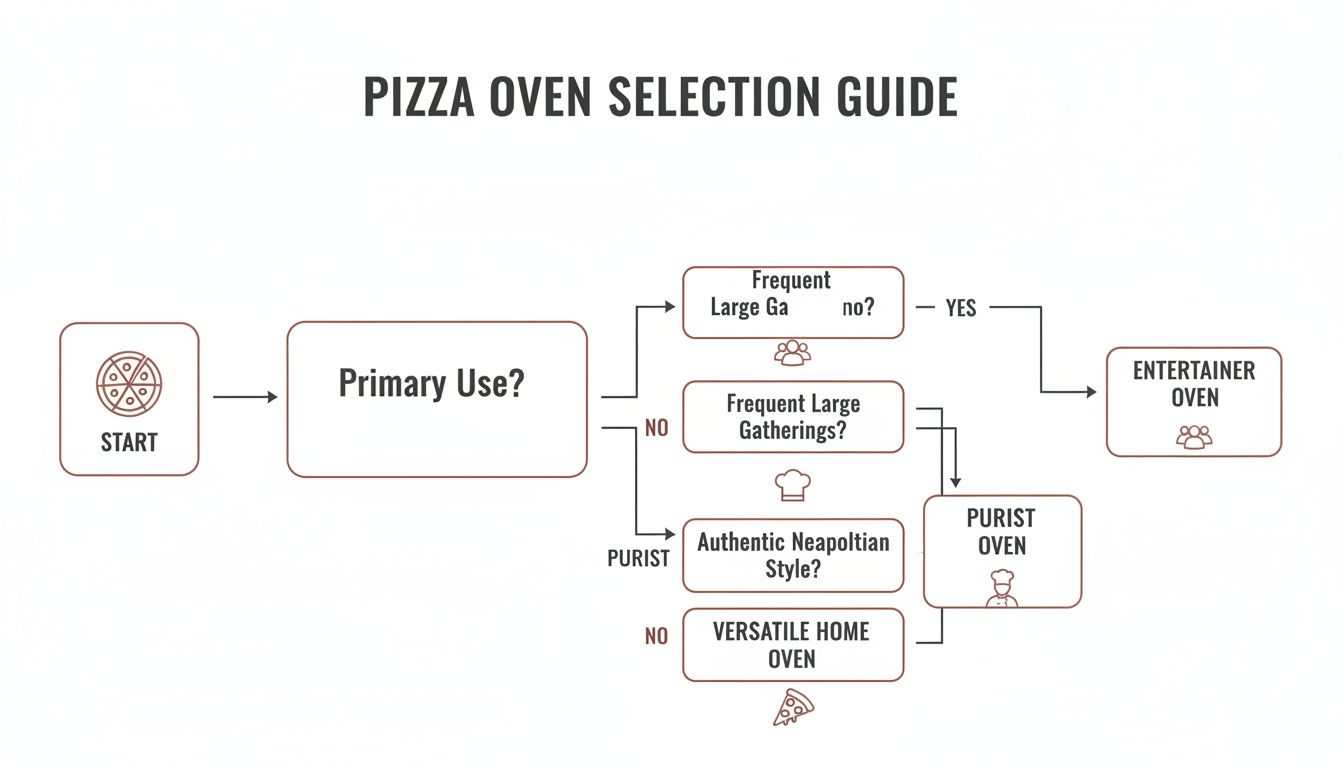
The flowchart makes it clear how your lifestyle—whether you need convenience for frequent parties or crave authenticity for special occasions—points to different fuel types.
The Best of Both Worlds: Hybrid Fuel Ovens
What if you can’t—or don't want to—choose between the romance of wood and the reliability of gas? Enter the hybrid oven. These dual-fuel models are engineered for the enthusiast who wants it all, featuring both gas burners for quick, controlled heat and a wood tray for that essential smoky finish.
This dual functionality means you can tailor your cooking to any situation.
- Weekday Dinners: Fire it up with gas for a rapid preheat and a no-muss, no-fuss cook.
- Weekend Gatherings: Get the dome and stone screaming hot with gas, then throw in a few wood splits for the last few minutes of cooking to infuse your pizza with that authentic wood-fired taste.
- Beyond Pizza: The precise control of gas is perfect for roasting vegetables or fish, while the intense heat from a wood fire is unbeatable for searing steaks.
This flexibility makes a hybrid oven a smart long-term investment for a high-end outdoor kitchen. It’s a no-compromise solution that adapts as your skills and culinary interests expand. If building a versatile outdoor cooking setup is your goal, you might also find our guide on the best pellet grills that offer similar smoky flavors helpful. Ultimately, a hybrid oven bridges the gap between tradition and modern convenience, ensuring you're ready for anything.
Outdoor Pizza Oven Fuel Type Comparison
To simplify your decision, here’s a direct comparison of how each fuel type stacks up in the areas that matter most.
| Fuel Type | Best For | Flavor Profile | Temperature Control | Ease of Use & Cleanup |
|---|---|---|---|---|
| Wood-Fired | The purist, weekend gatherings, and creating a memorable cooking event. | Authentic & Complex. Delivers a distinct, smoky flavor that's impossible to replicate. | Challenging. Requires skill and constant attention to maintain a consistent temperature. | High-Maintenance. Involves fire management and regular ash cleanup. |
| Gas-Powered | The frequent entertainer, weeknight convenience, and predictable results. | Clean & Neutral. The oven cooks the pizza; the ingredients provide the flavor. | Effortless. Precise, consistent heat with the turn of a dial. | Very Low-Maintenance. Turn it on, cook, turn it off. Minimal cleaning. |
| Hybrid (Dual-Fuel) | The enthusiast who wants it all: convenience for everyday and authenticity for special occasions. | Versatile. Can be clean (gas only) or smoky and complex (wood-enhanced). | Best of Both. Easy gas control with the option to add wood for flavor. | Moderate. Low-maintenance on gas mode; requires cleanup after using wood. |
Each fuel source offers a distinct path to incredible homemade pizza. The best choice is the one that aligns not just with your culinary goals, but with your lifestyle and how you love to entertain.
The Performance Metrics That Actually Matter
Forget the glossy marketing brochures for a moment. When you're serious about creating an authentic outdoor kitchen, the real story of a pizza oven is told by its performance numbers. These metrics are the difference between an oven that looks good and one that cooks brilliantly, consistently delivering that perfect Neapolitan pie you're dreaming of. Let's break down what to look for.
Understanding these specs isn't just about being a numbers geek; it's about knowing how the oven will behave when you've got hungry guests waiting. A well-engineered machine blends raw power with smart design to make your cooking experience feel effortless.
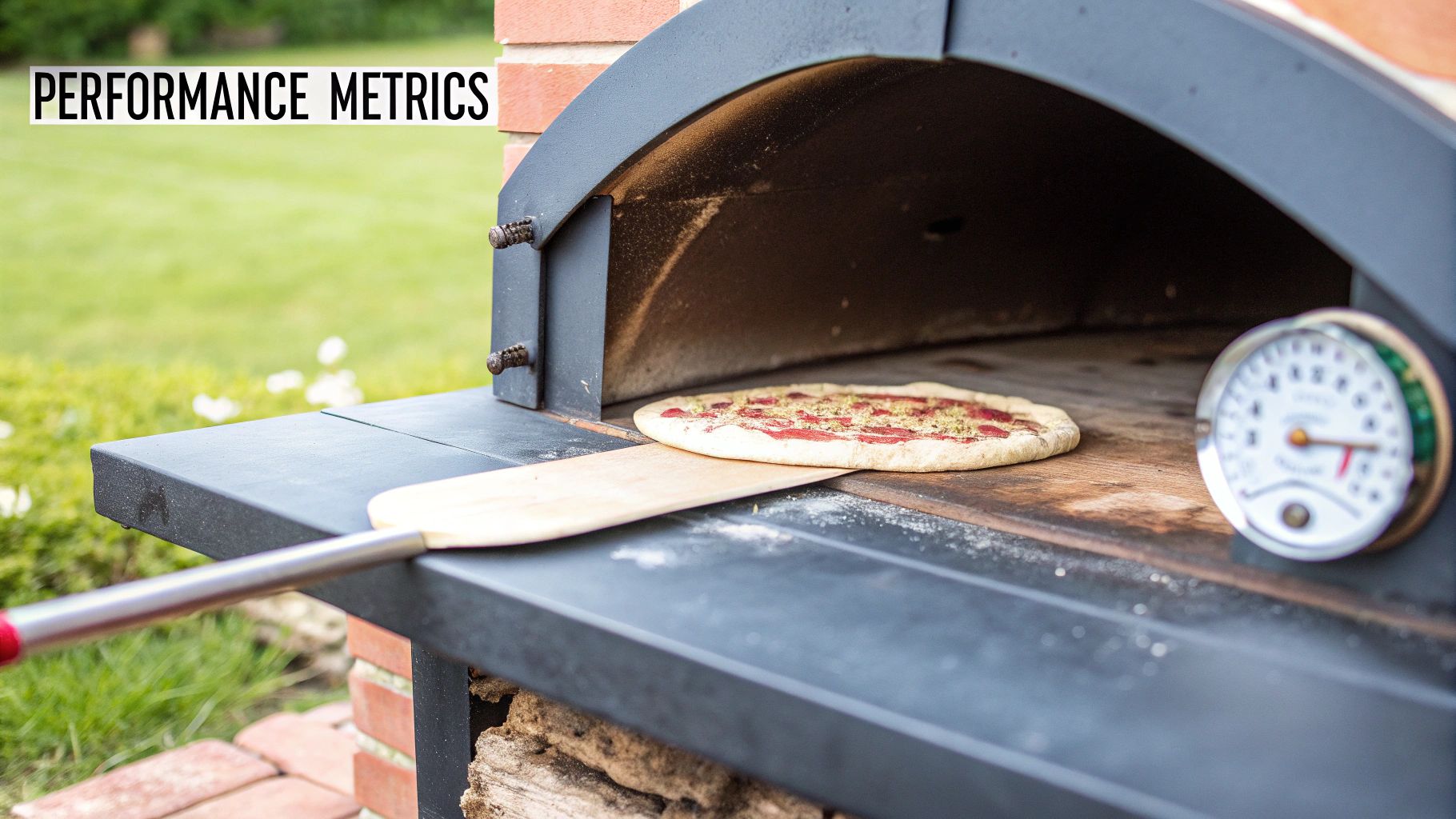
Maximum Temperature and Heat-Up Time
If there's one number that defines an oven's pizza-making prowess, it's the maximum temperature. To get that iconic, leopard-spotted "char" on a Neapolitan crust, you need screaming-hot temperatures of at least 900°F (about 480°C). This intense heat flash-cooks the pizza in just 60 to 90 seconds, causing the moisture in the dough to instantly turn to steam and puff up the crust into that airy, crisp-chewy perfection.
But how long does it take to get there? That's where heat-up time comes in. A high-end gas oven can be ready to go in a mere 15-20 minutes—a game-changer for a last-minute pizza night. Traditional wood-fired ovens, on the other hand, are more of a slow dance, taking anywhere from 45 to 90 minutes to fully heat-soak the dome and floor. They're built for the weekend, not the weeknight.
A quick heat-up time isn't just about convenience; it’s a direct reflection of the oven’s engineering—its burner power, airflow, and, most importantly, its insulation.
Temperature Recovery Time
Here’s the metric most people overlook: temperature recovery time. This is the unsung hero of a great pizza party. It measures how fast the cooking stone gets back up to temperature after you've pulled out a pizza. Every time you place a room-temperature pizza on that hot deck, its temperature plummets.
A cheaper oven with poor insulation or a thin stone might take a frustrating 5-10 minutes to recover. That's an eternity when you have a line of people waiting. The result? The second and third pizzas come out with soggy, undercooked bottoms. In contrast, a premium oven with a thick, high-mass stone and top-notch insulation bounces back in as little as 60-90 seconds.
This is what separates a good oven from a great one for entertaining. Fast recovery time means you can churn out perfectly cooked pizzas one after another, without breaking a sweat.
Cooking Surface Material and Thickness
The cooking deck is where the crust gets its soul. The material and its thickness dictate how well the oven stores and transfers heat, which is the key to a crispy, non-soggy bottom.
You'll generally find two main materials in high-end ovens:
- Cordierite Stone: The standard for most modern portable and countertop ovens. Cordierite is a fantastic material because it can handle extreme temperature swings without cracking (this is called thermal shock resistance). It heats up fast and does a great job pulling moisture out of the dough.
- Fire Brick (Refractory Brick): The old-school, traditional choice found in classic masonry ovens. These bricks have incredible thermal mass, meaning they absorb and hold onto heat for a very long time. This gives you an incredibly stable cooking surface, but it's also why they take so long to heat up.
Thickness is non-negotiable. A thicker stone—think 0.75 inches or more—retains far more heat, giving you better temperature stability and faster recovery. This is a key upgrade you'll see in newer, more advanced models like the Ooni Koda 2 Max, which features a substantially thicker stone than its predecessors.
Insulation and Heat Retention
Finally, let's talk about insulation. This is what truly separates the best-in-class ovens from the rest. Great insulation is the backbone of performance, keeping the intense heat inside the oven chamber where it belongs.
Look for these key technologies:
- Ceramic Fiber Insulation: This is the gold standard. It's a lightweight but incredibly effective material used to line the dome of top-tier ovens, trapping heat with amazing efficiency.
- Double-Walled Steel Construction: Many modern ovens have an inner and outer steel body with an insulated air gap between them. This design drastically reduces heat loss to the surrounding environment.
Why does it matter so much? Because excellent insulation means the oven holds a steady temperature, even on a cool or windy evening. It also means you'll use less fuel, and critically, the outside of the oven stays cooler to the touch—a crucial safety feature, especially when you have kids or pets around.
Choosing Your Oven Style Freestanding vs Built-In
Beyond the fuel you burn and the temperatures you hit, the physical form of your pizza oven is the most defining choice you'll make. It’s a decision that dictates not just the look of your space but also its workflow, permanence, and overall budget. Deciding between a freestanding model and a fully integrated built-in unit is about defining the entire ambition for your outdoor kitchen.
One path offers incredible flexibility and a quicker start, while the other is a true commitment—an architectural statement piece for a bespoke outdoor living area. Let’s break down what each style means for your home.
The Versatility of Freestanding Ovens
Freestanding pizza ovens are all about freedom and flexibility. These self-contained units range from compact, portable models you can set on a countertop to larger, more substantial ovens mounted on a dedicated cart. They offer a fantastic way to start making incredible pizza right away, without the need for a major construction project.
Their biggest advantage is pure adaptability. You can position a freestanding oven on your existing patio, move it to chase the sun (or the shade), and even take some of the smaller models with you camping or to a friend's barbecue. This plug-and-play nature is a huge reason why residential buyers now make up 60.65% of the pizza oven market—homeowners want functional, stylish outdoor spaces without a full-blown renovation. For a deeper dive, you can find detailed market analysis here.
This style is the perfect fit if you:
- Are working with an established backyard layout and aren't planning a major overhaul.
- Want the freedom to rearrange your outdoor furniture and cooking zones with the seasons.
- Might be renting or planning a move, as you can take your investment with you.
The Statement of a Built-In Oven
A built-in pizza oven isn't just an appliance; it's the heart of a custom outdoor kitchen. It’s a true architectural element, permanently and seamlessly integrated into your countertops, hardscaping, and cabinetry. This is the choice that transforms your oven from a piece of cooking equipment into a stunning, intentional focal point.
Opting for a built-in model is a declaration of permanence. It signals a deep commitment to a specific design vision, creating an unmatched, high-end look that blends the oven into materials like stacked stone, polished concrete, or sleek stainless steel.
A built-in oven elevates your outdoor kitchen from a collection of components to a unified, functional, and luxurious space. It signals that cooking and entertaining are central to your home's design philosophy.
This path, however, demands serious planning. You have to account for the oven’s substantial weight with proper structural support, map out ventilation, and run permanent utility lines for gas models. It’s a construction project that usually requires coordination with contractors and designers to get it right. For inspiration on how to structure a setup like this, take a look at our guide to designing the perfect outdoor kitchen island.
Freestanding vs. Built-In Pizza Oven Decision Matrix
The right choice really boils down to your long-term goals, your current backyard setup, and your budget. A freestanding oven gets you cooking incredible pizza with maximum flexibility, while a built-in unit delivers a level of design cohesion that simply can’t be replicated.
To help you decide which path is right for you, here’s a straightforward comparison of the key factors.
| Consideration | Freestanding Oven | Built-In Oven |
|---|---|---|
| Flexibility & Portability | High. Can be moved around the patio or taken to another location. | None. A permanent installation fixed in one location. |
| Installation & Cost | Minimal. Often requires simple assembly. Lower initial investment. | Complex. Requires masonry, structural support, and professional installation. Higher overall cost. |
| Aesthetics & Integration | Appliance-focused. Sits on or next to existing structures. | Architectural. Seamlessly integrated into the kitchen design for a custom, high-end look. |
| Best For | Homeowners who value adaptability, have an existing patio, or want a lower-cost entry point. | Homeowners building a new outdoor kitchen or undertaking a major backyard renovation for a permanent setup. |
Ultimately, your vision will guide you. A freestanding model is your ticket to immediate pizza-making freedom, while a built-in oven is a legacy investment, creating a lasting hub for gourmet outdoor entertainment for years to come.
Integrating Your Pizza Oven into a Luxury Kitchen Design
Picking the perfect pizza oven is just the first step. The real magic happens when you thoughtfully integrate it into your outdoor kitchen, creating a space that’s not just beautiful but incredibly functional. A well-designed kitchen doesn't just hold an oven; it elevates the entire cooking experience, turning a simple appliance into the heart of your culinary domain.
The goal is to create a seamless flow where every element has a purpose. Think about optimal placement, complementary materials, and smart accessory integration—these are the pillars of an outdoor kitchen that feels both luxurious and completely intuitive.
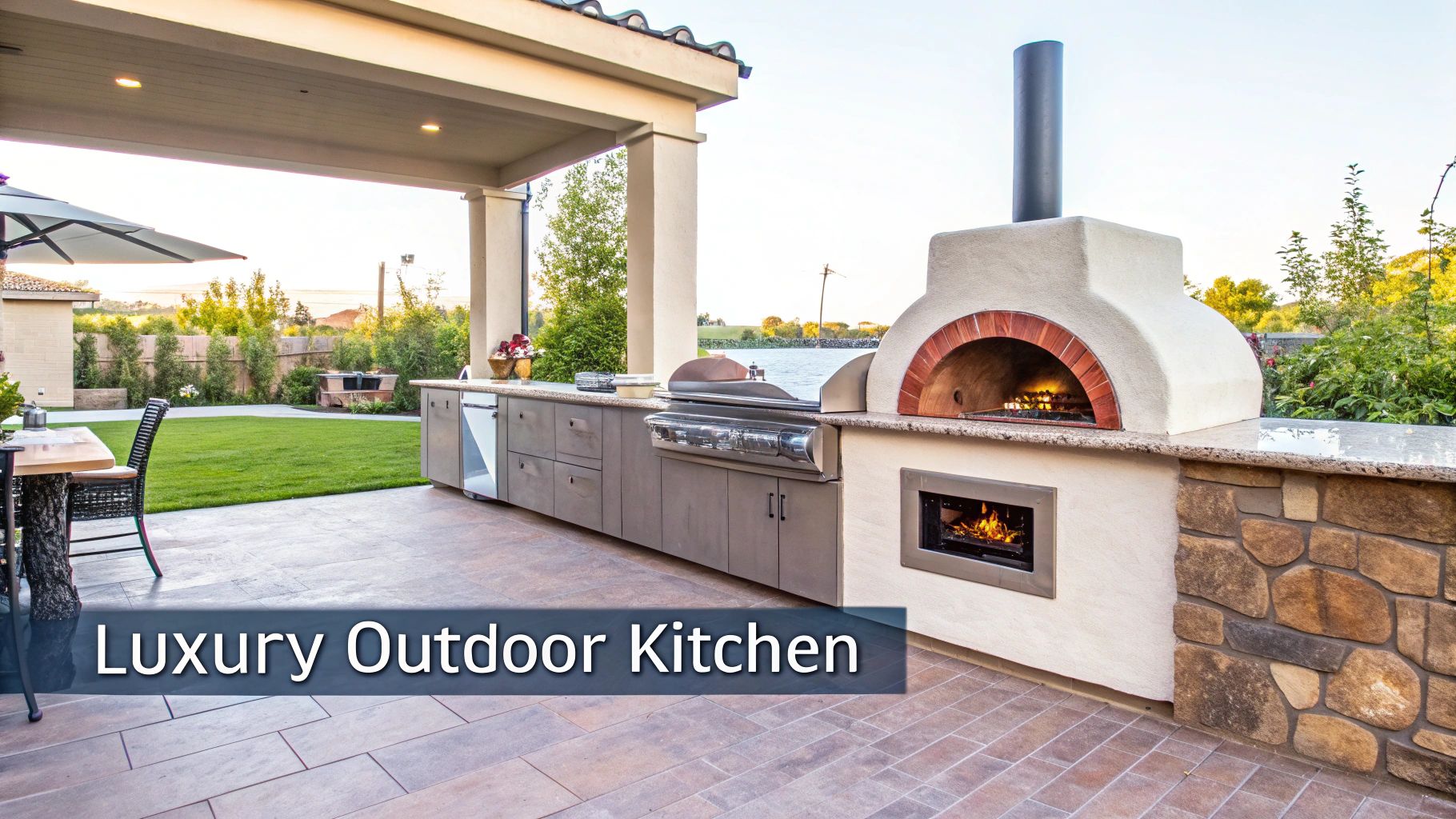
Planning Your Workflow and Placement
The foundation of any great outdoor kitchen is strategic placement. You'll want to establish a natural "workflow triangle" that connects your prep counter, the pizza oven, and your serving area. This simple layout cuts down on frantic running around, letting you assemble, cook, and serve pizzas effortlessly, even with a crowd watching.
Keep these key factors in mind:
- Safety First: Your oven needs breathing room. Make sure it has plenty of clearance from combustible materials like a wooden fence, overhanging branches, or siding. Always, always check the manufacturer’s specific guidelines.
- Wind Direction: Try to position the oven so its opening is sheltered from the prevailing wind. A strong gust can wreak havoc on your flame and send smoke billowing right at you or your guests.
- Prep Proximity: Your oven should be right next to a clear counter space of at least 36 inches. This becomes your dedicated "launch zone" for dressing pizzas on the peel right before they slide into the heat.
Harmonizing Materials and Aesthetics
Your pizza oven shouldn’t look like an add-on; it should feel like it was always meant to be there. The materials you choose for surrounding countertops, cabinetry, and flooring are crucial for achieving that cohesive, high-end look. You're aiming for a design that flows naturally with your existing grills, smokers, and other outdoor appliances.
For a sleek, modern look, you can't go wrong pairing a stainless steel oven with matching cabinetry and polished granite or concrete counters. It creates a clean, professional vibe. If you’re leaning more toward a rustic, Mediterranean feel, a built-in oven finished with natural stone or brick, set against teak or stone countertops, is absolutely stunning. For more visuals, take a look at our guide to brilliant outdoor kitchen ideas to help you get inspired.
Designing for Different Outdoor Kitchen Personas
Everyone uses their outdoor space a little differently. To help spark your imagination, we've sketched out three distinct "personas" with sample layouts to show how a pizza oven can be tailored to your specific lifestyle.
1. The Entertainer’s Paradise This design is all about hosting. The centerpiece is a large, impressive wood-fired or hybrid built-in oven that commands attention.
- Layout: A sprawling U-shaped or L-shaped island is perfect, providing tons of counter space for multiple prep areas and bar seating for guests to gather.
- Features: Think big: a dedicated beverage center, lots of under-counter storage for platters, and integrated lighting for those late-night parties.
- Oven Choice: A large-capacity built-in oven is a must-have, something that can handle multiple pizzas at once.
2. The Culinary Artist’s Workshop This setup is for the serious home chef who craves precision and versatility. It's less of a party space and more of a functional workspace.
- Layout: A galley-style kitchen with distinct zones for prepping, cooking, and plating works beautifully here, often featuring deep counters and focused task lighting.
- Features: A built-in prep sink is a game-changer, as is dedicated storage for peels, thermometers, and maybe even a small herb garden.
- Oven Choice: A high-performance hybrid oven gives you the best of both worlds: the pinpoint control of gas for technical bakes and the smoky flavor of wood for authentic Neapolitan pizza.
Key Insight: The best design supports your cooking style. For the culinary artist, workflow and tool accessibility are every bit as important as the oven's max temp.
3. The Compact Luxury Patio This proves you don’t need a sprawling backyard to have an incredible outdoor cooking setup. It’s all about smart design in a smaller footprint.
- Layout: A simple linear island or even a dedicated, high-end cooking cart can house a powerful freestanding oven.
- Features: Vertical storage, fold-down counter extensions, and multi-functional carts are your best friends here.
- Oven Choice: A top-tier freestanding model like a Gozney Dome or Ooni Koda delivers professional-grade heat without the permanent footprint of a built-in.
Your Outdoor Pizza Oven Questions Answered
Even with all the specs and styles laid out, you probably have a few practical questions kicking around. It’s one thing to compare features, but it’s another to know what it’s actually like to live with one of these ovens. We get it. Let's tackle the most common questions we hear from homeowners to make sure you're completely confident in your choice.
How Much Upkeep Does an Outdoor Pizza Oven Really Need?
Honestly, the maintenance is pretty straightforward, but it does change depending on your fuel source. A classic wood-fired oven demands the most attention—you'll need to regularly sweep out ash and soot from the dome and cooking deck. A good, stiff wire brush with a long handle is your best friend here.
Gas ovens, on the other hand, are much more low-maintenance. It's mostly a matter of keeping the burners clean and ensuring the gas connections are secure for a steady, reliable flame. For any model, you'll want to clean the exterior with a material-appropriate cleaner, whether it’s stainless steel or a custom powder coat.
Pro Tip: No matter which oven you choose, a high-quality, weather-resistant cover is the single best investment you can make. It shields your oven from rain, snow, and harsh sun, which goes a long way in preserving its looks and performance for years to come.
Can I Cook Anything Besides Pizza in These Ovens?
Absolutely. Thinking a pizza oven is a one-trick pony is one of the biggest misconceptions out there. A great outdoor oven is an incredibly versatile cooking machine; think of it as a high-performance convection oven that also imparts incredible flavor.
That intense, roaring heat is perfect for getting a beautiful sear on steaks and chops. It can roast vegetables in a fraction of the time they'd take indoors and bakes artisanal bread with that perfect, crackly crust everyone loves. Once you get the hang of managing lower temperatures after the initial heat-up, a whole new world opens up. You can gently cook delicate fish, roast a whole chicken, or even bake a fruit crumble in a cast-iron skillet. It truly expands what you can do in your outdoor kitchen. For a look at equipment built for this kind of versatility, check out our guide on choosing a dual-fuel countertop pizza oven.
What Are the Must-Have Pizza Oven Accessories?
You can go down a rabbit hole with accessories, but there are a few tools that are truly non-negotiable right from the start. These are the fundamentals you'll need for both cooking great pizza and keeping your oven in top shape.
- A Quality Pizza Peel: This is your essential tool for launching pizzas into the heat and pulling them out safely. Many pros use a wooden peel for launching the uncooked pizza (it doesn't stick as much) and a separate metal one for turning and retrieving.
- An Infrared Thermometer: This is the only way to know the real temperature of your cooking surface. Getting that stone to the perfect temp—often between 750°F and 900°F—is the secret to a crisp, beautifully cooked crust that’s never soggy.
- A Long-Handled Brush: You'll need this to quickly sweep the cooking stone clean between pizzas. It gets rid of any burnt flour or stray toppings that can create a bitter, acrid taste on your next pie.
With just these three basics, you’ll be set up for success from day one.
At UrbanManCaves.com, we live and breathe this stuff. We hand-pick the best equipment to help you build an outdoor space that’s not just functional, but legendary.
Shop Our Premier Collection of Outdoor Pizza Ovens at UrbanManCaves.com
