

The best outdoor kitchens are more than just a collection of appliances; they're a complete ecosystem. At the core, you have a high-performance grill, but the real magic happens when you add specialized cookers like pizza ovens and smokers, and then support it all with essentials like outdoor refrigeration and a functional sink.
This thoughtful combination is what elevates a simple patio into a true outdoor kitchen—a luxurious, fully equipped space built for making incredible food and even better memories.
Your Blueprint for the Ultimate Outdoor Kitchen
Think of your backyard as more than just a lawn with a grill on it. Imagine it as the new heart of your home, an open-air hub for entertaining where the best moments happen around the fire. This guide is your blueprint for making that happen. We're moving beyond the standalone cart grill to explore the world of fully integrated, high-end outdoor kitchens.
Investing in top-tier equipment isn't just about cooking better food; it's a permanent upgrade to your lifestyle and home. The old idea of the lonely griller stuck in a corner while everyone else is inside is dead. Today, it’s about creating a destination that blurs the lines between indoor and outdoor living, demanding the same level of performance and style outside as you expect inside. This shift has pushed incredible innovation in outdoor appliance technology and design.
The Alfresco Living Boom
This isn't just a niche trend; the desire for sophisticated outdoor spaces is backed by some serious numbers. The global market for outdoor cooking equipment was valued at USD 5.08 billion in 2024 and is expected to climb to USD 8.54 billion by 2032.
That growth is fueled by a massive lifestyle change, with over 75% of U.S. homeowners now saying that outdoor living areas are a top priority. You can dig into more of this data on the outdoor cooking market at grandresearchstore.com. This guide will help you navigate this exciting world of possibilities, creating a space that’s as functional as it is beautiful.
The goal here is to design a seamless workflow that makes cooking and hosting outdoors feel completely effortless. Think of it like designing a chef's kitchen, just with blue skies as your ceiling.
Before we dive deep into specific models and materials, let's get a quick overview of the essential building blocks you'll be working with.
Core Outdoor Cooking Equipment at a Glance
This table provides a quick summary of the essential equipment types and their primary purpose to help you get started.
| Equipment Type | Primary Use | Key Benefit |
|---|---|---|
| Grill (Gas/Charcoal/Pellet) | Searing, roasting, smoking | The versatile centerpiece for all-around cooking. |
| Pizza Oven | High-heat baking | Authentic, restaurant-quality pizzas in minutes. |
| Griddle / Plancha | Sautéing, searing, breakfast | Even, consistent heat for delicate foods and large batches. |
| Smoker | Low-and-slow cooking | Unbeatable smoky flavor for barbecue classics. |
| Outdoor Refrigerator | Storing ingredients & drinks | Keeps everything you need chilled and within arm's reach. |
| Outdoor Sink | Prep, cleanup, hand washing | Adds crucial convenience and food safety. |
| Kegerator | Dispensing draft beer | The ultimate upgrade for effortless entertaining. |
With these core components in mind, we can start piecing together your ideal setup.
Building Your Outdoor Culinary Haven
Crafting the perfect outdoor kitchen is about so much more than just picking a great grill. It requires a thoughtful plan that considers layout, material choices, and how all your appliances will work together. We’ll walk through how to choose the right culinary centerpiece, expand your cooking capabilities with specialized gear, and build out a complete entertainment zone your neighbors will be talking about for years.
Here’s a look at what we’ll cover:
- Core Cooking Appliances: A deep dive into grills, pizza ovens, smokers, and griddles.
- Essential Support Systems: Why refrigeration, sinks, and smart storage are non-negotiable.
- Design and Layout: Planning efficient work zones so you aren't running back and forth.
- Material and Construction: Understanding what separates high-end, long-lasting gear from the rest.
Consider this your definitive guide to turning a patch of your backyard into a premier destination for dining and entertaining. Let's start building your blueprint.
Choosing Your Culinary Centerpiece: The Grill
Let's get one thing straight: the grill is the heart and soul of any great outdoor kitchen. It’s more than just an appliance; it’s the star of the show. Your choice here sets the tone for the entire space, influencing how you cook, what you cook, and the flavors you create. This isn't about picking the most expensive model—it's about matching the grill's personality to your own.
Think of it like choosing a car. A high-performance gas grill is your luxury sedan. It’s responsive, powerful, and offers precise control right at your fingertips. It fires up instantly, making it perfect for a quick weeknight steak or for effortlessly managing a big party.
A charcoal grill, on the other hand, is more like a classic muscle car. It takes a bit more finesse and hands-on attention to really make it sing. But the payoff? An authentic, smoky flavor that gas grills simply can’t touch. It turns cooking into an event.
This is the very first, and most important, decision you'll make, whether you’re planning a simple patio setup or a full-blown culinary oasis.
This simple guide can help point you in the right direction based on how you plan to use your space.
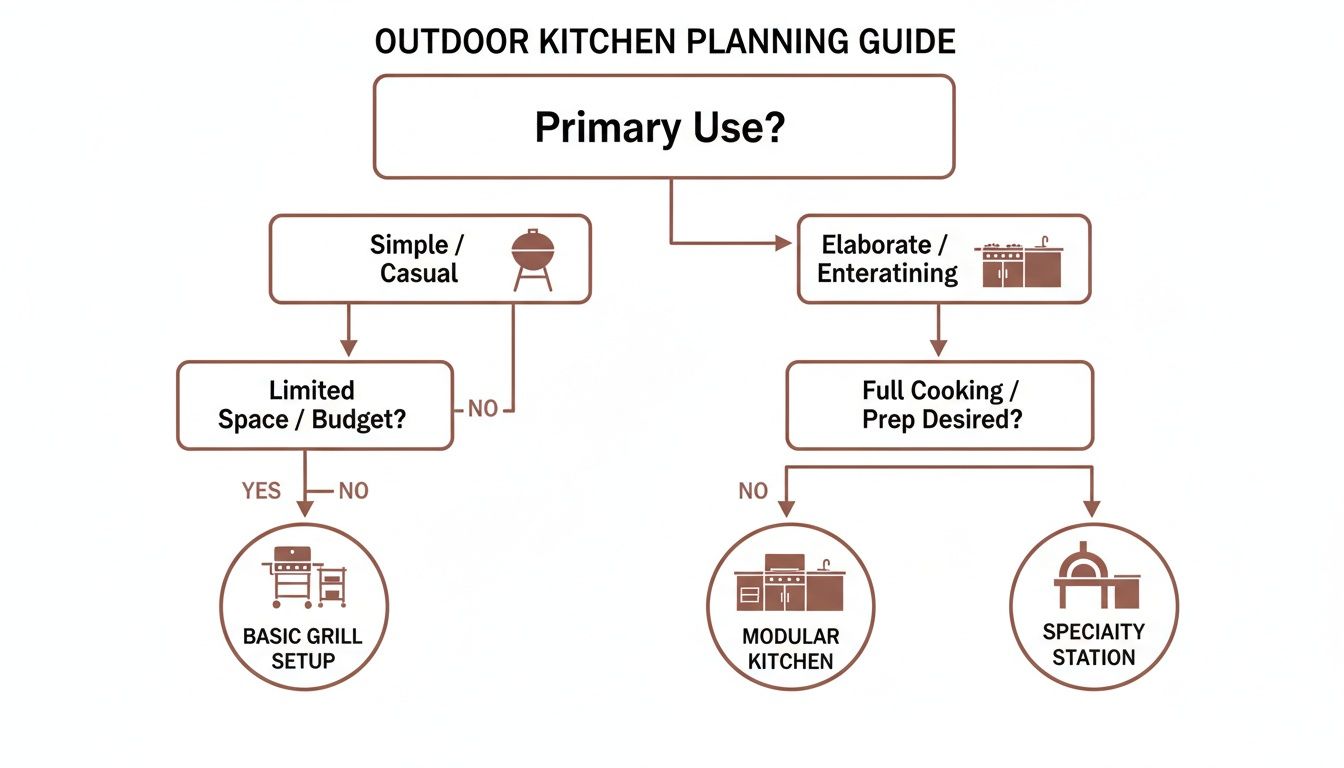
Ultimately, your vision—be it intimate family dinners or large-scale entertaining—will shape the kind of equipment that makes the most sense for you.
Comparing Grill Fuel Types
Use this comparison to understand the trade-offs between different grill fuels and find the perfect match for your priorities.
| Fuel Type | Flavor Profile | Heat Control | Convenience Level | Ideal For |
|---|---|---|---|---|
| Natural Gas/Propane | Clean, neutral flavor; allows food to shine | Excellent, precise control with knobs | Highest; instant-on ignition and easy cleanup | Weeknight grilling, large parties, and those who value speed and ease of use. |
| Charcoal | Rich, smoky, and complex | Manual; requires skill to manage vents and fuel | Lower; longer preheat time and messier cleanup | The flavor purist who enjoys the ritual of grilling and wants authentic barbecue taste. |
| Wood Pellets | Authentic wood-fired smoke (variety of flavors) | Excellent, automated digital control | High; set-it-and-forget-it operation | Long smoking sessions, baking, roasting, and anyone wanting smoky flavor with digital ease. |
The right fuel type really comes down to what you value most: the pure convenience of gas, the authentic flavor of charcoal, or the modern hybrid approach of pellets.
The Rise of the Smart Grill
Then there's the pellet grill, the new-school contender. Think of it as the "smart oven" of the backyard, brilliantly merging genuine wood-fired flavor with the kind of digital precision you’d expect indoors. It’s the perfect solution for anyone who craves that smoky taste but doesn't have the time to babysit a fire all day.
Pellet grills work by automatically feeding tiny hardwood pellets into a fire pot, holding the exact temperature you punch into a digital controller. This means you can smoke a brisket for 12 hours with almost no intervention—a job that would keep you glued to a traditional smoker.
Gas Grills: The Kings of Convenience
For most high-end outdoor kitchens, a built-in gas grill is still the undisputed champion, and for good reason. You get instant ignition, incredibly precise temperature management, and a clean, no-fuss cooking experience. The best models take this convenience to another level with some seriously powerful features.
Here are the premium upgrades to look for:
- Infrared Sear Burners: These use special ceramic plates to pump out intense, direct heat. The result? A perfect, steakhouse-quality crust on your steak in less than a minute, all without overcooking the inside.
- Heavy-Duty Rotisserie Systems: A powerful motor paired with a dedicated rear-mounted infrared burner means you can roast whole chickens or roasts that are perfectly browned and incredibly juicy from self-basting.
- Multiple Cooking Zones: With independent controls for each burner, you can create different heat zones on the same grill. Sear steaks over blistering heat on one side while gently warming vegetables on the other.
These are the kinds of features that elevate a simple grill into a true performance machine. For a closer look, you can learn more about what separates the good from the great in our in-depth guide to the best outdoor kitchen grills.
Charcoal Grills: The Flavor Purist's Choice
While gas is king of convenience, charcoal is the undisputed master of flavor. There's just no substitute for the deep, complex taste that comes from real wood smoke. It infuses food with a character that grilling purists will tell you is the very definition of authentic barbecue.
Modern high-end charcoal grills, especially the kamado style made from thick ceramic, have completely changed the game. Their incredible insulation allows them to hold rock-steady temperatures for hours on end, making them surprisingly versatile for everything from searing at 700°F to smoking low-and-slow.
So, what's the bottom line? The choice between gas, charcoal, or pellets boils down to a simple trade-off: Are you after speed and convenience, or is achieving the most authentic, smoky flavor your ultimate goal? Your answer will point you straight to your perfect culinary centerpiece.
Expanding Your Outdoor Cooking Arsenal
So, you’ve picked out the perfect grill. That’s the cornerstone, the absolute must-have. But let's be honest, that's just the beginning of the real fun. Think of your grill as your go-to chef's knife—incredibly versatile, but a true master needs more than just one tool in their block.
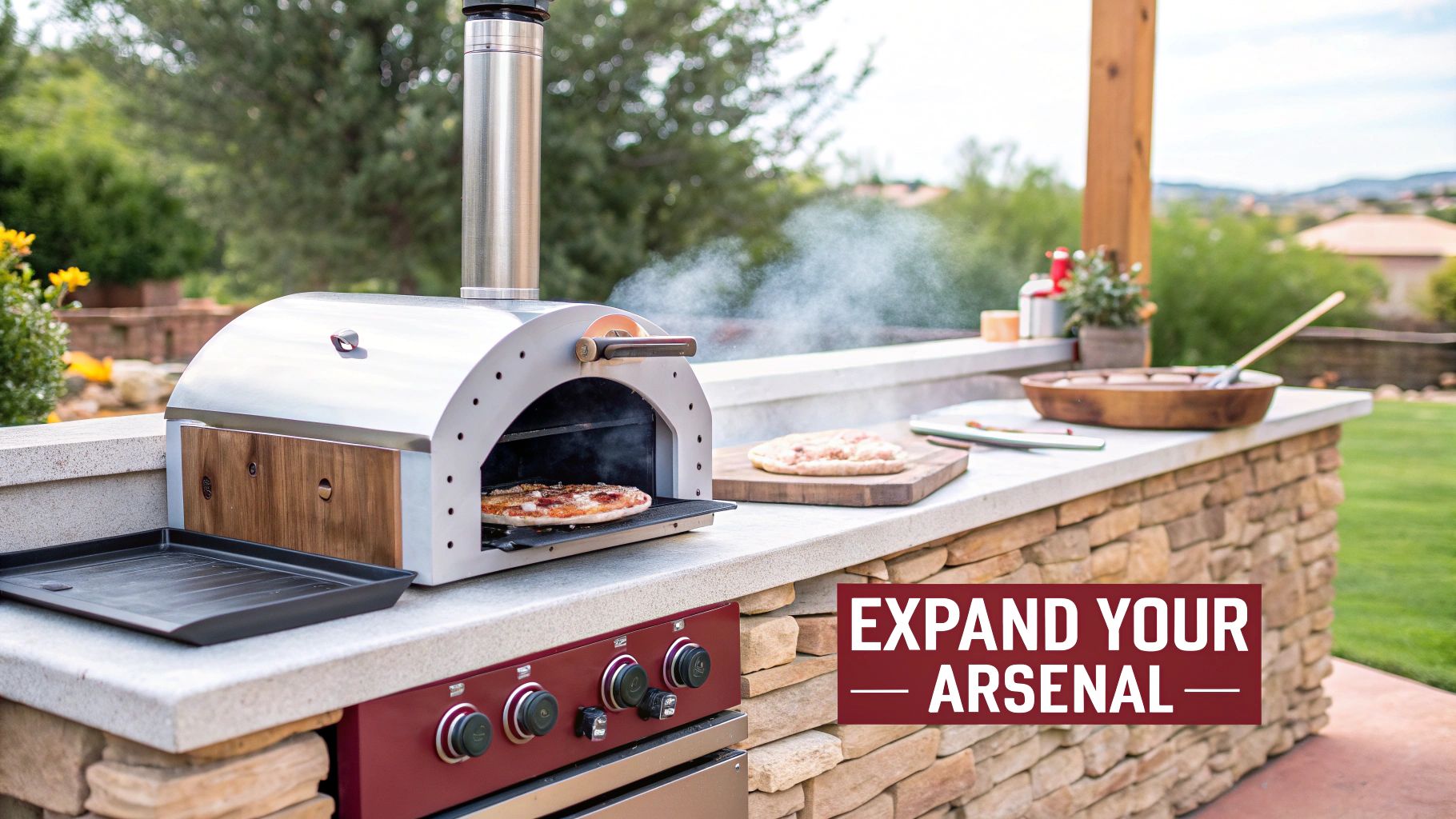
This is where specialized appliances come in. Adding a dedicated smoker, a wood-fired pizza oven, or a flat-top griddle is what elevates a simple patio setup into a full-blown outdoor culinary playground. It's the difference between just grilling steaks and burgers and being able to smoke a perfect brisket, fire a Neapolitan pizza, or host a hibachi night. This is how you turn your backyard into a chef’s paradise.
For the Barbecue Purist: The Dedicated Smoker
Sure, plenty of high-end grills have smoking functions, and they do a decent job. But if you're serious about authentic barbecue, nothing beats a dedicated smoker. These units are engineered for one specific task: holding a rock-steady, low temperature for hours on end. This is the only way to break down tough cuts of meat and infuse them with that incredible smoky flavor. For iconic dishes like brisket or pulled pork, it's simply non-negotiable.
When you're ready to get serious, you'll find a few main types to choose from:
- Offset Smokers: These are the classic "stick burners" you see in barbecue competitions. They're known for producing a deep, authentic smoke flavor that's hard to replicate.
- Vertical Smokers: Sometimes called cabinet or water smokers, these are space-savers that are fantastic at maintaining consistent temps for those long, all-day cooks.
- Kamado Grills: While they are amazing all-around grills, their thick ceramic walls make them exceptional smokers. They hold heat and moisture like nothing else, guaranteeing juicy results.
Adding one of these to your kitchen is a statement. It says you're committed to the art of low-and-slow.
Bring Italy Home with a Wood-Fired Pizza Oven
Let’s get one thing straight: you cannot replicate a real pizza oven inside your house. Your kitchen oven might hit 550°F on a good day, but a proper wood-fired oven can roar to temperatures over 900°F. That blistering heat is the secret to cooking a true Neapolitan-style pizza in as little as 90 seconds, creating that signature leopard-spotted, crispy-chewy crust.
And they’re not just for pizza. These ovens are workhorses, perfect for roasting vegetables until they're caramelized and sweet, baking rustic artisan breads with an incredible crust, or searing steaks with an unmatched wood-fired flavor. A pizza oven doesn't just make better food—it creates a show. It’s an interactive cooking experience that becomes the main event at any party.
An outdoor pizza oven transforms dinner into an event. It's a focal point for entertainment where guests can customize their own pizzas, making the meal as memorable as the food itself.
The Griddle: The Ultimate Crowd-Pleaser
The flat-top griddle, or plancha, might be the most underrated piece of equipment you can add to an outdoor kitchen. It's essentially a giant, restaurant-grade flattop that opens up a whole new world of cooking possibilities. It’s perfect for all the delicate or small-item foods that would tragically fall through the grates of a standard grill.
Imagine cooking a full brunch for a crowd—pancakes, bacon, sizzling home fries, and eggs, all going at once. Or picture yourself putting on a hibachi-style dinner for friends, complete with fried rice and perfectly seared scallops. That's the kind of versatility a griddle brings to the table.
For more inspiration on building out your space, our guide on outdoor kitchen essentials is a great resource. By expanding beyond a single grill, you’re setting yourself up to tackle any recipe for any occasion.
Building a Complete Outdoor Entertainment Hub
Once you've picked out your main cooking appliances, the real magic begins. What truly sets a luxury outdoor kitchen apart is how effortlessly it all works together. This isn't just about having a great grill; it’s about creating a self-sufficient space where you can prep, cook, serve, and clean without constantly running back inside. You're not just buying equipment—you're building a fully integrated entertainment hub.
The goal is to design a workflow that feels as natural and intuitive as your indoor kitchen. Everything should have its place, right where you need it. This thoughtful approach transforms hosting from a frantic chore into a genuinely relaxed and enjoyable experience for everyone, including you. It all comes down to investing in the essential supporting pieces—the unsung heroes that make outdoor living feel truly seamless.
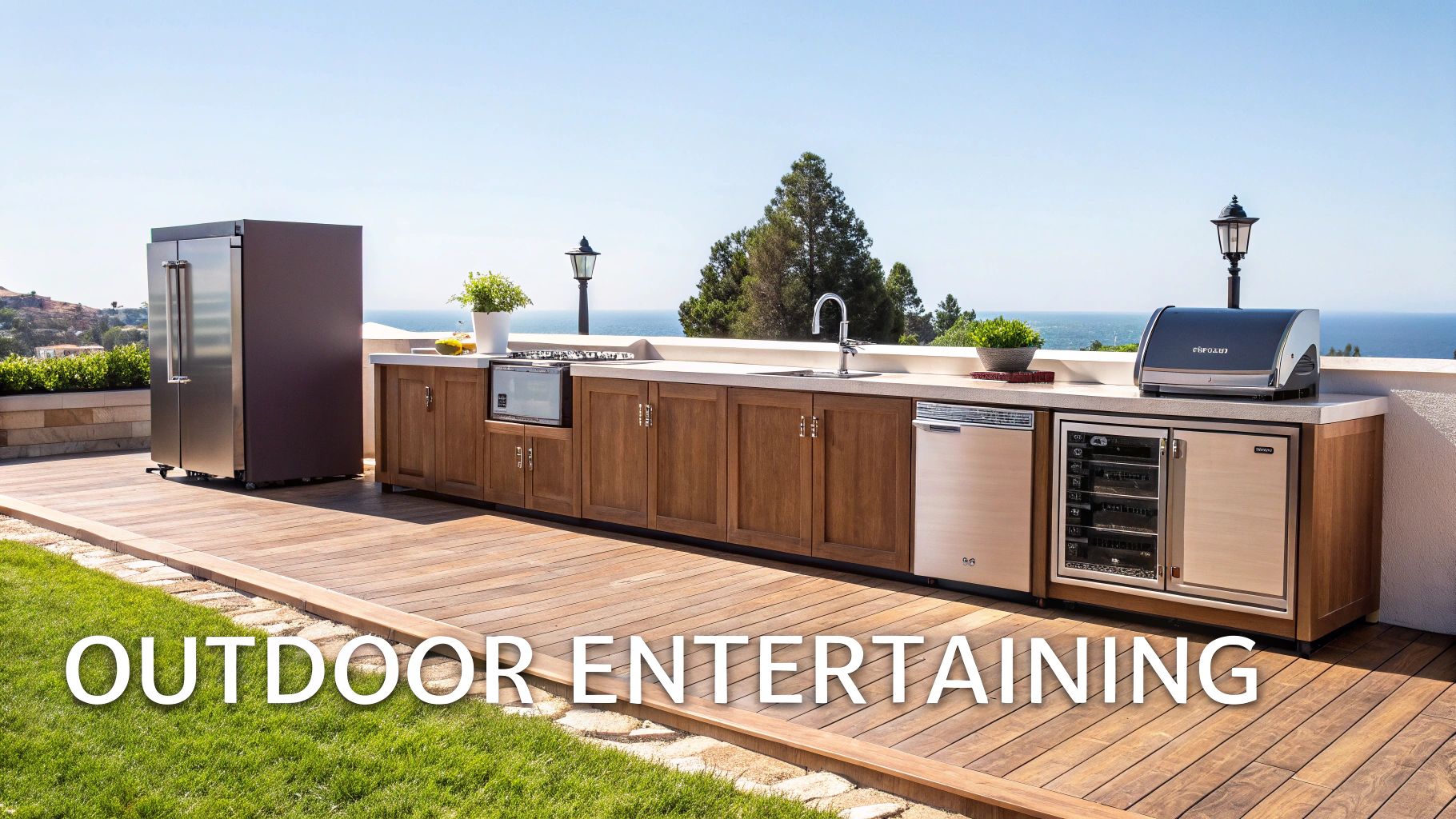
This idea of creating fully functional outdoor rooms isn't just a niche trend; it's a movement. The global outdoor kitchen market was valued at a massive USD 21.81 billion in 2023 and is on track to hit an incredible USD 45.45 billion by 2032. This explosive growth is happening because homeowners are looking for more than just a place to grill—they want a complete outdoor lifestyle.
The Convenience of Cold Storage
One of the biggest game-changers for any outdoor kitchen is dedicated refrigeration. An outdoor-rated refrigerator is specifically engineered to handle the wild swings in temperature and humidity that would destroy a standard indoor model. It puts an end to the endless trips inside for ingredients, condiments, and cold drinks, letting you stay right in the middle of the action with your guests.
Here are a few cold storage options to consider for your setup:
- Undercounter Refrigerators: These are the go-to choice for most outdoor kitchens, designed to slide perfectly into your island cabinetry. Look for models with adjustable shelves so you can easily fit everything from marinating steaks to tall bottles of wine.
- Beverage Centers: Built specifically for drinks, these units often feature stylish glass doors and specialized racks for cans and bottles. This frees up valuable space in your main fridge for food.
- Kegerators: If you want to be the ultimate host, nothing beats a built-in kegerator for fresh, perfectly chilled draft beer. It's a statement piece that never fails to impress.
By adding dedicated cold storage, you’re not just adding convenience; you're creating a more efficient and social cooking environment.
Integrating a Functional Wet Zone
Let's be clear: an outdoor sink isn't a luxury—it's a necessity. Having an integrated sink with hot and cold running water brings one of the most fundamental functions of your indoor kitchen to the great outdoors.
An outdoor sink completely changes your workflow. It provides a dedicated spot for washing hands, rinsing vegetables, and handling cleanup without tracking messes through the house. This single feature dramatically increases the self-sufficiency of your outdoor space.
This "wet zone" is vital for food safety, too. It gives you a place to handle raw meat and immediately wash your hands and utensils, which is key to preventing cross-contamination. And when the party’s over, it makes cleanup a breeze, letting you soak greasy grill grates or wash dishes right on the spot.
Weatherproof Storage Solutions
Finally, every great kitchen needs smart storage. When you move outdoors, that means choosing cabinets and drawers that can stand up to the elements and protect your valuable tools. High-grade stainless steel cabinetry is the gold standard here, offering unmatched durability and weather resistance.
These purpose-built cabinets are designed to seal out moisture, dust, and pests, ensuring your tongs, spatulas, and other gear are always clean and ready when you need them. Look for premium features like sealed doors and soft-close drawers, which not only provide a tight seal but also add a touch of refinement. For more layout tips, check out our guide on inspiring outdoor kitchen ideas.
By thoughtfully bringing these supporting elements together—refrigeration, a functional sink, and protected storage—you create a cohesive system. This integrated approach is the secret to building an outdoor cooking hub that is as practical as it is impressive.
What You're Really Paying For: Materials and Construction
When you invest in a high-end grill or outdoor appliance, you're buying more than just a brand name. The real value is in the stuff you can't always see at first glance—the grade of the steel, the way it's pieced together, and the sheer weight of the components. These are the details that separate an appliance that lasts a season from one that lasts a lifetime.
Think of it like a luxury car versus an economy model. They both get you from A to B, but the engineering, materials, and build quality create a totally different experience in performance and durability. Knowing what to look for lets you see past the marketing hype and spot true, lasting quality.
Not All Steel is Created Equal
When it comes to outdoor kitchens, stainless steel is the material of choice, but there's a huge difference between grades. For a high-end setup that has to endure the elements, 304-grade stainless steel is the undisputed champion. It's not just a random number; it's a specific alloy with high amounts of chromium and nickel, giving it superior rust and corrosion resistance.
Many cheaper grills use 430-grade stainless. It looks great on the showroom floor, but because it lacks the nickel content of its 304 counterpart, it's far more prone to rust, especially if you live in a humid area or near the coast. Insisting on 304 stainless is probably the single most important choice you can make to protect your investment. We've handpicked some of the best examples in our guide to the best stainless steel grills available.
Welds vs. Screws: A Sign of True Craftsmanship
How a grill is assembled tells you a lot about its quality. Look closely at the seams and joints. One of the clearest signs of a premium build is the use of fully welded seams.
-
Welded Seams: Welding literally fuses metal panels into a single, solid piece. This creates incredible structural strength, seals out moisture that causes rust, and gives the appliance a clean, seamless finish that holds up for years.
-
Screws and Fasteners: On the other hand, entry-level models are often held together with screws. The constant cycle of heating up and cooling down causes these fasteners to loosen over time. The result? Wobbly lids, doors that don't quite line up, and weak spots where rust can get a foothold.
A welded grill is like a unibody car frame—solid, rigid, and built to last. A screwed-together grill is more like flat-pack furniture; it works for a while, but it will never have that same unshakeable, long-term integrity.
Pro Tip: When you're checking out a grill in person, run your hand along the corners and edges. A high-end unit will have smooth, polished welds. This isn't just for looks—it’s a direct indicator of meticulous craftsmanship and a more stable, durable appliance.
The Importance of "Heavy-Gauge" Internals
Finally, don't forget to look under the hood. The weight and thickness of the internal components, especially the cooking grates and burners, are critical. This is where the term heavy-gauge becomes so important. Simply put, thicker and heavier steel or cast iron parts are much better at absorbing and holding onto heat.
This has a direct impact on your cooking. Heavy-gauge burners provide more even heat distribution, getting rid of annoying hot spots and giving you consistent temperatures from one end of the grill to the other. In the same way, thick, heavy grates are what create those beautiful, professional-quality sear marks—they hold that intense heat right where you need it and transfer it directly to your food. A high BTU (British Thermal Unit) rating tells you about the grill's power, but it's the quality of the burners that dictates how effectively that power is actually used.
Designing a Functional Outdoor Kitchen Layout
Picking out the best grill and appliances is the fun part, but how you arrange them is what truly makes or breaks an outdoor kitchen. A great layout is the invisible secret that makes cooking outside feel effortless and intuitive, not like a frantic dash back and forth to the house.
The trick is to stop thinking about individual appliances and start thinking like a chef. We design for workflow. The best way to do this is by creating distinct work zones—a concept borrowed directly from professional restaurant kitchens. Grouping related tasks and tools together minimizes wasted movement and creates a seamless, logical flow. It’s how you turn a patio into a high-performance culinary stage.
The Three Core Work Zones
A really functional outdoor kitchen is built around three primary zones. When we design, we often arrange these in what’s called a "work triangle." It's a classic concept for a reason: it ensures everything you need is just a pivot and a step away.
-
The Hot Zone: This is where the magic happens. It’s your main cooking station, anchored by the built-in grill, maybe a smoker, or side burners. You’ll want all your essential tools—tongs, spatulas, meat thermometers—in drawers right here, within arm's reach.
-
The Cold Zone: Think of this as your prep and storage hub. It’s centered around the outdoor refrigerator and should have a good stretch of uninterrupted countertop space for chopping, seasoning, and plating. Keeping your cold storage right next to your prep space is a game-changer.
-
The Wet Zone: This area revolves around the outdoor sink and is dedicated to washing and cleanup. It's where you'll wash hands, rinse fresh produce before it hits the grill, and fill pots. Placing it away from the hot zone is key to preventing dangerous water splashes on hot oil or cooking surfaces.
This zone-based approach is the foundation of a space that just works. To see some real-world examples of how these zones come together, our guide on designing a custom outdoor kitchen island breaks down several popular layouts.
Planning for Flow and Functionality
Beyond the three core zones, you have to think about how people will actually move around the space. You want a clear path for guests that doesn't force them to cut right through your cooking triangle while you're holding a hot skillet.
As a rule of thumb, you need a minimum of 36 inches of clear walkway in front of your appliances. This gives you enough room to move safely and open appliance doors without bumping into anyone.
A well-designed layout anticipates your needs. The refrigerator should be easily accessible from both the cooking area and any nearby seating, so guests can grab a drink without interrupting the chef.
Finally, don't overlook the boring but critical stuff: the infrastructure. Plan your utility lines for gas, water, and electricity from the very beginning. Proper ventilation is also a must, especially if your kitchen is tucked under a covered patio or pergola. You need to manage that smoke and heat safely. Thinking through these details upfront is what creates a space that’s not just beautiful, but a true joy to use.
Frequently Asked Questions
As you get closer to finalizing your outdoor kitchen plans, a few last-minute questions always seem to pop up. Let's tackle some of the most common ones we hear from homeowners, so you can move forward with total confidence.
What’s the Single Most Important Piece to Buy First?
Without a doubt, your grill is the heart and soul of the entire project. It's the best place to start and where you should focus the bulk of your initial investment.
Think of it as the foundation. The grill is where you'll spend most of your time, so getting this one piece right is critical. Go for the highest quality grill your budget can handle, paying close attention to the fuel type and size that match how you cook. A premium grill built from 304 stainless steel gives you a rock-solid, reliable centerpiece you can build around for years to come.
How Much Space Do I Actually Need?
A great outdoor kitchen is more about smart design than sheer square footage. You can create something fantastic with a simple 10-foot run of countertop, or go all out with a sprawling U-shaped oasis.
For a solid starter setup—a built-in grill, a small fridge, and a sink—plan on having at least 10 to 12 linear feet of counter space. This gives you enough room to work without feeling cramped.
The golden rule here is to leave a minimum of 36 inches of clear walkway in front of everything. This isn't just about comfort; it's a crucial safety measure that ensures you can open appliance doors and move around freely.
Is an Outdoor Refrigerator Really Worth the Money?
If you want to create a true entertainment space, then yes, 100%. An outdoor-rated refrigerator is a game-changer. It puts an end to the endless parade of people running in and out of the house for drinks, condiments, and ingredients.
You get to stay outside, engaged with your guests and focused on the grill. A kegerator kicks that experience up another notch, serving up perfectly chilled draft beer. These aren't just appliances; they're what turn a simple cooking area into a self-sufficient social hub, making them a key part of the best outdoor cooking equipment layouts.
Should I Splurge on 316 Stainless Steel or is 304 Good Enough?
This really comes down to where you live. For most people, 304 stainless steel is the gold standard and more than tough enough to handle the elements. But if you're in a coastal area, 316 "marine-grade" steel is a smart upgrade.
The secret ingredient in 316 steel is molybdenum, which gives it incredible resistance to salt and other corrosive chemicals. If you can taste salt in the air from the ocean or have a saltwater pool nearby, investing in 316-grade equipment is the best way to protect your kitchen from rust and ensure it lasts a lifetime.
Ready to design the outdoor kitchen you've always dreamed of? Explore the curated collection of premium grills, appliances, and accessories at UrbanManCaves.com and start building your ultimate backyard retreat. Find everything you need at https://www.urbanmancaves.com.


